
TL;DR Summary for Those in a Hurry:
- Single Stage vs. Two Stage Heating Systems explains the differences between basic and advanced heating setups so you can choose the best fit for comfort, efficiency, and budget.
- Single-stage systems run at full power all the time, while two-stage systems adjust output for better temperature control and efficiency.
- Understanding these differences helps you decide which system will lower energy costs and improve comfort in your home.
- Choose a two-stage system for steadier temperatures and quieter operation, or a single-stage system for simpler, lower-cost heating.
- This guide gives clear comparisons of performance, cost, and long-term benefits to support your heating decision.
Choosing the right heating system is crucial for comfort and efficiency. Homeowners often face the decision between single stage and two stage furnaces. Many people begin by comparing Single Stage vs. Two Stage Heating Systems to understand which option aligns best with their needs. Each type offers unique benefits and considerations. Understanding these differences can help you make an informed choice.
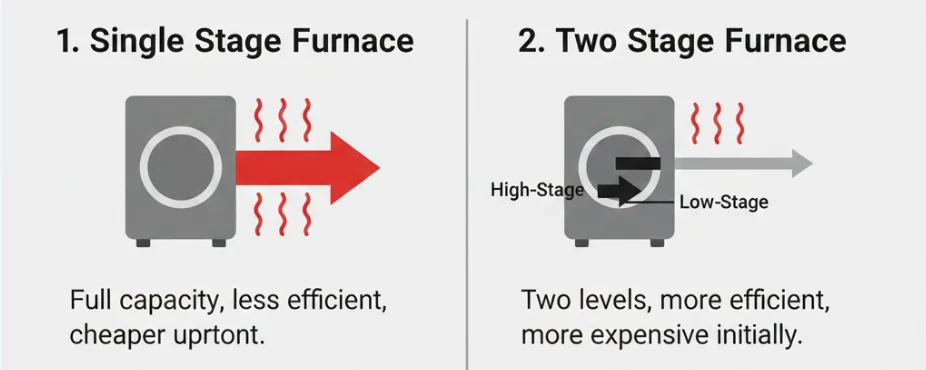
Single stage furnaces operate at full capacity whenever they are on. This simplicity makes them a popular choice for many. However, they may lead to temperature fluctuations. Two stage furnaces, on the other hand, offer more flexibility. They can operate at two levels: high for cold days and low for milder ones.
This dual operation provides more consistent heating. It also enhances energy efficiency, potentially lowering your energy bills. The initial cost of a two stage furnace is higher. Yet, the long-term savings and comfort can outweigh this expense.
Whether you prioritize upfront cost or long-term efficiency, understanding your options is key. In this article, we will explore the differences between these systems. Our goal is to help you decide which furnace best suits your needs.
Table of Contents
Understanding Single Stage and Two Stage Furnaces
Furnaces are a critical component of any HVAC system, providing warmth and comfort to homes. They come in various types, but single stage and two stage furnaces are the most common.
Single stage furnaces are straightforward devices. They operate at full blast whenever heating is required. This simplicity makes them reliable and easy to maintain. However, they may not offer the best energy efficiency.
Two stage furnaces, in contrast, are more sophisticated. They have two operating modes: high and low. This design allows them to adjust to varying temperature needs. It results in a more balanced indoor climate.
Homeowners should weigh several factors when choosing between these systems. Consider your climate, budget, and home size. These elements will influence the best choice for your heating needs.
Here’s a quick comparison to get started:
- Single Stage: Full capacity, less efficient, cheaper upfront
- Two Stage: Two levels, more efficient, more expensive initially
How Single Stage Furnaces Work
Single stage furnaces are the backbone of basic home heating systems. Their operation is quite straightforward, making them a popular choice for many households.
These furnaces run at a single, fixed speed. When the thermostat signals for heat, the furnace kicks into full power mode. This allows for a quick response to temperature changes.
However, this simplicity also means they cycle on and off frequently. Such frequent cycling may lead to inconsistent indoor temperatures. It can also result in increased wear on the system over time.
While they might not be the most efficient option, single stage furnaces provide reliable heating. Their simpler design also means fewer components can fail, leading to lower maintenance needs.
Key features of single stage furnaces include:
- Operates at full capacity
- Simple design with fewer parts
- Frequent cycling may affect comfort
How Two Stage Furnaces Work
Two stage furnaces offer a smarter approach to heating. They adjust their power output depending on the home’s heating needs.
These systems have two levels of operation: high and low. On milder days, they run on low to maintain a consistent temperature. During colder spells, the high setting kicks in to provide additional warmth.
This variable operation means these furnaces run longer cycles at a lower capacity. This reduces temperature fluctuations and enhances overall comfort. Longer run times also contribute to better indoor air quality.
The efficiency of two stage furnaces often translates into cost savings on energy bills. Homeowners can enjoy the benefits of steady warmth and improved air quality, thanks to more even heat distribution.
Key advantages of two stage furnaces include:
- Dual operation levels for energy efficiency
- Consistent temperatures and enhanced comfort
- Improved air quality due to longer cycles
Key Differences Between Single Stage and Two Stage Furnaces
Understanding the differences between single stage and two stage furnaces can guide your decision. Each type has distinct benefits and drawbacks, depending on your needs.
A single stage furnace runs at full capacity whenever it’s turned on. This can lead to noticeable temperature changes. On the other hand, a two stage furnace operates at two distinct settings. It runs on low power during milder conditions, ensuring steady heat.
Energy efficiency is another key difference. Two stage furnaces often use less energy by adjusting output to match heating demands. This can result in lower utility bills over time, adding financial benefits.
Noise levels vary between the two types as well. Two stage models tend to be quieter due to prolonged, low-speed operation. Meanwhile, single stage units can be noisier since they always run at full force.
In terms of maintenance, single stage systems are simpler. They have fewer components, making them easier to service. Yet, a two stage system provides advanced technology for enhanced comfort and efficiency.
Here’s a summary of their main differences:
- Operation mode: Single stage at full, two stage varies
- Efficiency: Two stage is more energy-saving
- Noise: Two stage operates more quietly
Pros and Cons: 1 Stage vs 2 Stage Furnace
Choosing between a single stage and a two stage furnace involves evaluating the pros and cons of each type. This assessment helps determine which system aligns better with your needs.
Pros of a Single Stage Furnace:
- Simplicity: With fewer parts, they’re easier to service.
- Cost-Effective: Generally, they have a lower upfront cost.
- Quick to Install: Installation is straightforward, saving time and effort.
Cons of a Single Stage Furnace:
- Energy Use: Always runs at full power, potentially increasing energy bills.
- Temperature Fluctuations: Can lead to uneven heating throughout your space.
- Noise: Operates at full blast, which can be louder.
Pros of a Two Stage Furnace:
- Energy Efficiency: Uses less energy by adjusting power based on need.
- Comfort: Provides more consistent and stable heating.
- Quiet Operation: Runs quietly, especially on lower settings.
Cons of a Two Stage Furnace:
- Higher Initial Cost: More expensive upfront due to advanced technology.
- Complex Installation: Requires professional expertise for setup.
- Maintenance: May require more attention due to additional components.
When considering both options, remember these key points. A single stage furnace suits straightforward, cost-focused needs. A two stage furnace, however, offers enhanced efficiency and comfort.
Careful consideration of these pros and cons can help in making an informed decision. Matching the right furnace to your requirements ensures optimal performance.
Cost Comparison: Upfront and Long-Term
When evaluating heating system investments, both initial and extended costs play a significant role. Choosing wisely can lead to both immediate savings and future benefits.
Upfront costs for a single stage furnace are generally lower. This affordability makes them attractive for budget-conscious homeowners. Simplicity in design also contributes to minimal installation expenses.
Two stage furnaces come with a higher initial price tag. This cost reflects their advanced technology and operational flexibility. Homeowners must consider these upfront expenses against potential long-term savings.
In the long run, two stage systems may prove more economical. Their energy-efficient operation often leads to reduced utility bills. Over time, these savings can offset the initial investment.
Consider the following cost-related aspects:
- Initial Investment: Single stage is more affordable upfront.
- Long-Term Savings: Two stage may offer better energy savings.
- Installation Costs: Simpler setup for single stage can reduce initial outlay.
Choosing the right furnace can balance both immediate and future costs effectively.
Energy Efficiency and Savings
Energy efficiency is a major factor when selecting a heating system. Choosing a furnace that maximizes savings is beneficial for both homeowners and the environment.
Single stage furnaces operate at full capacity when on, often leading to higher energy consumption. This can result in increased utility bills, especially in colder climates. For those prioritizing upfront savings, this might remain an acceptable trade-off.
Two stage furnaces, conversely, are designed for optimized energy use. By operating at a lower capacity for milder weather, they consume less energy. This feature translates to consistent savings on monthly energy bills.
Investing in a two stage furnace can also qualify homeowners for energy efficiency incentives. These rebates can further offset the initial costs, enhancing long-term value.
Consider energy efficiency features:
- Operation Modes: Single stage operates at full, while two stage adjusts.
- Energy Consumption: Two stage systems consume less energy.
- Rebates: Two stage may qualify for incentives.
Selecting a two stage furnace can lead to substantial savings and improved efficiency over time.
Comfort and Indoor Air Quality
Comfort is essential when choosing a heating system. The ability of a furnace to maintain a constant temperature affects this comfort level significantly.
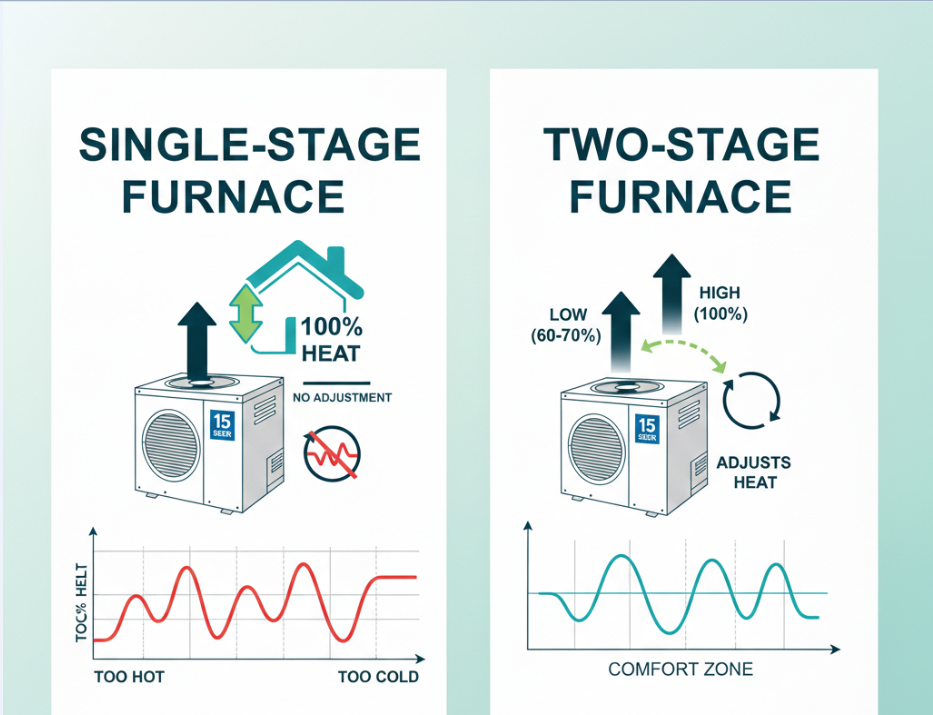
Single stage furnaces can create temperature swings. This is due to their operation at full capacity, which may cause some areas in your home to feel warmer or cooler than others. It might be less ideal for maintaining a consistent indoor climate.
Two stage furnaces, however, offer more even temperature distribution. They adjust the heat output based on the actual heating demand, which prevents frequent cycling and temperature fluctuations. This feature leads to a more comfortable environment throughout your home.
Furthermore, indoor air quality plays a crucial role in your living experience. Two stage systems can improve air quality by running for extended periods at lower speeds, ensuring better filtration and air circulation.
Consider these comfort benefits:
- Temperature Consistency: More stable with two stage systems.
- Air Distribution: Two stage provides even heat throughout.
- Air Quality: Better filtration with longer operation times.
Comfort and quality indoor air are enhanced with a two stage furnace, making it a superior choice for those valuing indoor environment quality.
Maintenance, Reliability, and Lifespan
Maintenance can affect how long your furnace lasts. Single stage systems are generally simpler, with fewer parts that might fail. This design makes them easier and cheaper to maintain over time.
Reliability is crucial for a heating system. Single stage furnaces, with their straightforward mechanism, offer reliable performance, making them a time-tested choice for many households.
However, two stage furnaces, although more complex, tend to have a longer lifespan. This is due to their efficient operation, which reduces wear and tear by preventing constant full-capacity cycling. Their intricate design may require more specialized maintenance.
Key considerations for maintenance and lifespan include:
- Complexity: Single stage systems are simpler to maintain.
- Reliability: Single stage offers dependable operation.
- Durability: Two stage units generally last longer.
When factoring in maintenance and longevity, each furnace type has distinct advantages tailored to different needs.
Which System Is Right for You? Factors to Consider
Choosing between a single stage and a two stage furnace depends on your specific needs. Consider the climate in which you live. For areas with extreme temperatures, a two stage furnace might offer better comfort.
Your home’s size plays a crucial role as well. Larger homes might benefit from the consistent heating of a two stage system. Smaller homes, however, could find a single stage furnace adequate and cost-effective.
Budget is also a key factor. Single stage systems generally have lower upfront costs, appealing to those on a tighter budget. However, the long-term energy savings of a two stage furnace may balance out its initial expense over time.
When deciding, weigh these factors:
- Climate: Consider temperature extremes.
- Home Size: Match system to home scale.
- Budget: Balance upfront cost with energy savings.
Each home is unique. Choose the heating system that best meets your comfort and financial needs.
Conclusion: Single Stage vs. Two Stage Heating Systems
Choosing between a single stage and a two stage furnace involves weighing various factors. Consider your climate, home size, and budget to find the ideal match.
Single stage furnaces offer simplicity and cost-effectiveness, perfect for smaller spaces or milder climates. In contrast, two stage systems provide enhanced comfort and efficiency, especially in larger homes or areas with fluctuating weather.
Ultimately, the decision should align with your comfort preferences and financial plans. Consulting with an HVAC expert can also help, ensuring you select the system that meets your unique requirements and increases your property’s value.
Ready for Reliable Heating? Contact BOOST SERVICES Today!
Choosing the right heating system is essential for comfort and efficiency. BOOST SERVICES is here to help with expert advice and solutions tailored to your needs.
Our team is dedicated to delivering exceptional customer service, ensuring your home or business stays warm and comfortable. Whether you need installation, maintenance, or just guidance on which system to choose, we’re ready to assist.
- Quick response times
- Personalized service
- Expert HVAC solutions
Call us today at 818-277-5056 or 747-264-6358 to ensure your space remains cozy all year round.
Single Stage vs. Two Stage Heating Systems highlights how variable heat output leads to better comfort and efficiency. Knowing these options helps you pick the ideal system for your climate and energy goals.
FAQ:
What is the main difference between single stage and two stage heating systems?
A single stage heating system operates at one fixed output level (full capacity), while a two stage system can run at a lower setting for most of the time and ramp up to full power only when needed, providing more consistent comfort.
Which system is more energy efficient?
Two stage heating systems are generally more energy efficient because they run at a lower stage most of the time, reducing energy use and lowering utility bills compared to single stage systems.
Do two stage heating systems improve indoor comfort?
Yes — because two stage systems adjust heat output, they help maintain steadier indoor temperatures with fewer swings between too cold and too warm.
Is a two stage heating system more expensive to install?
Typically, yes. Two stage systems often cost more upfront due to more advanced components, but they can offer long-term savings through improved efficiency and reduced operating costs.
Are there any situations where a single stage system is better?
Single stage systems may be a good choice for smaller homes or tighter budgets, where simplicity and lower initial cost are more important than precise temperature control.
How do I know which system is right for my home?
Consider your climate, comfort preferences, energy goals, and budget. A professional HVAC assessment can help determine whether a single stage or two stage system best meets your needs.