
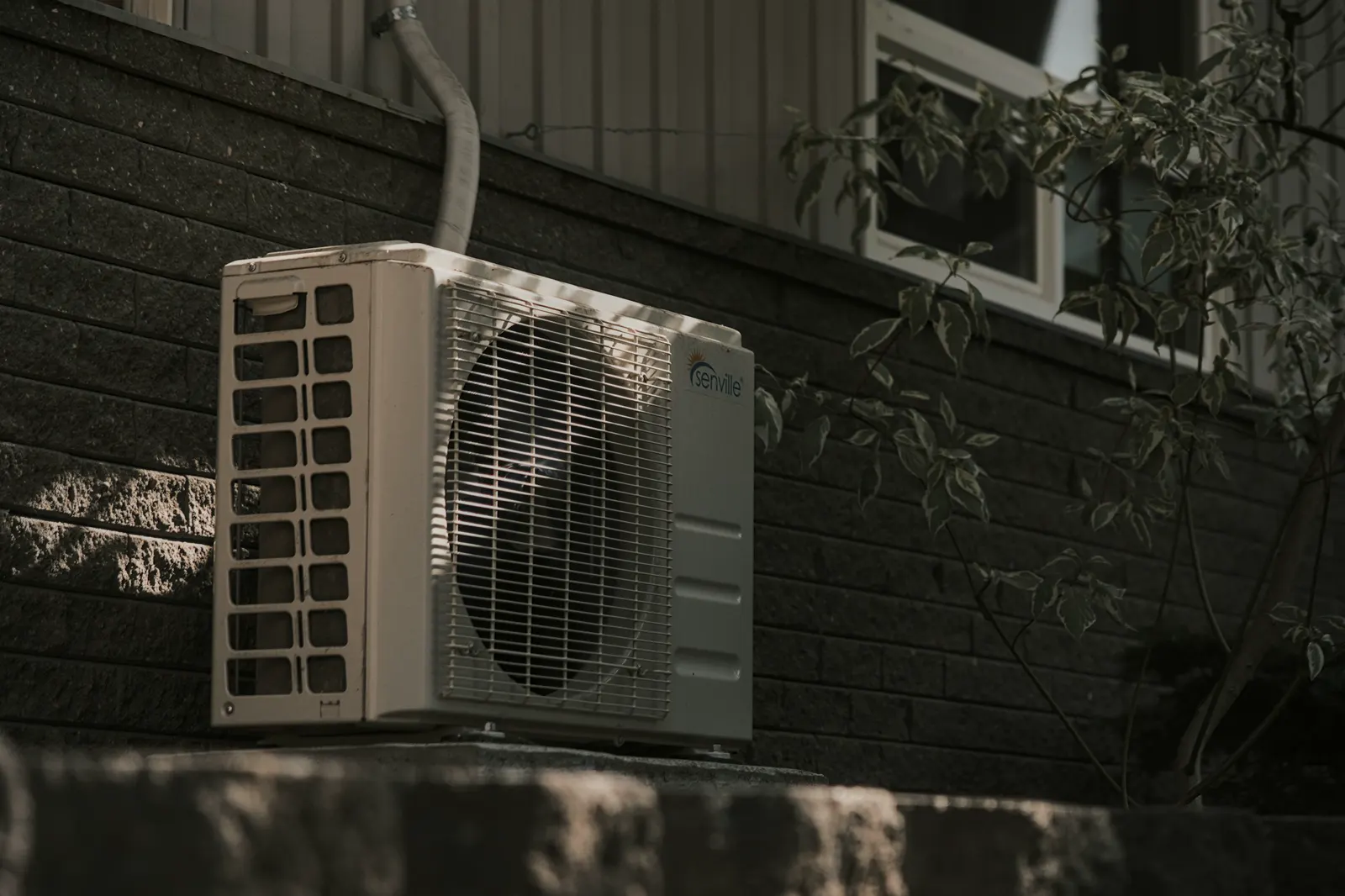
Refrigerant is the fluid that carries heat out of your house. It is not fuel and it is not used up; if a system is low, it leaked. Which refrigerant your system uses matters because the rules around them have changed twice in fifteen years, and the answer decides whether a leak on your system is a repair or the start of a replacement conversation. Here is where things stand for homeowners in Pasadena, CA and the surrounding Valley.
What refrigerant does
Inside the sealed loop of your air conditioner or heat pump, the refrigerant boils in the indoor coil, absorbing heat from house air, and condenses in the outdoor coil, giving that heat up to the yard. The compressor keeps it moving. The chemistry is chosen so that it boils and condenses at the right temperatures and pressures for the job. Changing the refrigerant means changing the pressures, the oil, and often the parts, which is why systems are built for one refrigerant and cannot simply be filled with another.
R-22: the old one
R-22 was the standard residential refrigerant for decades. It depletes the ozone layer, and it was phased out under the Montreal Protocol on a schedule the EPA implemented in the United States. The dates that matter:
- 2010. No new equipment could be built or imported using R-22. Systems installed before then kept running on it.
- 2020. No more production or import of R-22 at all. The only R-22 available for servicing since then is refrigerant recovered from other systems and reclaimed.
If your system went in before 2010, it is very likely R-22 — after that date new systems could no longer be built with it. They can still be serviced, but production of new R-22 ended in 2020 and only reclaimed supply remains, so it is scarce and priced accordingly, and a leak that needs a substantial recharge often costs a large share of what a new system would. That is the honest math behind most R-22 replacement recommendations, and it is why we quote both options in writing so you can decide. See AC replacement.
R-410A: the one most homes have now
R-410A replaced R-22 and does not deplete ozone. Most systems installed from roughly 2010 through 2024 use it. It runs at higher pressures than R-22, so the two are not interchangeable and an R-22 system cannot be "converted" by refilling it.
R-410A has a high global warming potential, and that is what the newest rule targets.
The 2025 change
Under the AIM Act, the EPA restricted the refrigerants allowed in new residential air conditioners and heat pumps. From January 1, 2025, new systems have to use a refrigerant with a global warming potential under 700, which rules out R-410A. There is an exception for systems whose components were all manufactured before that date, so equipment built in 2024 could still be installed after the deadline. The replacements manufacturers have moved to are lower-GWP refrigerants, and they carry a mildly flammable safety classification, which changes some installation practices and parts. Check the data plate on any new equipment you are quoted so you know which it is.
What the rule does not do, as far as the EPA's published guidance goes, is take R-410A away from existing systems. The restriction is on new equipment. Systems already installed continue to be serviced and recharged. If a contractor tells you your five-year-old R-410A system has to be replaced because of the rule, that is not what the rule says.
The rules that apply to every refrigerant
- No venting. Federal law prohibits knowingly releasing refrigerant during service, repair, or disposal. It gets recovered into a cylinder.
- Certified technicians only. Anyone who connects gauges to a system or adds or removes refrigerant has to hold EPA Section 608 certification.
- Fix the leak first. Recharging a leaking system without repairing it is not a real repair, and on R-22 it is an expensive way to lose refrigerant twice.
How to tell which refrigerant you have
Look at the data plate on the outdoor unit. It is a metal or foil label on the side of the cabinet, and it lists the refrigerant type along with the model and serial number. It will say R-22 (sometimes HCFC-22), R-410A, or one of the newer designations. The serial number usually encodes the manufacture year, which is the other half of the answer. If the label is sun-bleached beyond reading, which happens on a west-facing side yard, a tech can tell from the pressures and the fittings.
What you can check yourself
- The refrigerant type and manufacture year from the data plate on the outdoor unit.
- Whether cooling has faded gradually, which points at a slow leak.
- Ice on the copper line at the outdoor unit, or oily residue on the fittings.
Do not buy a recharge kit, and do not open any valve on the system. Handling refrigerant without certification is unsafe and illegal, and a kit cannot find a leak.
When to call a licensed tech
Call at the first sign of a leak: fading cooling, ice, hissing, oily fittings. Turn the system off while you wait; a compressor running on low charge damages itself. The AC repair visit measures the charge, searches for the leak, and gives you the repair price in writing. If the system is on R-22, we tell you what the recharge would cost against what a replacement would, and let you choose. An annual HVAC maintenance visit catches low charge before it becomes a frozen coil in July.
Common questions
Can my R-22 system be converted to R-410A?
Not by changing the refrigerant. R-410A runs at much higher pressures and the compressor, coils, and line set are built for one or the other. The conversion is a new system.
Do I have to replace my R-410A system because of the 2025 rule?
No. The rule restricts new equipment. Existing systems continue to be serviced. Replace it when it is old, unreliable, or leaking beyond a sensible repair, not because of the date.
Are the new refrigerants dangerous?
They carry a mildly flammable classification, which is why installation practices and some parts changed. In normal use inside a properly installed system, they are handled like any other refrigerant: by a certified technician, never vented, never touched by the homeowner.
If your system is low on refrigerant or you want a straight answer on repairing versus replacing an older unit, book a $69 diagnostic. We tell you the fee before booking and credit it toward the work. Call the Boost Services team at 818-277-5056 or send us a message.
Written with AI assistance by Boost Services, Heating and Cooling team, and reviewed by our licensed technicians before publishing. Boost Services Heating and Cooling, C-20 #1119892.