Schedule service
Fill in the form or call. We are on the phones 6am–10pm.
818-277-5056Licensed #1119892 · Veteran-owned · Pasadena & Reseda
A furnace that will not heat usually fails in one of a few ways: it clicks and never lights, it lights and shuts off after a minute, or the blower never starts. Each pattern points at a different part, and most of them are small.
A technician checks the safety side first, then works through ignition, flame sensing, airflow and controls until the cause is found. You get the price in writing before anything is replaced.
Furnaces here sit idle from roughly spring to late fall, so the first cold night is when a weak ignitor, a dirty flame sensor or a tired blower capacitor finally shows itself. That timing is why a fall check is cheap and a December breakdown is not.
Why people call us for furnace repair
- No heat or intermittent heat
- Pilot or ignition problems
- Burning smell or unusual noise
- Short-cycling
- Carbon monoxide alarm
$69 diagnostic, credited toward the work
- Combustion and safety inspection
- Ignition and burner service
- Heat exchanger check
- Filter and airflow check
- Written repair options
How a furnace repair visit goes
An owner answers the phone, 6am to 10pm, seven days, and we usually get to you within a few hours to a day. Tell us what the system is doing and where it is. If it is not safe to run, we say so before anyone drives out.
The heat exchanger, the vent and the gas connections get checked before the fault-finding starts. Then the technician works through the ignitor, the flame sensor, the limit switches, the blower and its capacitor and the control board in the order they fire. Most of the parts that fail are small; the work is finding which one.
Before any work starts you see a written price. Go ahead and the $69 diagnostic is credited toward it. Our labor carries a one-year warranty on top of the manufacturer's. The furnace runs a full heating cycle before we leave.





We repair, maintain and install these brands. Logos identify the equipment we work on and do not imply endorsement by the manufacturer.
Before you call
Clicks, fan runs, no heat: the ignitor
Most furnaces of the last few decades use a hot surface ignitor, a thin ceramic blade that has to glow bright orange every single cycle. It eventually cracks. Stand next to the furnace for one minute and you can usually tell it from its neighbors. Read more
Hums for half a minute, then silence
That pattern points at the blower capacitor, the part that gives the motor its starting shove. It fails on a predictable schedule and sits on terminals that stay dangerous after the power is off, so it is not one to open up yourself. Read more
Short cycling starts at the filter
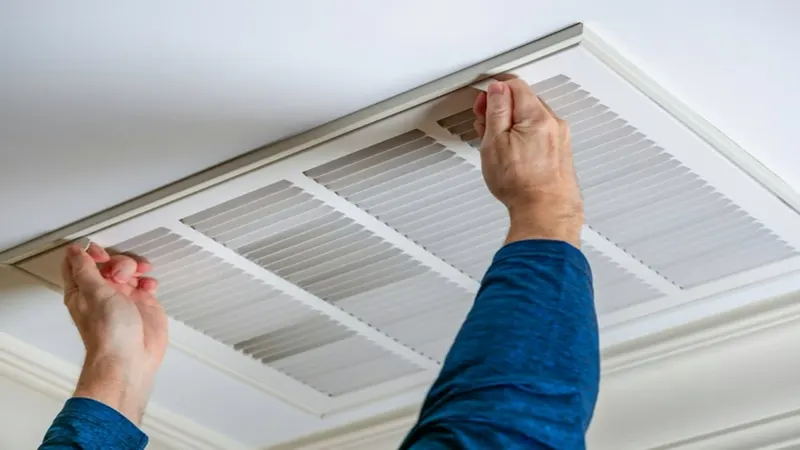
A furnace that runs a minute or two and stops is usually overheating, and the limit switch is protecting it. Not enough air across the heat exchanger is the common cause, and a clogged filter is the common reason for that. Read more
The first-run smell has a time limit
Dust burning off the heat exchanger smells like a hot iron and fades within a few hours. An electrical or plastic smell does not fade and means shut it off. A gas smell means leave the house and call the gas company from outside. Read more
A dead board is not always a dead furnace
Inducer motors and control boards come to our own bench, where a burned section or a cracked joint can often be rebuilt instead of replaced. Read more
Often booked with a furnace repair
Common questions
The ignitor is the first suspect and usually the right one. It is a small ceramic part that has to glow hot every cycle, and it eventually cracks. A dirty flame sensor causes a similar pattern: the burners light, then drop out after a few seconds. Read more
That is short cycling. Most of the time the furnace is overheating and its limit switch is protecting it, because not enough air is moving across the heat exchanger. Start with the filter. If a clean filter does not fix it, have it checked. Read more
That pattern points at the blower capacitor, the part that gives the motor the push it needs to start. It is a common failure. It also sits on terminals that stay dangerous after the power is off, so it is not one to open up yourself. Read more
Repair it when it is reasonably young and the fault is a single small part. Replace it when the heat exchanger is cracked, when repairs are stacking up, or when parts for it are getting scarce. In between, we price both in writing. Read more
$69, told to you before you book. It covers the visit and a written quote, and it is credited toward the work if you go ahead.
Usually within a few hours to a day. We are open 6am to 10pm, seven days.
It is the largest single component in the furnace, and replacing one is often not worth doing on an older unit. It is also the safety part: it keeps combustion gases out of the air the blower sends into the rooms. When one is cracked we price the replacement furnace in writing and explain why. Read more
Furnace & Heater Repair near you: Pasadena · Glendale · Alhambra · Arcadia · Temple City · Altadena