
A furnace that starts, runs for a minute or two, shuts off, and starts again a few minutes later is short cycling. Most of the time the furnace is overheating and its limit switch is protecting it, and the reason it is overheating is that not enough air is moving across the heat exchanger. Start with the filter. The list below runs from the things that cost almost nothing to the things that mean a serious conversation, in the order a tech would actually check them.
What short cycling looks like, and what is normal
A furnace sized right for a house in Pasadena, CA runs in cycles of roughly ten to fifteen minutes on a cold morning, then rests. Our winters are mild, so on a 55°F afternoon it may only run a few times an hour, and that is fine.
Short cycling is different. The burners light, the blower comes on, warm air arrives, and then everything quits before the room is anywhere near the set temperature. Two or three minutes on, a few minutes off, over and over. The house never quite gets warm, and the furnace wears out faster because starting is the hardest thing it does.
The cheap causes
- Dirty filter. The single most common reason. A clogged filter starves the blower, the heat exchanger gets too hot, and the high-limit switch shuts the burners off. The blower keeps running to cool things down, the limit resets, and it all starts again. Attic furnaces in San Fernando Valley ranch homes sit in 130°F heat all summer collecting dust before anyone turns the heat on in November. Check the filter first, every time.
- Closed or blocked registers. Furniture over a floor register, a closed vent in a spare room, or a return grille behind a couch all reduce airflow the same way a dirty filter does.
- Thermostat placement or settings. A thermostat in direct sun, next to a supply register, or above a lamp reads warm before the house is warm and shuts the furnace off early. Some older thermostats also have a cycle rate setting that can be set too aggressive. Low batteries in a digital thermostat can make it drop the call randomly.
The middle causes
- Dirty flame sensor. A thin metal rod in the burner flame tells the control board the burners lit. When it gets coated with residue, the board thinks the flame is out and shuts the gas off within seconds of lighting. This produces a very fast cycle: burners light, burners die, retry, and after a few tries the furnace locks out. Cleaning it is a short job.
- Pressure switch and vent problems. Before the burners light, a small switch has to confirm the inducer fan is pulling a draft through the vent. A blocked flue, a bird in the vent cap, a cracked hose, or on high-efficiency furnaces a plugged condensate drain will make that switch open mid-cycle.
- Failing limit switch. The limit itself can get tired and trip at a lower temperature than it should. It gets tested, not guessed at.
- Blower problems. A weak capacitor, a dirty blower wheel, or a motor on its way out moves less air. Same overheating result as a dirty filter, but the filter looks fine.
- Undersized or leaky return duct. A lot of 1950s and 60s SGV and SFV homes have a single return that was never big enough. Add a denser filter and a furnace that has been starving for years without anyone noticing finally starts tripping its limit.
The expensive causes
- Oversized furnace. This is more common here than people expect. Our winters are mild, and a furnace picked by rule of thumb rather than a load calculation is often far bigger than the house needs. It heats the space near the thermostat quickly, satisfies it, and shuts off, while the far rooms never catch up. The furnace has been short cycling since the day it was installed. No repair fixes this; only correct sizing at replacement does.
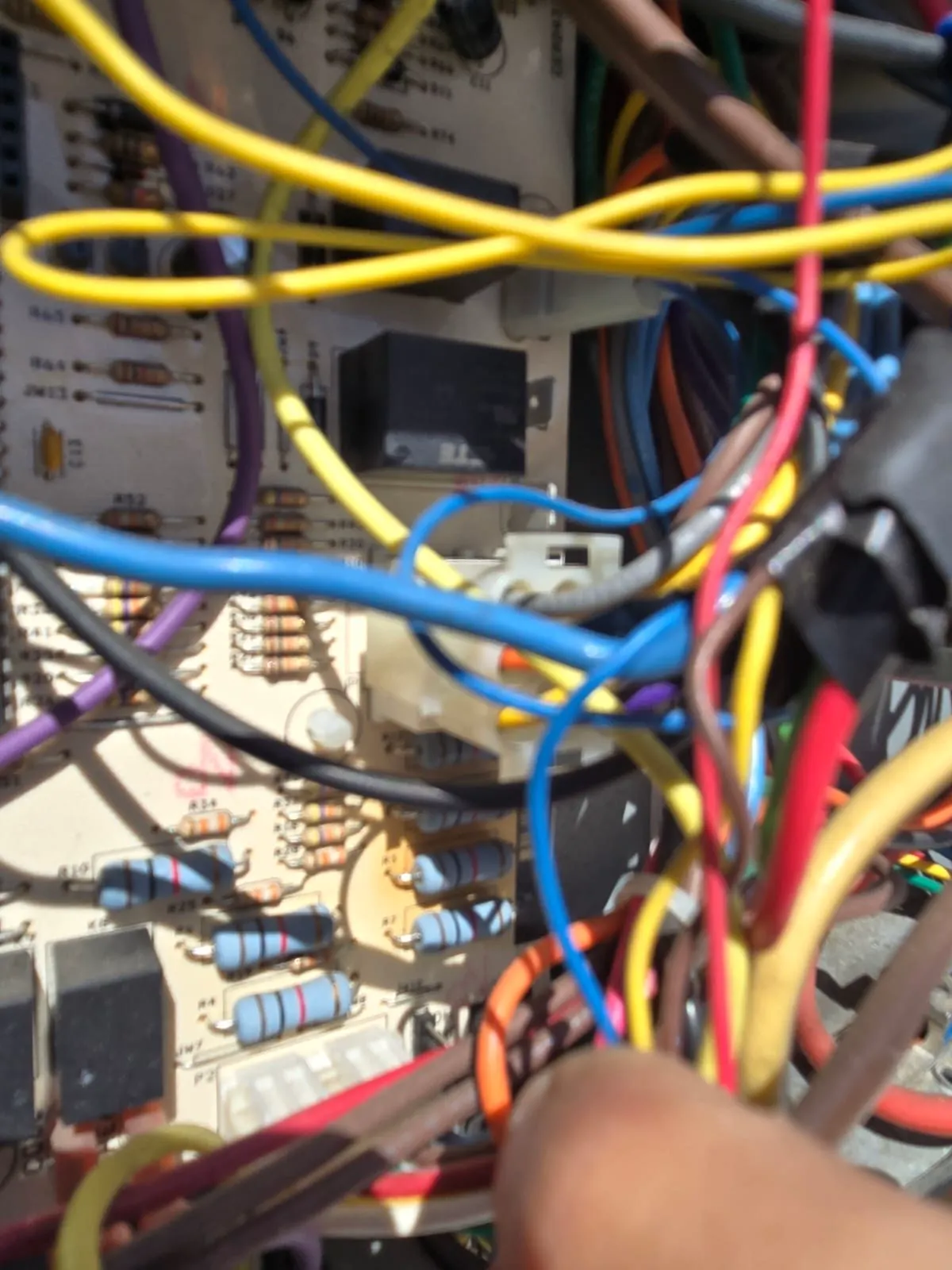
- Control board. A board with a failing relay or a cracked solder joint can drop the call for heat at random. It is diagnosed by ruling everything else out.
- Cracked heat exchanger. A crack can let the blower's air pressure disturb the burner flame once the fan starts, which can trip a rollout or flame sensor and shut things down. This is a safety issue and a replacement conversation. It is also the least common cause on this list, so do not assume it before the simple things are ruled out.
What you can check yourself
- Pull the filter and hold it up to a light. If you cannot see light through it, replace it. Note the size and the direction arrow.
- Walk every room and open every supply register. Move furniture off floor vents and away from return grilles.
- Look at where the thermostat is. If sun hits it in the afternoon or a supply register blows on it, that is your answer for afternoon short cycling.
- Replace thermostat batteries if it has them.
- Go outside and look at the vent termination on the roof or wall for a nest or debris. Look only, from the ground.
- Note the pattern. Does it happen right after lighting (flame sensor), after a few minutes of running (airflow or limit), or randomly (thermostat or board)? That detail saves diagnostic time.
Do not remove the burner cover, touch the gas valve, or bypass the limit or rollout switches. Those switches exist for a reason.
When to call a licensed tech
- The filter is clean, the registers are open, and it still short cycles.
- The burners light and go out within a few seconds, especially if the furnace then locks out.
- You hear the inducer fan run but the burners never light, or light and quit as the blower starts.
- The furnace is older and has never had its heat exchanger inspected. A furnace repair visit includes that.
- The furnace short cycles from day one, or since a new filter cabinet or new ductwork went in. That points at sizing or airflow, and it takes measurements to sort out. Regular furnace maintenance catches the flame sensor and airflow issues before they become a no-heat call on the first cold night.
Common questions
Is a short cycling furnace dangerous?
Usually it is the furnace protecting itself, which is the safety system working. It becomes a concern when the cause is a vent blockage or a heat exchanger problem, because those involve combustion gases. If your CO alarm has sounded, or you smell exhaust, stop using the furnace until it is checked. Have working CO alarms regardless.
Can the thermostat cause short cycling?
Yes. Location, low batteries, a cycle rate setting, and loose wiring all can. A thermostat replacement or relocation is a small job compared to most of the other causes, and it is worth ruling out early.
Will a bigger furnace fix it?
Almost never, and it is often the cause. A furnace that is too large for the house short cycles by design. If replacement is on the table, ask for a load calculation, not a swap for the same size.
Our diagnostic visit is $69, quoted before booking and credited toward the work. Call Boost Services Heating and Cooling at 818-277-5056 or contact us here.
Written with AI assistance by Boost Services, Heating and Cooling team, and reviewed by our licensed technicians before publishing. Boost Services Heating and Cooling, C-20 #1119892.