
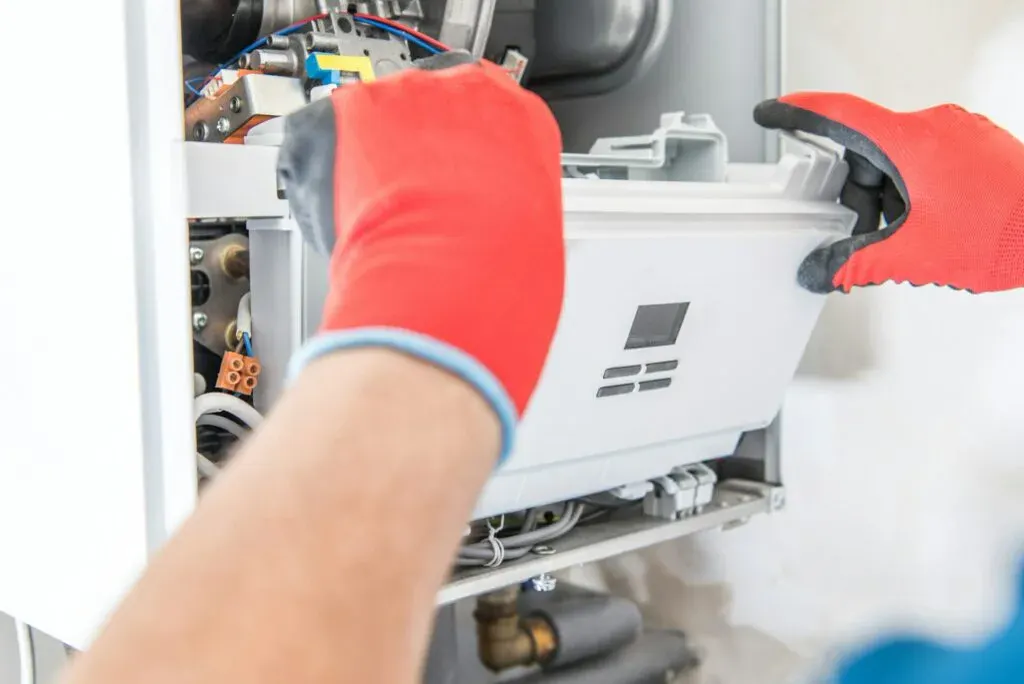
Most no-heat calls on the first cold night come down to a handful of things: the thermostat, a switch or breaker, a packed filter, or a furnace that has locked itself out for a reason you can often see. Here is what you can safely try before you call, what each symptom points to, and where to stop.
Know what you have
The fix depends on the equipment. Around Pasadena, CA, Altadena and South Pasadena, the 1900s to 1930s bungalows often have a wall furnace or a floor furnace with no ducts, and the older ones still run a standing pilot. The post-war ranch homes across the San Gabriel Valley and the San Fernando Valley usually have a gas furnace in a closet, garage or attic feeding ducts. A growing number of homes heat with a heat pump, which is the air conditioner running in reverse. Electric furnaces are rare here but they exist.
If you are not sure, look at the unit. A gas furnace has a gas line and a flue. A heat pump has no flue and the outdoor unit runs in winter.
What you can check yourself
Work down the list in order. Nothing here involves opening a sealed compartment or touching a gas valve.
- The thermostat. Heat, not Cool or Off. Setpoint a few degrees above the room. Fresh batteries if the screen is dim or blank. If it is a programmable model, check that a schedule has not dropped the setpoint. Then wait. Furnaces run a startup sequence and heat pumps have a delay; give it five minutes before you decide.
- The furnace switch and the breaker. There is a switch on or next to the furnace that looks like an ordinary light switch. Painters and people storing boxes in the closet flip it. Then check the breaker box for a tripped breaker and reset it once. If it trips again, stop.
- The blower door. Furnaces have a safety switch on the blower compartment door. If the door was left loose after a filter change, nothing runs. Seat and latch it. Do not remove it or tape the switch.
- The filter. A packed filter starves the burner compartment of airflow, the furnace overheats, and the high-limit switch shuts it down. It may restart a few minutes later and do it again. Change the filter.
- Vents and returns. Every supply register open, and nothing (rugs, a couch, a dog bed) over the return grille. Closing registers in unused rooms to "push heat" elsewhere raises the pressure in the ducts and makes leaks worse.
- One power cycle. Turn the furnace switch off, count thirty seconds, turn it on. That clears a lockout once. If the furnace locks out again, it is telling you something is wrong and a second reset will not fix it.
- The condensate drain on a high-efficiency furnace (white PVC vent pipe instead of a metal flue). A clogged drain trips a safety switch. Water near the furnace is the clue.
- The pilot on an old wall or floor furnace. If the flame is out, leave it out. Relighting means holding the gas control open by hand, and on a furnace that old the reason it went out matters more than getting it lit. If you smell gas at all, do not touch anything, leave the house and call the gas company from outside. A pilot that lights and then dies when you release the knob usually has a worn thermocouple, which is a tech job either way.
What each symptom points to
- Nothing happens at all. Thermostat, power switch, breaker or blower door.
- The furnace clicks and tries but no flame. A failed hot-surface ignitor, a pressure switch, or a gas valve that is not opening. The clicking is covered in more detail in why your thermostat clicks but no heat.
- The burners light, run a few seconds, and go out. A dirty flame sensor. The furnace cannot confirm the flame, so it shuts the gas. A tech cleans or replaces the sensor.
- It runs, but the house stays cold. Filter, leaking attic ducts, a closed damper, or a furnace that was never big enough for the house. If the air at the registers is cool, see cold air blowing from the heater vent.
- It shuts off unexpectedly and comes back. Overheating on the limit switch, almost always airflow: the filter, blocked returns, or a blower that is failing.
- It smells hot the first time it runs. Dust on the heat exchanger burning off. Normal for the first cycle of the season. A smell that persists, or smells electrical, is not.
Fixes that make things worse
Some advice that gets repeated online will cost you.
- Duct tape on ducts. It dries out and falls off within a season in a hot attic. Duct joints get sealed with mastic or UL 181 foil tape.
- Oiling the blower motor. Modern motors have sealed bearings. Oil goes where it should not.
- Pressing every reset button you find. The rollout switch on a gas furnace trips because flame came out of the burner compartment. It is a manual reset for a reason: a tech needs to find out why before it runs again.
- Bypassing the door switch or a safety to get heat tonight. That is how a cracked heat exchanger keeps running.
- Relighting a pilot repeatedly. If it will not hold, it will not hold. Each attempt puts a little unburnt gas in the room.
When to call a licensed tech
- You smell gas. Leave first, call the gas company from outside, then call us.
- The furnace locks out again after one reset.
- The breaker trips a second time.
- A burning smell that does not clear within the first cycle, or any electrical smell.
- A carbon monoxide alarm sounds, even briefly.
- Water pooling around the furnace.
- A wall or floor furnace with soot marks above the grille, a yellow lazy flame, or a pilot that keeps going out.
Gas furnace and wall furnace work is what our furnace repair and wall and floor furnace repair calls are for. If the system is a heat pump, the same first checks apply and the rest of the diagnosis is on the heating side.
Common questions
Why does my furnace smell when it first comes on?
Dust settles on the heat exchanger over the summer and burns off on the first cycle. It should clear in an hour with a window open. If it smells like hot plastic or wiring, or it comes back every cycle, turn the furnace off and call.
My wall furnace pilot keeps going out. Can I fix it?
Usually not. A pilot that lights and then dies when you let go of the knob has a worn thermocouple, and one that blows out on its own often has a draft or a dirty pilot orifice. Both are quick tech jobs. Do not keep relighting it.
How long should I wait after changing the thermostat?
Five minutes is fair. Gas furnaces run a sequence (inducer, pressure switch, ignitor, gas, then the blower a minute later). Heat pumps and some thermostats add their own compressor delay. If nothing has happened after five minutes, move to the power checks.
Our diagnostic is $69, quoted before we book and credited toward the work. Call the Boost Services team at 818-277-5056, 6am to 10pm, seven days a week, or book online.
Written with AI assistance by Boost Services, Heating and Cooling team, and reviewed by our licensed technicians before publishing. Boost Services Heating and Cooling, C-20 #1119892.