That click means the thermostat did its job. It closed the circuit and called for heat. When nothing follows, the fault is downstream of the thermostat: power to the furnace, airflow, or the ignition sequence. Work the checks below in order, because the early ones are free and the late ones are not.
The short version
- A thermostat that clicks but produces no heat is sending the signal. The furnace is not acting on it.
- The usual causes are thermostat settings, weak batteries, a tripped breaker or a flipped furnace switch, or a filter clogged enough that the furnace shuts itself down.
- Mechanical faults stop the heat too: a dirty flame sensor, a worn igniter, a failing control board.
- Settings, batteries, power and the filter are safe to check yourself, and they solve a fair share of these calls.
- Repeated lockouts, a gas smell, or anything inside the burner compartment is a licensed tech's job.
Start here: three quick checks at your thermostat
Before we blame the furnace, make sure the order is loud and clear. Confirm the thermostat is set to HEAT, not Cool or Off, and that the target temperature sits at least five degrees above the room temperature. That is you actually asking the system for heat.
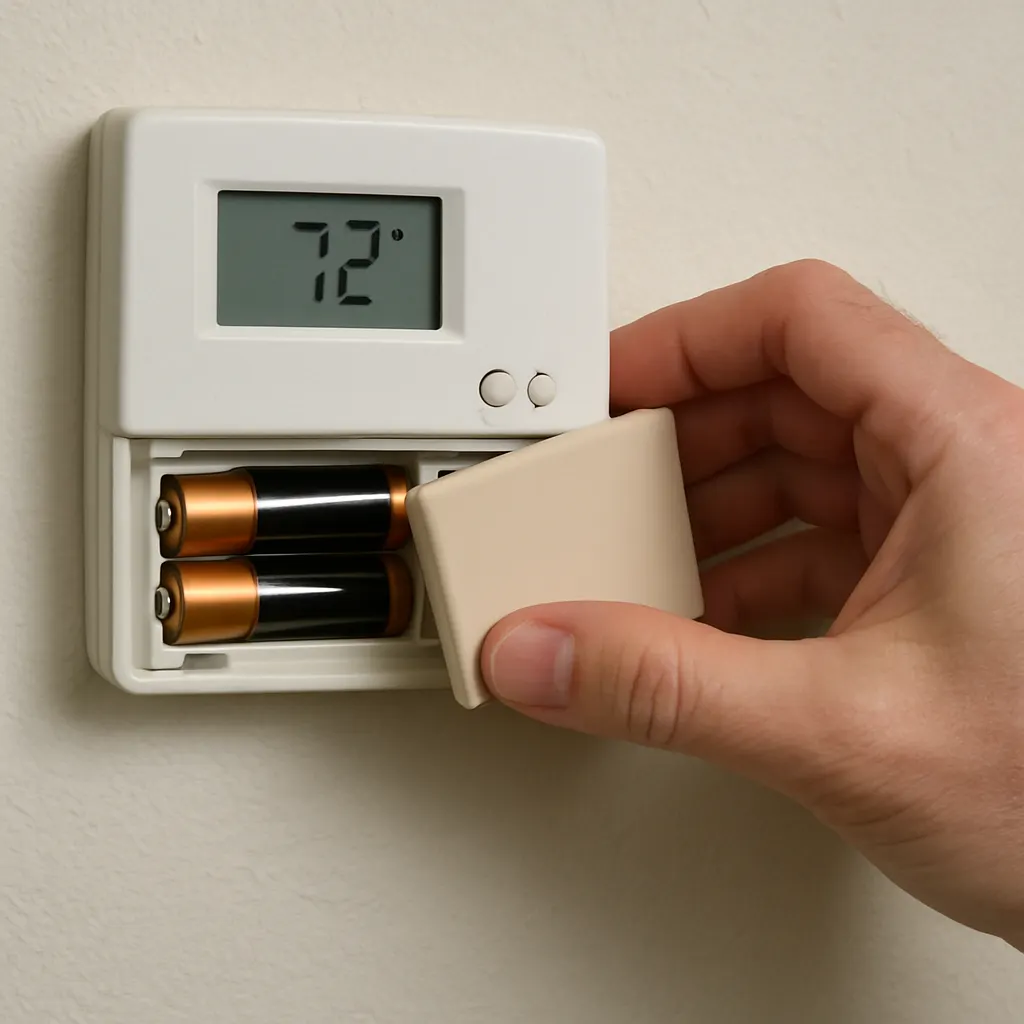
Most digital thermostats, smart ones included, run on batteries. A dim screen, a blank screen or a low-battery icon is your answer. Even a screen that looks normal can be running on batteries too weak to hold the call. Slide the thermostat body off its wall plate, or open the cover, and swap the AA or AAA cells.
Think of a TV remote with dying batteries. The little light on the remote still flickers when you press a button, but the TV ignores it. Same thing here: the click says the thermostat is trying, and weak batteries mean the signal never lands at the furnace. If fresh batteries and the right settings do not fix it, move to the furnace's own power.
Is your furnace getting power? Two switches to check
Furnaces have a dedicated power switch, usually on or beside the unit, and it looks exactly like a light switch. It is there for service work, and it gets flipped off by accident all the time, most often by somebody reaching for a garage or closet light. Find it and confirm it is ON. This is the first place to look in any thermostat-versus-furnace question.
Next, the breaker box. Your furnace runs on its own circuit, protected by a breaker that trips when it sees a fault. Find the breaker marked "Furnace" or "HVAC." If it sits in the middle, or fully off, reset it once: push it firmly to OFF, then back to ON. If it trips a second time, stop and call. A breaker that keeps tripping is protecting something.
If a flipped switch was the whole problem, you will hear the furnace start within a minute. If it has power and still makes no heat, the system may be shutting itself down for a reason.
The overlooked culprit: how a clogged filter shuts down your heat
You cannot run a mile breathing through a straw, and your furnace cannot run without air moving across the heat exchanger. The filter catches dust; when it packs solid, it suffocates the system. This is one of the most common reasons a furnace will not stay lit, and it is the one homeowners skip.
A starved furnace overheats fast. Every furnace has a high-limit switch that shuts the whole thing down when the internal temperature climbs too high. That is a furnace lockout. The thermostat is still calling for heat, which is the click you hear, and the furnace is refusing to run because it has put itself in a safety timeout. Nothing is broken. The furnace is protecting itself.
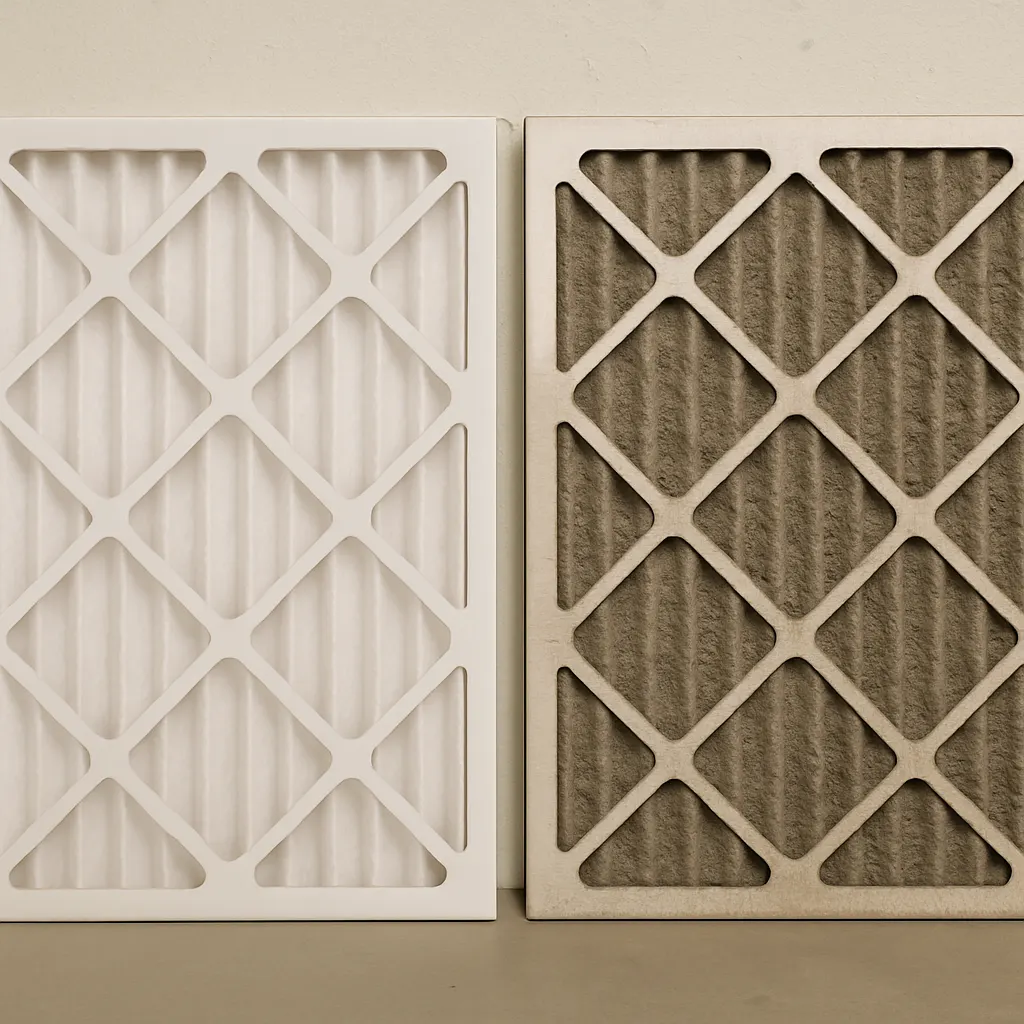
Find the filter access panel, usually a thin slot on the side or the bottom of the unit. Slide the filter out and hold it up to a light. If no light comes through, you have found your problem. Replacing it takes two minutes, often clears the lockout, and saves you a service call. As a rule of thumb, check it monthly during heavy use and change it when it looks loaded. The Department of Energy's Energy Saver home cooling guide makes the same point about the cooling side: a clogged filter restricts airflow through the unit and cuts its efficiency.
Furnace ignites then shuts off? Look at the flame sensor
The most maddening version of this problem is the one where you can hear it trying. You get the click, then a whoosh as the burners light, then the flame dies after a few seconds. The system may repeat that two or three times before it gives up. That pattern points at the flame sensor.
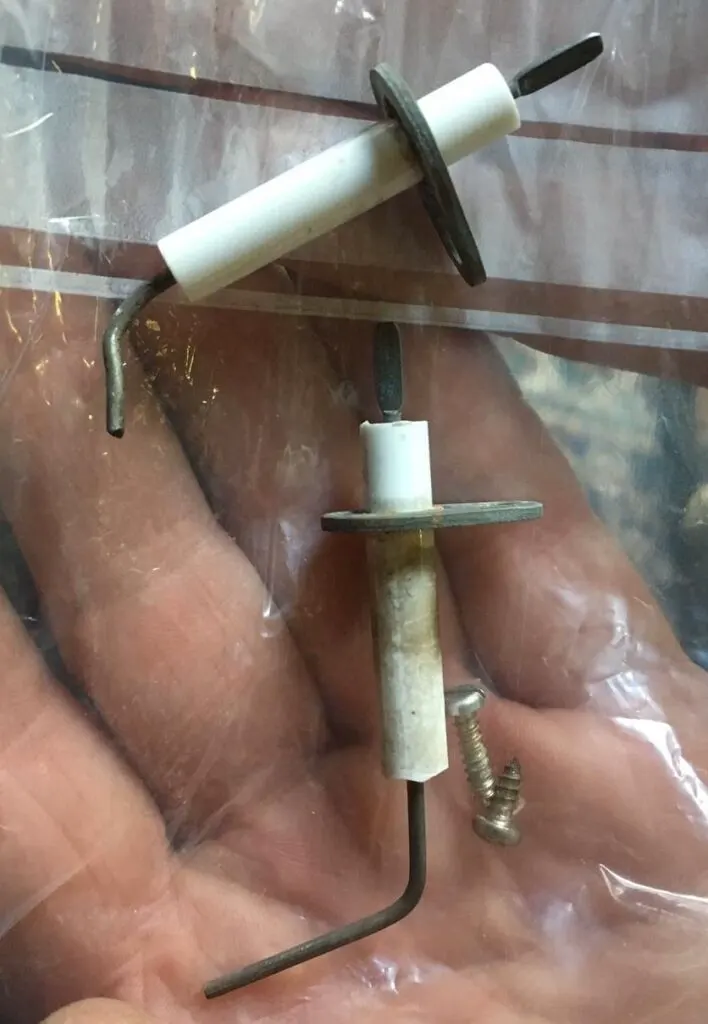
The flame sensor is a safety guard with one job: confirm that gas is actually burning. If it cannot detect a flame, it assumes gas is pouring into your house unburnt and tells the control board to close the gas valve. That is exactly what you want it to do.
Over time the thin metal rod gets coated in soot and oxide, which is a blindfold on the guard. It can no longer see the flame in front of it and shuts the system down. Cleaning a flame sensor is a tech's job, inside the burner compartment, but spotting the symptom is worth a lot. Telling us "it lights for a few seconds, then quits" usually gets the diagnosis done in minutes.
What the blinking light on your furnace is telling you
That blinking light is the most useful clue the furnace can hand you. The control board is the furnace's brain, and when it sees a fault it flashes a diagnostic code through a small LED.
You do not need to open anything to read it. Look for a small round window on one of the furnace doors. Through it you will see a green or red light blinking a pattern: three short flashes, then two long ones, for example. That pattern is the code, and the key is almost always printed on a sticker inside the furnace panel.
Knowing the code turns a vague complaint into information. Instead of "the heat is broken," you can say "the board is flashing a pressure switch fault." That saves the technician diagnostic time and makes it far more likely the right part is already on the truck. After several failed ignition attempts the board may stop trying altogether, the lockout again, and clearing that usually takes a tech.
Know when to stop: five signs to call a licensed tech
Solving this yourself is satisfying, and knowing where to stop is the important part. Your furnace gives clear signals when the problem has moved past a filter change. If you see, hear or smell any of these, stop and call.
- You smell gas, like rotten eggs.
- You hear banging, scraping or a high-pitched squeal.
- There is a pool of water around the furnace.
- The furnace tries to start over and over, then locks out.
- You have done every check above and still have no heat.
The gas smell is the one that cannot wait. If you suspect a leak, do not touch light switches or anything else electrical. Get everyone out of the house, and from outside call your gas company or 911. The other four point at mechanical or safety faults, and a furnace repair visit is the safe answer to all of them.
When you call, tell us what you found: the blink code, whether the blower runs, whether the burners light and die, what the filter looked like. It shortens the visit. If the thermostat itself turns out to be the fault, or the wiring behind it, that falls under thermostats, and a yearly tune-up catches a dirty sensor before a cold night does.
Common questions
Why does my thermostat click but no heat comes on?
The click is the thermostat closing the circuit and asking for heat. When nothing follows, something downstream is blocking it: no power at the furnace, airflow restricted enough to trip a safety, or a fault in the ignition sequence.
Could a simple setting or thermostat battery be the issue?
Often, yes. A thermostat still in Cool, a setpoint below room temperature, or batteries too weak to hold the call will all produce a click and no heat. Check those before anything else.
Can a dirty air filter really stop the heat even if the thermostat clicks?
Yes. A packed filter starves the furnace of air, the high-limit switch sees the temperature climb, and the furnace shuts itself down. The thermostat keeps calling; the furnace keeps refusing.
Should I check the power supply if the thermostat clicks but the furnace does not respond?
Yes. Two things cut power more often than anything else: the service switch beside the furnace, which looks like a light switch and gets flipped by accident, and a tripped breaker. Reset a breaker once. If it trips again, leave it off.
Can component failures inside my furnace cause this?
Yes. A dirty flame sensor, a worn igniter, a failing blower motor or capacitor, or a control board fault will all stop heat while the call for heat is still there. Those are inside the burner and blower compartments, so they need a licensed tech.
When should I call a professional HVAC technician?
When settings, batteries, the filter and the breaker have all been checked and there is still no heat, or at any point you smell gas, see water pooling, hear grinding, or the furnace locks out repeatedly.
Our diagnostic is $69, quoted before we book and credited toward the work. Call Boost Services at 818-277-5056, 6am to 10pm, seven days, or send us a message.
Written with AI assistance by Boost Services, Heating and Cooling team, and reviewed by our licensed technicians before publishing. Boost Services Heating and Cooling, C-20 #1119892.