
The thermostat is lit up, it says Heat, and nothing is happening. About half the time this is something at the thermostat or at the furnace's own power switch, and you can sort it out in ten minutes. The other half is a real fault inside the furnace or heat pump, and the point of this checklist is to tell the two apart before you spend anything.
Go in order. Each step rules something out.
Step one: the thermostat itself
Most "no heat" calls in October start here, because the system has sat untouched since spring.
- Mode. Make sure it reads Heat, not Cool, Off, or Auto with a cooling setpoint. On some thermostats Auto will quietly pick cooling on a warm afternoon.
- Setpoint. Set it at least 5 degrees above the room temperature. A setpoint one degree above the room may never call.
- Hold and schedule. A programmed schedule can drop the target to 60 at the time you happen to be testing. Press Hold and set it manually.
- Batteries. A thermostat with weak batteries can light the screen and still fail to send a signal. Swap them even if the display looks fine.
- Fan setting. If Fan is set to On, the blower runs all the time and pushes room-temperature air whether or not the burner is lit. That feels like "no heat." Set it to Auto.
- Wait five minutes. Many thermostats and furnace boards have a built-in delay after any change. Nothing happening for three minutes is normal.
A smart thermostat with a blank or rebooting screen has lost its power feed. That is a thermostat wiring issue, not a furnace fault.
Step two: power to the furnace
Furnaces in San Gabriel Valley and San Fernando Valley homes are usually in a hallway closet, the garage, or the attic. Find yours.
- The furnace switch. There is a plain light switch on or next to the furnace. It gets flipped off by painters, by someone looking for the attic light, or by a kid. Turn it on.
- The blower door. The lower panel on the furnace presses a small safety switch. If the panel was pulled to change a filter and not seated fully, the furnace will not run. Push it in until it latches.
- The breaker. Find the breaker labeled Furnace, FAU, or Heat. If it is tripped, reset it once. If it trips again, stop. That is a fault, not a fluke, and resetting it repeatedly can damage something.
- Gas supply. If the burners on your gas stove light, the gas to the house is on. Do not touch the shutoff at the furnace itself.
Step three: airflow and the filter
A furnace that starts, runs a minute, and shuts down again is usually overheating, and the most common reason is a clogged filter. Pull it. If you cannot see light through it, replace it. A 1-inch filter in a house with attic ducts and a dog can plug up in six weeks during fire season.
Also make sure nothing is stacked against the return grille in the hallway. That alone can trip the limit switch.
Step four: what the furnace is actually doing
Stand next to it with the thermostat calling for heat and listen. What you hear narrows it down.
- Nothing at all. No click, no fan, no hum. Points to the thermostat wiring, the door switch, a blown low-voltage fuse on the control board, or the transformer.
- A click, then nothing. The board got the call and tried. Usually the inducer motor, a pressure switch, or the ignitor.
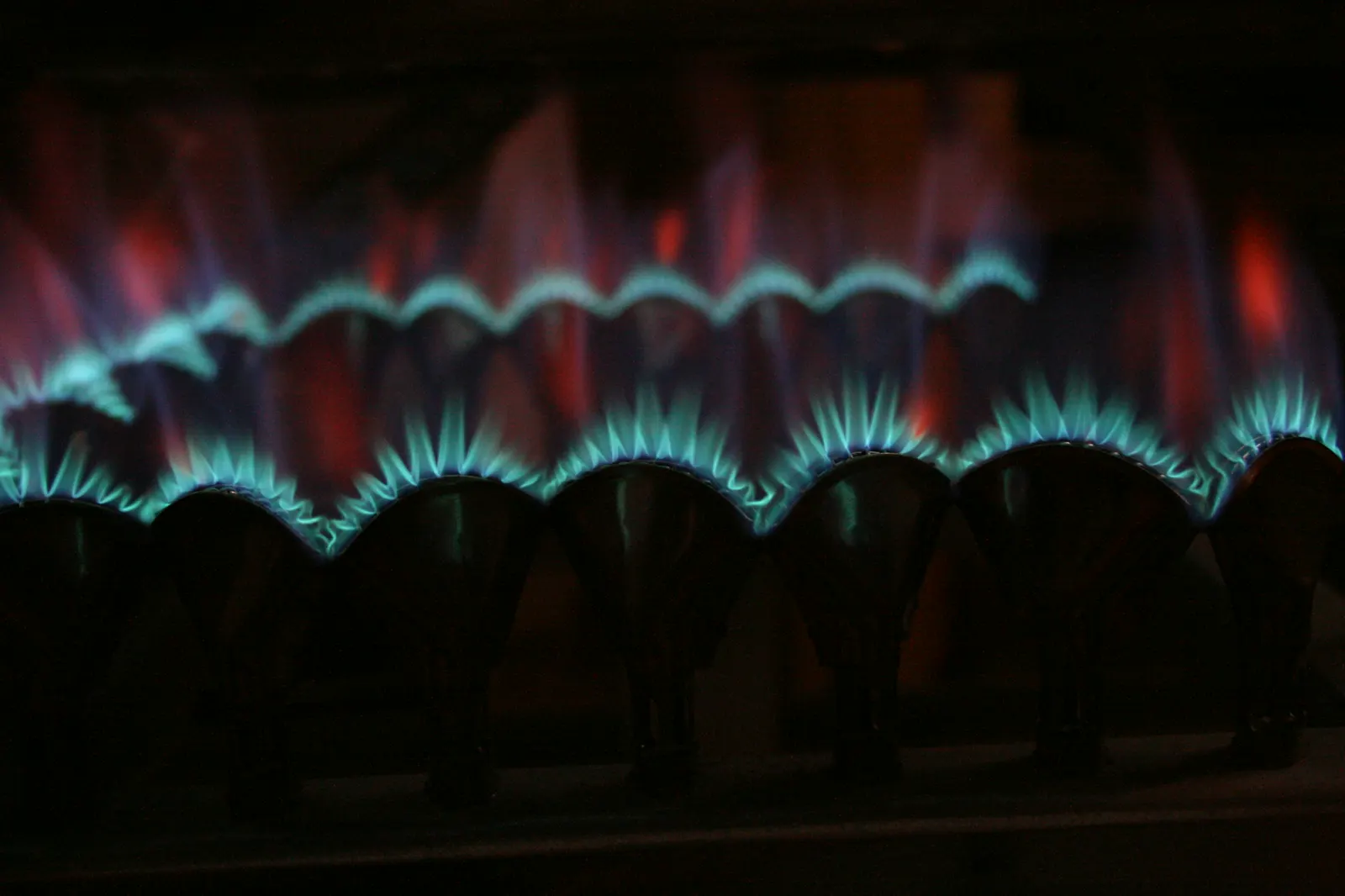
- Ignitor glows, no flame. Gas valve, or a dirty flame sensor causing an immediate shutdown. The flame sensor is a common one on furnaces that sat all summer.
- Flame lights, then dies in a few seconds. Flame sensor almost every time.
- Burners light and stay lit but the blower never starts. Blower motor, its capacitor, or the board. The furnace will overheat and shut itself off on the limit, then try again. That cycling is hard on the heat exchanger.
Many furnaces have a small LED behind a window in the lower panel that blinks a code. Count the blinks; the code is printed inside the door. Telling the tech "three short flashes" saves diagnosis time.
If you have a heat pump instead of a furnace
Many newer installs in Pasadena, CA and across the valleys are heat pumps. The checks above still apply, plus two things:
- On cold, damp mornings the outdoor unit will go through a defrost cycle. The indoor air goes lukewarm for a few minutes, and there may be steam off the unit outside. That is normal.
- If the outdoor unit is dead silent and the indoor fan is blowing cool air, the system may have switched to its electric backup heat, or the outdoor unit has a fault. Either way, it is a heat pump repair visit, not a thermostat problem.
What you can check yourself
Everything in steps one through three is safe for a homeowner:
- Thermostat mode, setpoint, hold, batteries, fan set to Auto
- The furnace power switch and the blower door
- Resetting a tripped breaker once
- Replacing the filter and clearing registers and returns
- Watching and listening to the furnace, and reading the blink code
Leave the covers alone beyond the filter door. Do not open the burner compartment. The flame sensor, the ignitor and the gas valve all sit in there, and cleaning or testing any of them is a licensed tech's job.
When to call a licensed tech
Call when you have gone through the list and the furnace still does nothing, or when it starts and shuts down again on its own. Repeated short cycling, a breaker that trips twice, a burning smell that does not clear within a few hours, an electrical or smoky smell, or any gas smell at all means stop testing and make the call. A furnace that has cracked its heat exchanger from years of overheating can put combustion gases into the house, and no amount of thermostat fiddling fixes that. Our furnace repair visits start with the diagnosis, so you know what it is before you decide anything.
Common questions
Why does the thermostat say Heat On but the vents blow cold?
Either the blower is running without the burner (fan set to On, or the burner failed to light), or the system is a heat pump in defrost. Set the fan to Auto and wait five minutes. If it keeps blowing cold with the burner silent, it is a furnace fault.
Can a bad thermostat cause no heat even though it lights up?
Yes. The display runs on batteries or a trickle of power, but the call for heat goes out on a separate wire. A loose W wire at the thermostat or at the furnace board, or a failed internal relay, gives you a lit screen and a cold house.
Is it the thermostat or the furnace?
A quick test: with the thermostat calling for heat, is there any sound from the furnace at all? A click or a fan means the call is reaching it and the problem is inside the furnace. Total silence means the call is not arriving, so the thermostat, its wiring, the door switch, or the board fuse is the place to look.
If you have worked through this and the house is still cold, we can come out. The diagnostic is $69, quoted before we book and credited toward the work if you go ahead. Call Boost Services Heating and Cooling at 818-277-5056, or send us the details and we will get back to you, usually within a few hours to a day.
Written with AI assistance by Boost Services, Heating and Cooling team, and reviewed by our licensed technicians before publishing. Boost Services Heating and Cooling, C-20 #1119892.