
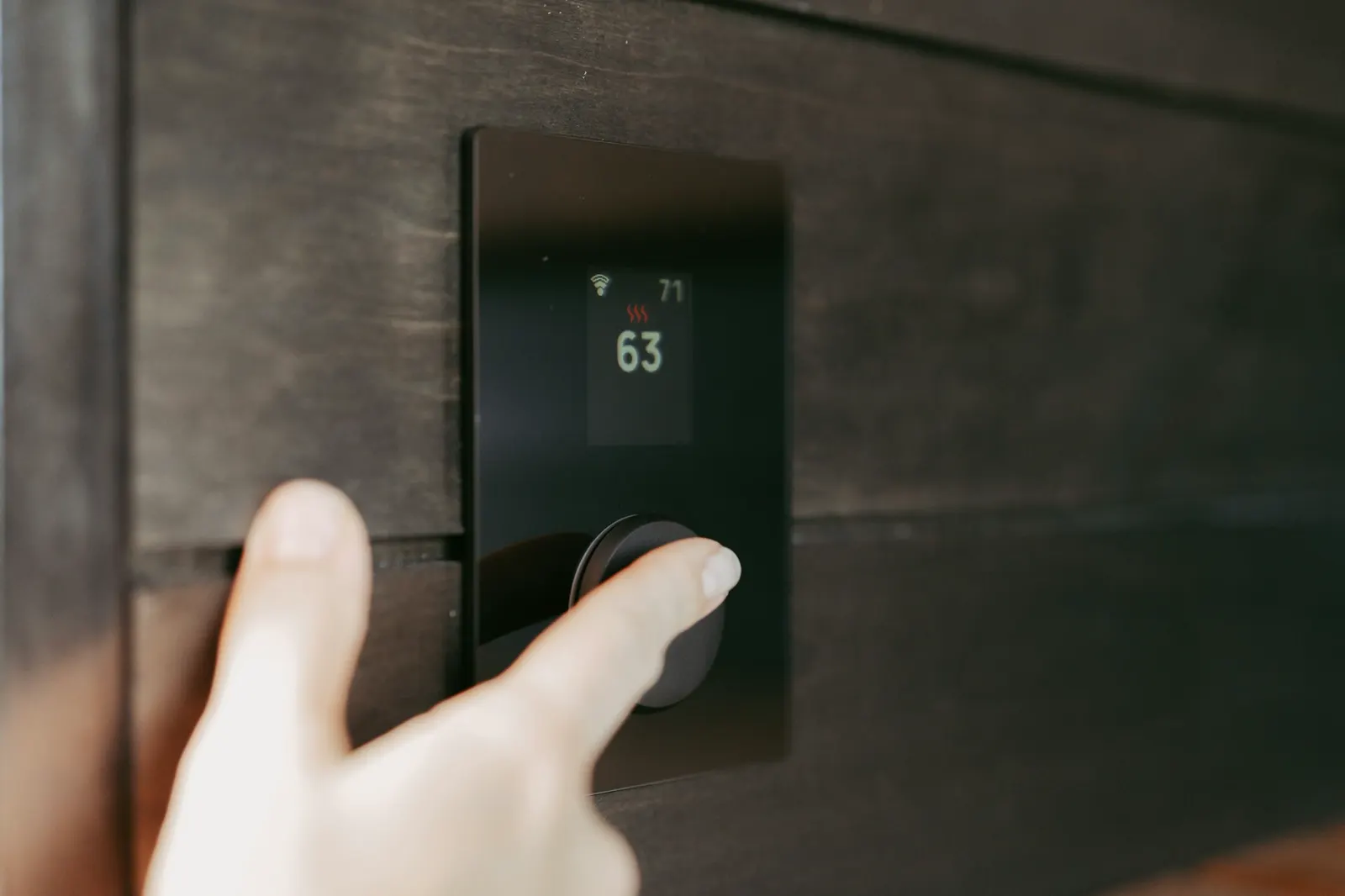
A heater blowing cold air is usually one of five things: the blower is running without the burners (a thermostat fan setting or a safety shutdown), the burners never lit (pilot, ignitor, or gas), the air is warm at the furnace but cold by the time it reaches you (duct leaks), the system is a heat pump doing something normal, or, on an electric furnace, an element or breaker is out. Most of the first group you can sort out yourself in ten minutes. Here is the order to check them in.
The fan is running, the burners are not
Thermostat fan set to "On"
If the fan switch on the thermostat says "On" instead of "Auto," the blower runs continuously, including the long stretches when the burners are off. Cold air moves through the house and it feels like the heater is failing. Set it to Auto. This is the single most common cause of the complaint, especially after someone changes batteries or a guest fiddles with the settings.
The high-limit switch shut the burners off
A furnace overheats when air cannot move through it fast enough. The limit switch cuts the burners and leaves the blower running to cool the heat exchanger, so you get cold air from the registers for a while, then maybe warm, then cold again. The cause is almost always airflow: a filter that has not been changed since spring, closed or blocked registers, or a return grille with a couch against it. Change the filter and open the registers. If it keeps cycling, the blower or the exchanger needs a look.
The burners never lit
Pilot light out (wall and floor furnaces)
The 1900s-to-1930s Craftsman bungalows and Spanish homes in Pasadena, CA, Altadena and South Pasadena often still heat with a wall furnace or a floor furnace, and most of those have a standing pilot. If the pilot went out, the burner cannot light. Relighting it by the instructions on the furnace's label is fine. If it goes out again within a day, the thermocouple is usually failing, or the pilot orifice is dirty, and that is a wall and floor furnace repair visit rather than a matchbook job. If you smell gas at any point, stop, leave, and call SoCalGas.
Ignitor or flame sensor (modern furnaces)
Central furnaces from the last few decades use a hot surface ignitor that glows to light the gas, and a flame sensor that proves the flame is there. A cracked ignitor never glows, so the furnace runs its fan, waits, and gives up. A dirty flame sensor lets the burners light, then shuts them off after a few seconds because it cannot see the flame. Either way the blower may run and push cool air. Both are routine furnace repair fixes; neither is something to work around by lighting the furnace by hand.
Gas supply
A gas valve that got turned off during other work, or a SoCalGas interruption, means no heat with everything else acting normal. Check that other gas appliances work. Do not do anything else with gas piping.
Warm at the furnace, cold at the register
Leaky or uninsulated attic ducts
In the 1950s-and-60s ranch homes of Reseda, Northridge and the newer parts of the San Gabriel Valley, the ducts run through the attic. On a January night that attic is cold. Warm air leaves the furnace, leaks out of the joints, and cold attic air gets pulled in on the return side. The registers farthest from the furnace go cool first. A duct system can lose a large share of the heat put into it this way; a Department of Energy guide for contractors puts duct heat losses at up to 30% or more where the ducts are leaky, poorly insulated, and running through an uninsulated attic. Sealing with mastic and insulating to the R-8 that California's 2025 Title 24 requires for new attic ducts fixes it. Tape does not last.
A disconnected duct
Rodents, a roofer's boot, or a duct that was never strapped up properly. One room goes cold and stays cold while the rest are fine.
If it is a heat pump
Two things are normal and one is not.
- Defrost. On a cold, damp morning the outdoor coil frosts over. The heat pump reverses briefly to melt it and blows cool air inside for a few minutes, sometimes with a puff of steam outdoors. Normal.
- Gentler air. Heat pump supply air is warm, not hot like a gas furnace. On a 45°F Pasadena night it feels lukewarm from the register and still heats the house. Normal.
- Cold air that stays cold. Low refrigerant, a stuck reversing valve, or an outdoor unit that stopped. That is a heat pump repair.
If it is an electric furnace
Electric furnaces heat with resistance elements that switch on in stages. A tripped breaker for one stage, a failed element, or a failed sequencer means the blower runs and only part of the heat comes on, or none. Reset the breaker once. If it trips again, or the air is still cool, leave it off and call. Element and sequencer work is behind the panel and stays with the tech.
What you can check yourself
- Thermostat: Heat mode, fan on Auto, setpoint above room temperature, fresh batteries.
- Filter: replace it if it is gray. Note the date on the frame.
- Registers and returns: open, and not covered by rugs or furniture. Floor furnace grilles especially.
- Furnace switch and breaker: switch on, breaker reset once.
- Pilot light on a wall or floor furnace: relight per the label once.
- Other gas appliances: working means the gas supply is fine.
- Listen at the furnace: does the fan start, do the burners light, does the flame stay lit.
Skip anything that involves removing the burner door, touching the ignitor, resetting a safety switch repeatedly, or lighting burners by hand.
When to call a licensed tech
- The burners light and die more than once.
- No glow, no flame, and the furnace keeps trying and giving up.
- The pilot on a wall or floor furnace will not stay lit after one relight.
- The limit keeps tripping with a clean filter and open registers.
- Cold rooms at the far end of the house every winter. That is a duct job, and it is the kind of thing a fall furnace check finds.
- Any gas smell, or a carbon monoxide alarm. Leave and call the utility first.
- A heat pump that stays cold beyond a few minutes of defrost.
Common questions
Why does the heater blow cold air for a minute before it warms up?
The blower starts after a short delay so it does not push cold air, but on a long duct run the first minute of air is whatever was sitting in the attic ducts. If it takes much longer than that, or never warms, look at the causes above.
Can a dirty filter make the heater blow cold air?
Yes. It is one of the most common causes. Restricted airflow overheats the furnace, the limit switch cuts the burners, and the blower runs on with cold air until the exchanger cools.
My heat pump blows cool air on cold mornings. Is it broken?
Probably not. Defrost cycles blow cool air for a few minutes, and heat pump air is never as hot as a gas furnace's. If the air stays cold for a long stretch and the house is losing temperature, call.
Our diagnostic visit is $69, told to you before booking and credited toward the work. Boost Services Heating and Cooling answers at 818-277-5056 or contact us here.
Written with AI assistance by Boost Services, Heating and Cooling team, and reviewed by our licensed technicians before publishing. Boost Services Heating and Cooling, C-20 #1119892.