
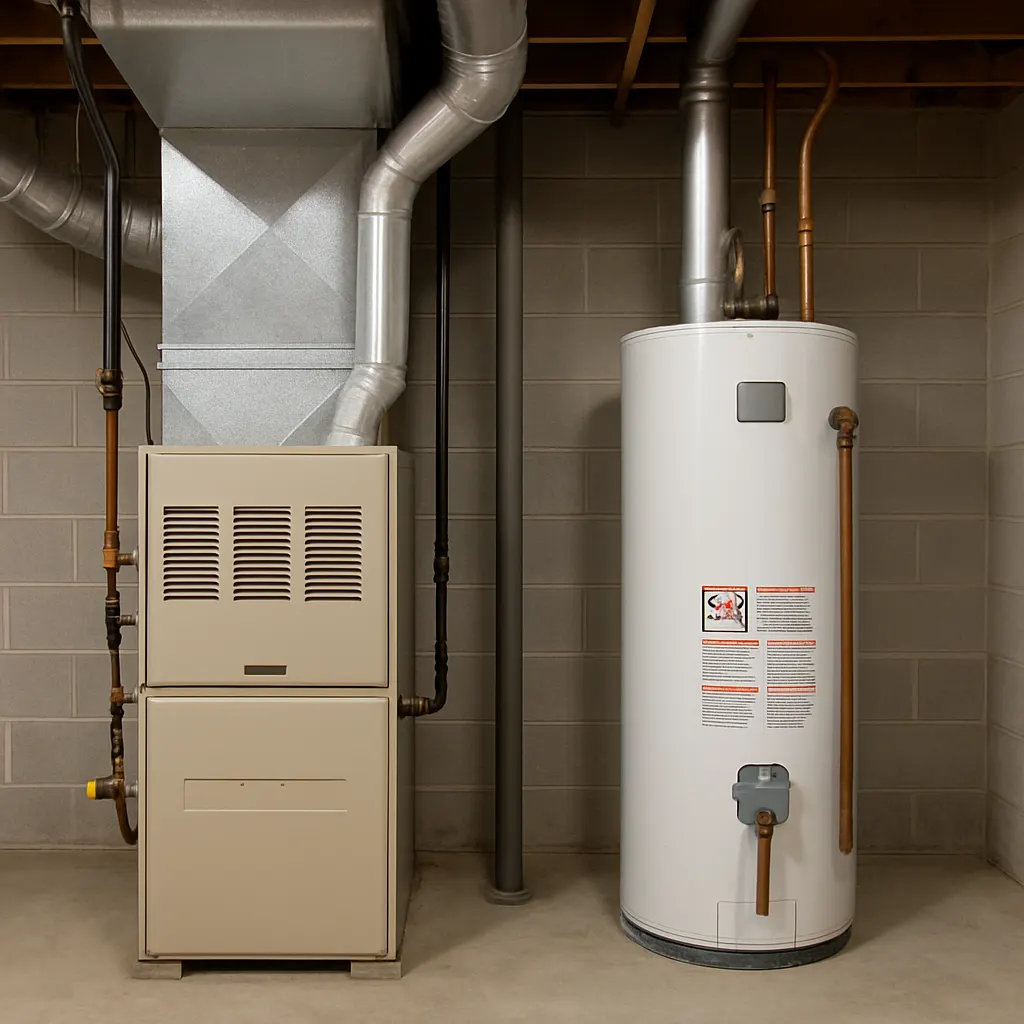
No. A water heater is not part of your HVAC system. HVAC stands for heating, ventilation, and air conditioning, and it covers the equipment that heats, cools, filters, and moves the air in your house. The water heater heats water for your taps and shower. It is plumbing, installed and serviced under a plumbing contractor's license, which is a different classification from ours. We are a C-20 HVAC contractor, and we do not install or repair water heaters. This post explains why the two get mixed up, what is actually inside "HVAC," and who to call for what.
Why people ask
The confusion is reasonable. In a lot of Pasadena, CA homes the furnace and the water heater stand next to each other in the same closet or garage. They are both gas appliances, both have a flue, both have a pilot or an igniter, and both have the word "heat" attached to them. When one of them stops working, it is not obvious which trade to call. And a few search results describe setups where a boiler heats both the house and the water, which muddies it further. Those exist, mostly in older homes in cold parts of the country, and they are rare here.
What is in your HVAC system
Everything that touches the air:
- The heating equipment. A gas furnace in the closet, garage, or attic. A heat pump. In older Pasadena, Altadena, and South Pasadena bungalows, a wall furnace or a floor furnace. Covered under heating.
- The cooling equipment. The outdoor condenser and the indoor evaporator coil, or a heat pump doing both jobs, or a ductless mini split.
- The air handler and blower. The cabinet that moves the air, often built into the furnace.
- The ducts. Supply and return, usually through the attic in the ranch homes across the Valley.
- The thermostat and controls.
- Filters and air quality equipment. The filter rack, a media cabinet, an air purifier if one is installed.
- Ventilation. Fresh-air intakes, exhaust fans tied to the system, and the balance of air in the house.
If it heats, cools, filters, or moves air, it is HVAC and it is ours.
What is not
- The water heater, tank or tankless. Plumbing.
- The gas line from the meter to the appliances. Plumbing, and the gas company on the utility side.
- The electrical panel and house wiring. An electrical contractor. We handle the wiring at the furnace and the thermostat, and nothing at the panel.
- The flue the water heater uses when it is separate from the furnace's. Plumbing.
Where the two touch
There are a few places where the furnace and the water heater interact, and it is worth knowing them so nobody blames the wrong appliance:
- A shared flue. Older homes often vent the furnace and the water heater up the same chimney. If the furnace is replaced with a high-efficiency model that vents through PVC, the water heater is left alone on the old flue, which may now be oversized for it. We will point this out on a furnace replacement. Resizing the water heater's vent is the plumber's job.
- Gas supply. Both draw from the same line. A pressure problem shows up in both.
- Combustion air. Both need air to burn. A closet that was sealed up tight during a remodel can starve both.
- The closet itself. When one appliance gets replaced, the other one's clearances and access should not get worse.
Heat pump water heaters
One product line uses the same principle as a heat pump: it pulls heat out of the surrounding air to warm the water instead of burning gas. Because of the name, people assume it is HVAC equipment. It is not. It is a water heater and it is installed by a plumber. The refrigeration circuit inside it is the same physics as your air conditioner, but the trade line runs by what the appliance does, not how it does it.
What you can check yourself
Before you call anyone, narrow it down:
- No heat from the vents, hot water fine. Furnace or thermostat. Check the thermostat is in Heat with a setpoint above room temperature, the furnace switch is on, and the filter is not choked. That is a furnace repair call if it does not respond.
- No hot water, house heats fine. Water heater. Plumber.
- Neither works. Check whether other gas appliances light, because it may be the gas supply. If you smell gas, leave the house and call the gas company from outside.
- Water on the floor near both. Look at which one is wet. A furnace's air conditioning coil produces water in summer and a clogged condensate drain leaks; a water heater leaks from the tank or its fittings.
When to call a licensed tech
Call us for anything that heats, cools, or moves air: a furnace that clicks and does not light, a wall furnace that smells, a system that short-cycles, a coil that is leaking condensate, ducts that need sealing, or an annual HVAC maintenance visit. For the water heater, call a plumbing contractor. If you are not sure which one you have a problem with, describe it on the phone and we will tell you honestly whether it is ours.
Common questions
Does an HVAC tune-up include the water heater?
No. The tune-up covers the furnace or heat pump, the air conditioner, the blower, the coils, the drain, and the thermostat. The water heater is not on the list because it is not ours to service.
My furnace and water heater share a vent. Who do I call?
For the furnace side, us. For the water heater side, a plumber. If you are replacing the furnace, ask about the vent before the work starts so the water heater's venting is handled by the right trade at the same time.
Should I replace the furnace and the water heater together?
They are separate appliances on separate schedules, installed by separate trades. Replace each when it is due. The one thing to coordinate is the shared flue, if you have one.
If the problem is on the air side of the house, book a $69 diagnostic. We tell you the fee before booking and credit it toward the work. Call Boost Services Heating and Cooling at 818-277-5056 or send us a message.
Written with AI assistance by Boost Services, Heating and Cooling team, and reviewed by our licensed technicians before publishing. Boost Services Heating and Cooling, C-20 #1119892.