

TL;DR Summary for Those in a Hurry:
- Water Heater is usually a separate appliance from your HVAC system and focuses on supplying hot water for everyday use.
- Most standard HVAC systems don’t include the water heater, but both systems contribute to overall home comfort and can be located near each other.
- In some integrated or hydronic heating setups, the water heater can work with HVAC components to provide space heating too.
- Knowing the difference helps you schedule proper service, avoid confusion about repairs, and make smarter decisions about efficiency and maintenance options.
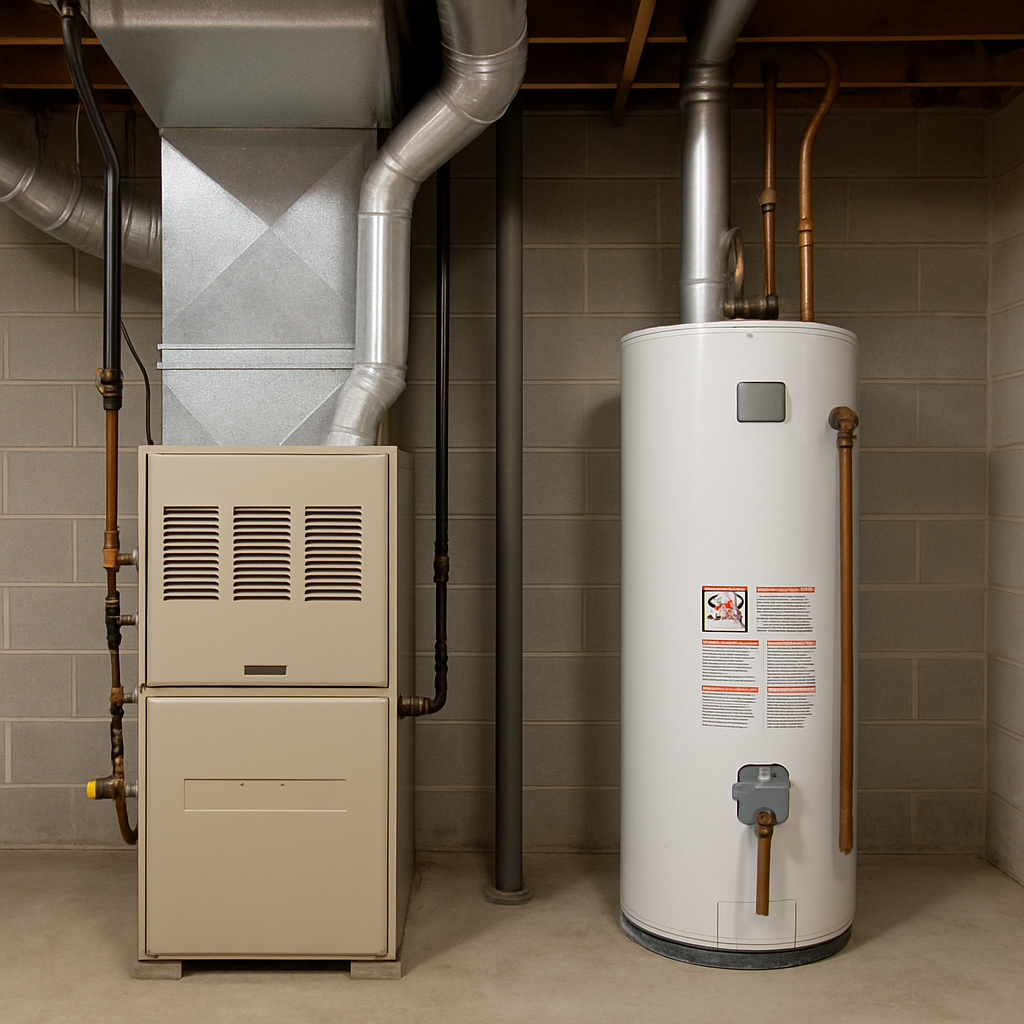
A huge chunk of your monthly utility bill comes from two separate workhorses: your heating system and your water heater. For most homes, they don’t work smart. Each one burns fuel on its own island, often wasting energy along the way. According to the U.S. Department of Energy, space heating and water heating combined can devour more than 60% of a typical home’s energy budget.
Table of Contents
The All-in-One Solution: How a Combi-Boiler Heats Your Home and Your Water
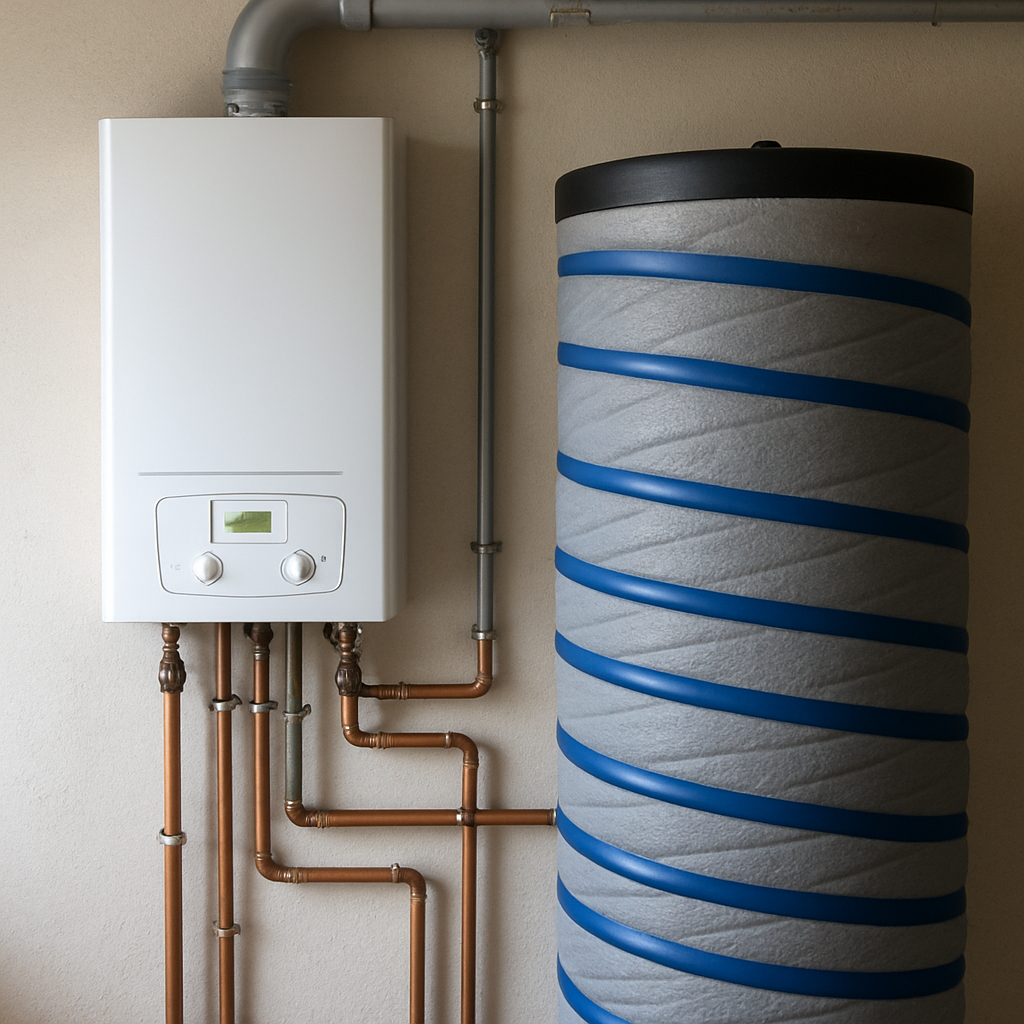
Instead of two large, separate appliances, imagine a single unit that handles both your home’s heat and your hot water. This is exactly what a combi-boiler system is: a high-efficiency boiler and a water heater combined into one compact box. When your thermostat calls for heat, it sends hot water to your radiators or vents just like a standard boiler.
The magic is in how a combination boiler works for your water. It gets rid of the bulky storage tank altogether. Rather than paying to keep 40 or 50 gallons of water hot 24/7, a combi-boiler heats water instantly on-demand. It only uses energy when you actually need hot water, which significantly cuts down on the standby energy loss that costs you money every day.
This two-in-one approach has a visible benefit: more space. By replacing both your furnace and tank water heater, a single, wall-mounted combi-boiler can free up an entire closet. Its efficiency and small footprint make it one of the best combination boiler options for home use, especially in houses with limited square footage.
The “Super-Thermos” Trick: Getting Endless Hot Water from Your Boiler
For homes that need more hot water, an indirect water heater works like a high-tech thermos. Instead of having its own burner, it borrows power from your main home boiler. A heat exchange coil , filled with hot liquid from the boiler, snakes through the water inside the tank, quickly transferring its heat. Because it leverages the powerful engine you already own, it’s an especially smart partner when choosing a high-efficiency boiler for your home.
The real game-changer for busy families is its incredible recovery rate—how fast a heater can make more hot water. By tapping into your primary boiler, an indirect heater can heat fresh cold water many times faster than a standard tank. This means you can run the dishwasher and take back-to-back showers without that dreaded blast of icy water.
Beyond speed, this system is a model of efficiency. A typical gas water heater constantly loses heat and fires up to maintain temperature. An indirect tank, with its thick layer of modern foam insulation, loses heat incredibly slowly. This means your boiler runs far less often, saving you fuel and money.
How Your AC Can Help Heat Your Water for Free in the Summer
This idea of using one system to help another extends to cooling. Your air conditioner works by pulling heat from your home and dumping it outside, but you can capture that waste energy with a heat pump water heater. Instead of creating heat, it acts like a refrigerator in reverse, moving warmth from the surrounding air into your water tank.
A device called a desuperheater makes this concept even more powerful. Often paired with a central air or geothermal heat pump system, it intercepts waste heat your AC is trying to discard. Before that heat is vented outside, it’s diverted to pre-heat the water in your tank. On the hottest days, your air conditioner provides you with virtually free hot water while it’s busy cooling your home.
Because these systems move heat instead of making it, the savings are huge. A heat pump water heater can be two to three times more efficient than a conventional electric one, cutting water heating costs by over 60%. With several options now on the table, how do you choose the right one for your home?
Combi vs. Tankless vs. Indirect: A Quick Guide to Choosing Your System
Choosing a smarter system often comes down to one question: how much hot water do you need at once? A system’s ability to keep up is its “flow rate.” This is where the pros and cons of integrated heating systems come into focus.
To help you match a system to your lifestyle, here’s a quick cheat sheet:
Combi-Boiler
- Best For: Smaller homes or apartments (1-2 bathrooms).
- Hot Water Supply: On-demand, but can be stretched thin if the dishwasher and shower run together.
- Key Benefit: An all-in-one unit that saves a tremendous amount of space.
Indirect Water Heater (with Boiler)
- Best For: Larger homes or families with high demand (3+ bathrooms).
- Hot Water Supply: Excellent. The insulated tank acts as a ready reserve for back-to-back showers.
- Key Benefit: Unbeatable performance for big families; a true “set it and forget it” solution.
Standalone Tankless Heater
- Best For: Any size home where you only need to replace the water heater.
- Hot Water Supply: Endless, but flow is also limited by how many taps are open simultaneously.
- Key Benefit: Heats water instantly, so you never pay to keep a tank hot 24/7.
Finding the best system means matching its output to your family’s peak demand. Of course, another major factor is the price tag.
The Bottom Line: What Integrated HVAC and Water Heating Systems Cost
Let’s talk about the price tag. An integrated system is a bigger investment upfront than replacing appliances separately. The total furnace and water heater combo unit cost, including professional installation, generally ranges between $7,000 and $15,000, depending on the system and your home’s needs.
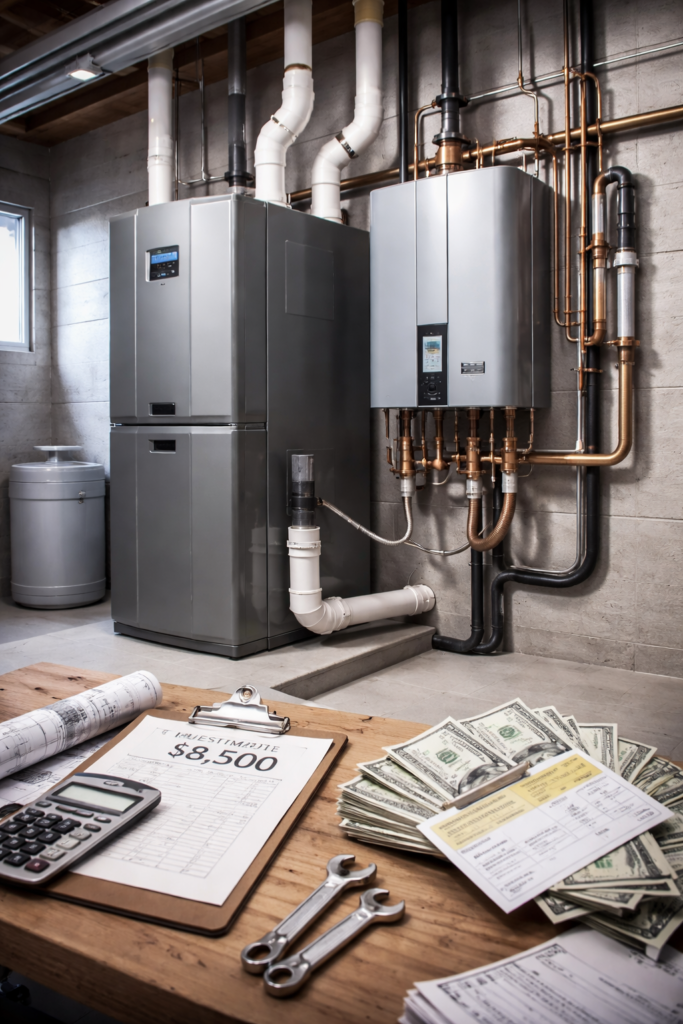
The true value unfolds over time. Because these systems are so much more efficient, the investment starts paying you back immediately through lower monthly energy bills. For many homeowners, the savings are substantial enough to cover the initial price difference in about 7 to 12 years. After that, all the extra money saved goes straight into your pocket.
Furthermore, you might not have to shoulder the entire cost alone. When choosing a high-efficiency boiler or heat pump system, look for government incentives. Federal tax credits and local utility rebates can make these upgrades more affordable, potentially shaving thousands of dollars off the final price. Always ask your contractor about current programs in your area.
Your Next Step to a Smarter, More Efficient Home
You once saw your furnace, air conditioner, and water heater as separate machines. Now, you see the hidden connection between them—and the potential for savings that comes from them working together. You can look at your utility closet not as a collection of parts, but as a single system waiting to be optimized.
The biggest takeaway is that making your home’s hardest-working appliances work as a team is the smartest path to efficiency. The next time you need service or consider a replacement, simply ask your technician: “What integrated HVAC and water heating options would work for my home?”
That single question transforms you from a passive customer into an informed homeowner. It opens the door to modern, efficient, and space-saving HVAC solutions that go beyond simple replacements, putting you in control of your home’s comfort and your energy bills.
Your regular water heater and HVAC system are generally separate, but certain heating configurations may link them. Understanding how they relate helps with maintenance planning, performance, and comfort management.
FAQ:
Is a Water Heater part of a regular HVAC system?
In most homes, no — a water heater is a separate appliance dedicated to heating water for daily use, while the HVAC system focuses on heating, cooling, and ventilation.
Can a water heater ever be integrated with HVAC equipment?
Yes — in some integrated or hydronic heating systems, a water heater or boiler can supply hot water for both domestic use and space heating, creating an interconnected setup with HVAC components.
Do water heaters and HVAC systems share utilities?
They often share utilities like gas, electricity, or venting paths, but they still perform different functions and usually require separate maintenance.
Will servicing my HVAC automatically include the water heater?
Not usually. Because they are separate systems in most homes, water heater service is typically a different maintenance task than HVAC tune-ups.
Do integrated systems make my home more efficient?
Integrated HVAC-water heating configurations like combi systems or heat pumps can be more efficient and save space, but they cost more upfront and are less common than standalone units.
How do I know if my water heater is connected to my HVAC system?
Check whether your home uses hydronic heating or a combined boiler/water heater setup — if hot water is circulated through radiators or coils for space heating, your systems are integrated.