
TL;DR Summary for Those in a Hurry:
- Furnace Capacitor Failure typically shows up as your furnace struggling to start, making unusual buzzing or clicking noises, or blowing weak or no airflow.
- Other signs include frequent short cycling and a furnace that won’t run at all despite thermostat calls.
- Catching these symptoms early helps prevent more serious damage to the blower motor or other parts of your heating system.
- If you suspect capacitor trouble, schedule a professional HVAC inspection rather than attempt DIY fixes.
Is your furnace making a strange humming sound, but no air is coming out of your vents? You might hear the ‘click’ of the thermostat, then a low hum, but the powerful whoosh of air never arrives. This frustrating situation often points to one small, common, and relatively inexpensive part: a failed capacitor.
A small part, often called a furnace run capacitor , provides the power for this critical startup sequence. The capacitor’s role is similar to pushing a heavy merry-go-round. You need a big, powerful shove to get it started, but once it’s spinning, it’s much easier to keep it going. The capacitor provides that big, initial shove for the furnace’s fan motor. Its only job is to deliver that jolt, which is the core of the furnace blower motor capacitor function.
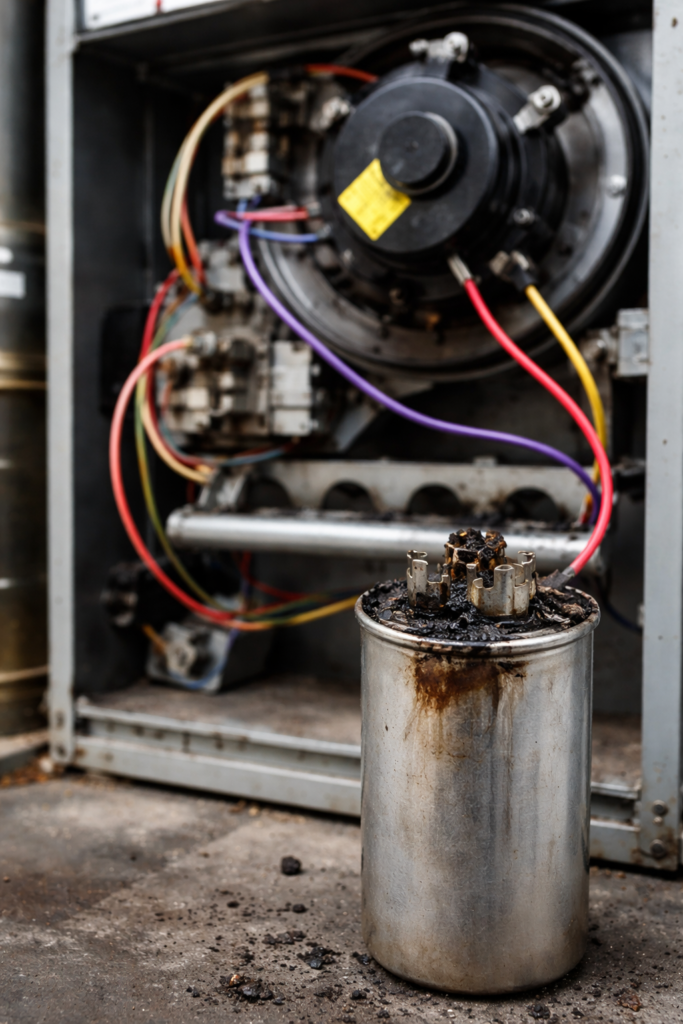
Without that starting kick, the motor is simply too weak to begin spinning on its own. It receives power from your thermostat—that’s the humming sound you hear—but it lacks the strength to overcome its own resistance. A weak furnace capacitor leaves your fan motor stuck at the starting line, unable to circulate the warm air you need. This is why a perfectly good motor won’t run, and your home stays cold.
Table of Contents
Symptom #1: The Telltale Hum of a Stuck Furnace Motor
This is, by far, the most common sign of a bad furnace capacitor. You’ve likely noticed a distinct sequence of events: your thermostat calls for heat, you hear a ‘click’ from the furnace, and then a low, steady hum begins. After a minute or so, the humming stops, and the furnace goes silent, having never actually pushed any warm air through your vents. Sound familiar?
That frustrating hum is the sound of your furnace’s blower motor—the main fan that pushes air through your home—trying to spin. The hum means the motor is receiving electricity, but it lacks the powerful kick-start that the capacitor is supposed to provide. Without that initial jolt of energy, the motor is effectively stuck in place, buzzing with power it can’t use to get moving.
Eventually, the furnace’s control board recognizes that the blower motor has failed to start. As a safety measure, it cuts power to the motor, which is why the humming stops. This “click, hum, silence” pattern is a classic sign of a bad furnace run capacitor. If your furnace is humming but not starting, you have found the number one symptom of a failed capacitor.
Symptom #2: A Struggling Blower Fan or Clicking Sounds
Unlike the definitive failure described above, a capacitor can also die a slow death. This creates even more confusing symptoms. You might notice your furnace fan struggles to get going, spinning slowly for a few moments before finally ramping up to full speed. In other cases, the fan might work one day but fail to start the next. This on-again, off-again behavior is a key symptom of what’s known as a “weak” capacitor—one that is right on the edge of failing completely.
Think of the capacitor as giving the fan motor a strong push to get started. A weak capacitor gives a weak, unreliable push. Sometimes it’s just enough, and other times it isn’t. When the push fails, you might hear a series of rapid clicking sounds from the furnace. That’s often the sound of the furnace’s internal controls repeatedly trying to engage the motor, which can’t start without that critical jolt of energy from the failing capacitor.
If you’re noticing these struggling starts or intermittent clicking, consider it an early warning. A weak capacitor will almost certainly become a completely failed one, and it won’t wait for a convenient time.
Symptom #3: How to Safely Spot a Bulging or Leaking Capacitor
While sounds offer powerful clues, a visual check can often confirm a failed capacitor. But before you even think about looking inside your furnace, you must follow a critical safety step. Go to your home’s main electrical panel and turn off the circuit breaker that powers your furnace. Don’t rely on the light switch-style power switch often located near the unit; cutting power at the breaker ensures the entire system is de-energized, making a visual-only inspection safe.
With the power completely cut, you can remove the furnace’s main service panel (it usually pulls or lifts off after turning a knob or two). Inside, scan for a component shaped like a large metal battery or a small beverage can. This is the capacitor. It’s typically a silver cylinder, though some can be black and rectangular, and will have two or three electrical terminals on top.
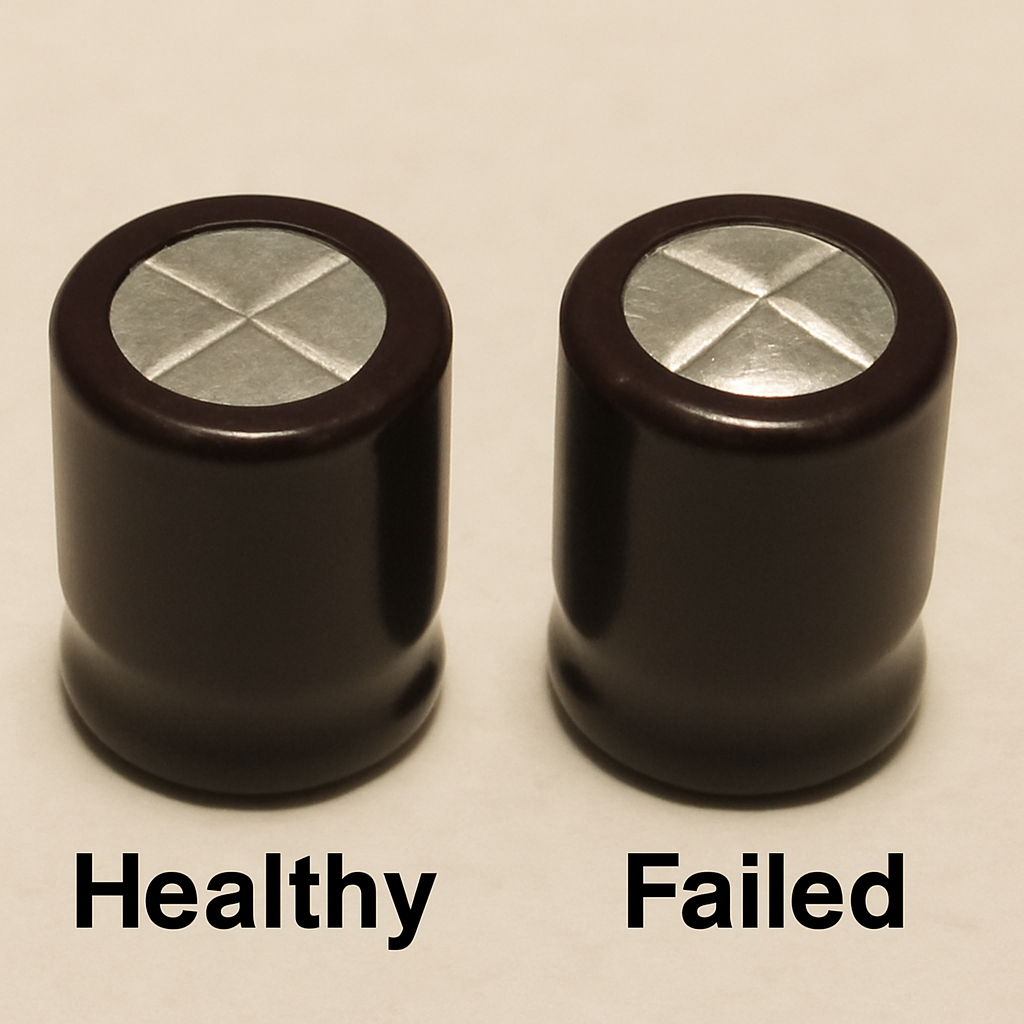
A healthy capacitor has a perfectly flat top. A failed one, however, will often physically bulge outwards. As you can see in the image, the top of a failed capacitor becomes distinctly domed, much like a can of soda that has frozen and expanded. You might also see an oily substance that has leaked from the casing, which is another definitive sign of failure.
WARNING: Even with the power off, a capacitor can hold a dangerous electrical charge similar to a camera flash. This is a job for professionals only. If you see a bulging or leaking capacitor, your inspection is done. Do not touch it. Simply replace the furnace panel, turn the breaker back on, and call a qualified HVAC technician.
How Much Should a Furnace Capacitor Replacement Cost?
After identifying a likely culprit, the next question is always about the repair bill. Fortunately, a furnace capacitor replacement is one of the more affordable professional repairs you’ll encounter. While prices vary by location and company, you can generally expect the total furnace capacitor replacement cost to be between $125 and $250. This puts it on the lower end of the spectrum for most common furnace issues, bringing welcome relief when you’re worried about a major expense.
You might be surprised to learn the capacitor itself is an inexpensive part, often costing less than $20. The majority of what you’re paying for is the technician’s professional service. This fee covers their travel time, the diagnostic work to confirm the failure (which involves safe HVAC capacitor testing with proper tools), and their expertise in handling a dangerous component. Essentially, you’re paying for a safe and correct repair, not just a simple part swap.
While the low part cost can make a DIY attempt tempting, the professional fee is a small price to pay for your safety. Remember, technicians are trained to safely discharge capacitors and prevent the severe electrical shock they can deliver. This modest furnace repair cost not only gets your heat back on quickly but also provides peace of mind, ensuring the job is done right without risk to you or your furnace.
Your Next Step: How to Confidently Call an HVAC Technician
Just a short while ago, that humming from your furnace was a source of anxiety, hinting at a huge repair bill. Now, you can confidently connect those sounds to the classic signs of a bad furnace run capacitor. You’ve successfully moved from being uncertain to informed, pinpointing the likely issue without ever needing to open a panel.
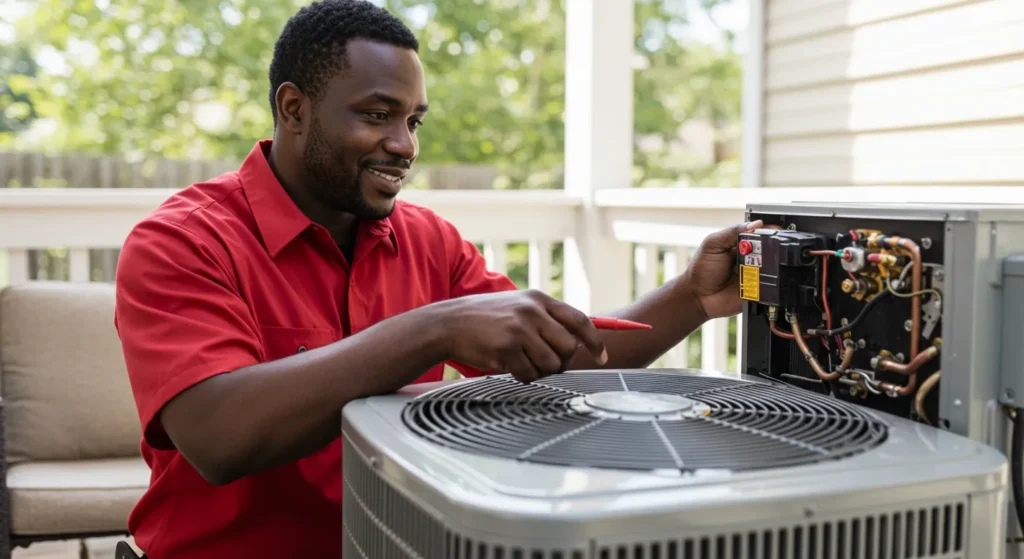
Your final step is getting your heat back on safely. Here is your clear action plan:
- Turn your furnace off at the thermostat.
- Do not attempt this furnace repair yourself. Capacitors hold a dangerous electrical charge.
- Call a qualified HVAC professional.
When you call, say with confidence: “My furnace is humming but the fan won’t start. Based on the symptoms, I suspect the blower capacitor may have failed.” This simple sentence saves the technician diagnostic time and shows you’ve done your research, helping streamline the repair process.
A failing furnace capacitor often leads to startup problems, strange sounds, and reduced airflow. Identifying these signs sooner allows you to get professional help, avoid bigger repairs, and keep your home comfortable.
FAQ:
What is a furnace capacitor and why does its failure matter?
A furnace capacitor stores and releases electrical energy to help the blower motor start and run. When it fails, your furnace may not start, run inefficiently, or stop altogether, leading to comfort issues and potential damage to other components.
What are the most common signs of a furnace capacitor failure?
Symptoms include strange humming or clicking noises at startup, weak or no airflow, frequent shutdowns, and the furnace failing to run even with the thermostat calling for heat.
Can a bad capacitor cause my furnace to short-cycle or turn off too soon?
Yes — a failing capacitor can lead to short cycling, where the furnace repeatedly turns on and off, which wastes energy and puts extra stress on the system.
Are burning smells or increased energy bills related to capacitor problems?
A burning smell can indicate electrical strain from a failing capacitor, and inefficient motor operation due to capacitor issues can also lead to higher heating costs.
How should I address suspected capacitor failure?
If you notice symptoms of capacitor trouble, turn off the system and schedule a professional HVAC inspection — capacitors hold electrical charge and should not be handled without proper training.
Can routine maintenance prevent furnace capacitor failure?
Yes — regular furnace maintenance allows technicians to check electrical components like capacitors and catch early wear before it leads to failure and system breakdowns.