
TL;DR Summary for Those in a Hurry:
- Common AC Issues in Pasadena homes often include weak airflow, poor cooling, strange noises, bad odors, and frequent system shutdowns.
- These problems are usually caused by dirty filters, refrigerant leaks, electrical faults, or worn internal components.
- Ignoring early symptoms can lead to higher energy bills, reduced comfort, and costly repairs.
- Homeowners benefit most by identifying issues early and scheduling professional AC inspection or repair.
- Timely service helps extend system lifespan and keeps cooling reliable during hot Pasadena weather.
Is your Pasadena home feeling more like a sauna than a sanctuary? When your air conditioner dies, it’s an emergency. But before making an expensive service call, let’s check the system’s brain—the thermostat. The fix for an AC not cooling your Pasadena, CA home is often simpler than you think and can save you time and money.
Table of Contents
First, Check the Brain of the System: The Thermostat
One of the most common thermostat malfunction symptoms is a blank screen, which usually means the fix is as simple as changing batteries in a TV remote. Just pop the thermostat’s cover off—most use standard AA or AAA batteries you can replace in 30 seconds. This simple action is frequently all it takes to get your system powered up again.
If the screen is on but there’s still no cool air, run through this one-minute checklist to troubleshoot your settings:
- Check the screen: Is it on and responsive?
- Check the mode: Is the system set to COOL and the fan to AUTO? (The “On” setting just circulates room-temperature air).
- Check the temperature: Is the set temperature lower than the current room temperature?
The Forgotten Switch: How to Safely Reset Your AC’s Circuit Breaker
If your AC system is completely dead—no sounds, no lights on the thermostat—the fix might be as simple as flipping a switch. Before making a call, locate your home’s main electrical panel. This is the gray metal box, usually found in a garage, closet, or on an exterior wall. Learning how to troubleshoot central air conditioning often begins right here, at your home’s electrical command center.
Inside the panel, look for one or two switches linked together and labeled “AC,” “Air Cond,” or “HVAC.” A tripped breaker will be stuck in the middle position, not fully on or off. To reset it correctly, you must first push the switch firmly all the way to the “OFF” position. Only then should you flip it back to “ON.” This two-step motion is crucial for a proper reset.
Sometimes a brief power surge on a hot afternoon is all it takes to trip this safety switch. If it stays on, you may have just solved the problem! However, if the breaker trips again immediately, stop and call a professional Pasadena HVAC repair service, as this signals a deeper issue. But if the power holds and your AC is still not cooling, the cause is likely not electrical at all.
The #1 Reason Your AC is Blowing Warm Air: A Clogged Filter
Now that you know the power is on, let’s tackle the most common reason an AC is not cooling in Pasadena: a clogged air filter. Your air conditioner needs to pull in huge amounts of your home’s warm air to cool it down. A dirty filter suffocates the system, essentially forcing it to breathe through a thick, dusty blanket. It simply can’t get enough air to do its job, which is the most frequent reason an AC starts blowing warm air.
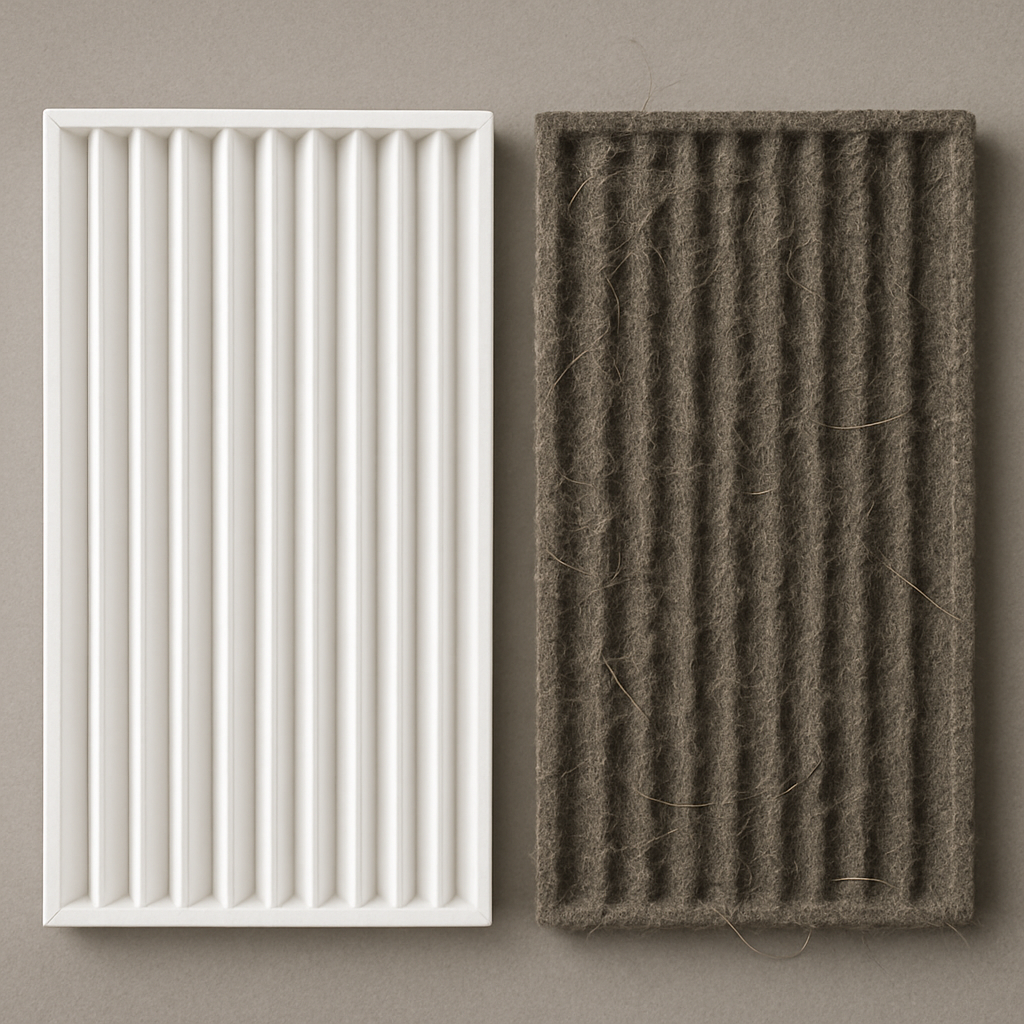
Locating the filter is your next step. It’s almost always a thin cardboard-framed rectangle found in one of two places: in a slide-in slot on the side of your indoor furnace or air handler (the big metal box in your garage, attic, or a closet), or behind a large return air grille on a wall or ceiling.
Once you find it, simply slide the old one out. Be sure to note the size printed on its frame before you buy a replacement. In Pasadena’s dusty environment, a filter can get clogged in as little as one month, so checking it regularly is crucial. Sliding in a clean one—making sure the arrow on the frame points toward the furnace—is often all it takes to fix the problem.
If a new filter brings back the chill, congratulations! You just performed the most important piece of AC maintenance. But if the air still feels weak or lukewarm, your system’s breathing problem might be happening outside.
Give Your Outdoor Unit a 15-Minute ‘Bath’ for Better Cooling
Your AC’s outdoor unit acts like its lungs, exhaling all the heat it has removed from your home. This heat escapes through the delicate metal fins that wrap around the unit like a grill. In Pasadena, these fins easily get caked with dust, pollen, and debris, trapping the heat inside and forcing your AC to struggle. A clean unit runs more efficiently, which is one of the main residential HVAC tune-up benefits homeowners enjoy.
Before starting, you must shut off the power. Look for a small metal box on the wall near the outdoor unit—this is the disconnect box . Open it and either pull out the handle or flip the switch to “OFF.” Now, with a regular garden hose (no fancy nozzle needed), gently spray down the fins from top to bottom, washing away the grime. Crucially, never use a pressure washer. The intense force will bend the fins flat, blocking airflow and causing severe damage.
This simple task is a key part of any good air conditioner maintenance checklist and can even quiet some unusual noises from an outdoor AC unit that come from a straining system. Once rinsed, wait about 30 minutes for it to dry, restore the power at the disconnect box, and test your AC. If the problem is solved, fantastic! But if your system is running and you’re now seeing water pooled inside your home, you’re likely dealing with a completely different issue.
Why Is My Air Conditioner Leaking Water? Fixing a Clogged Condensate Line
Discovering a puddle of water around your indoor furnace or air handler is alarming, but it’s rarely a sign of a complicated problem. This is a classic symptom of an air conditioner leaking water inside the house, usually caused by a clogged condensate line. Think of this small PVC pipe as your AC’s drain—it carries away the moisture pulled from your home’s air. In our warm, humid summers, this line can get blocked with algae and sludge, causing water to back up and spill over inside your home.
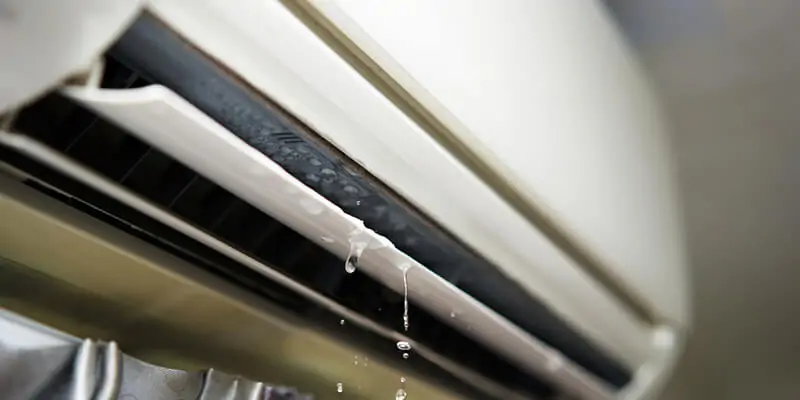
Fortunately, this is often an easy fix and a great lesson in how to troubleshoot central air conditioning. You can usually clear the blockage yourself with a wet/dry vacuum. Find where the condensate pipe exits your house (typically a white or black PVC pipe sticking out of the wall near your outdoor unit). Seal the vacuum hose around the end of the pipe and let it run for a minute or two. This suction is often enough to pull the entire clog out.
To keep this from happening again, a little preventative care goes a long way. Every few months, find the access opening on the drain line near your indoor unit (it often has a small cap). Pouring about a cup of distilled white vinegar down this opening will kill any algae or gunk before it has a chance to form a major blockage, saving you from future headaches and potential water damage.
If you can’t find the line or the vacuum trick doesn’t work, it’s wise to stop and call for help. A stubborn clog may require a professional’s tools, and a quick call to a Pasadena HVAC repair service is much better than dealing with damaged floors or drywall. A water leak is one thing, but what if you’re hearing something more sinister, like hissing or grinding? These are signs of a problem you should never ignore.
Hissing Sounds or Ice on Your AC? These Are Signs to Call a Professional
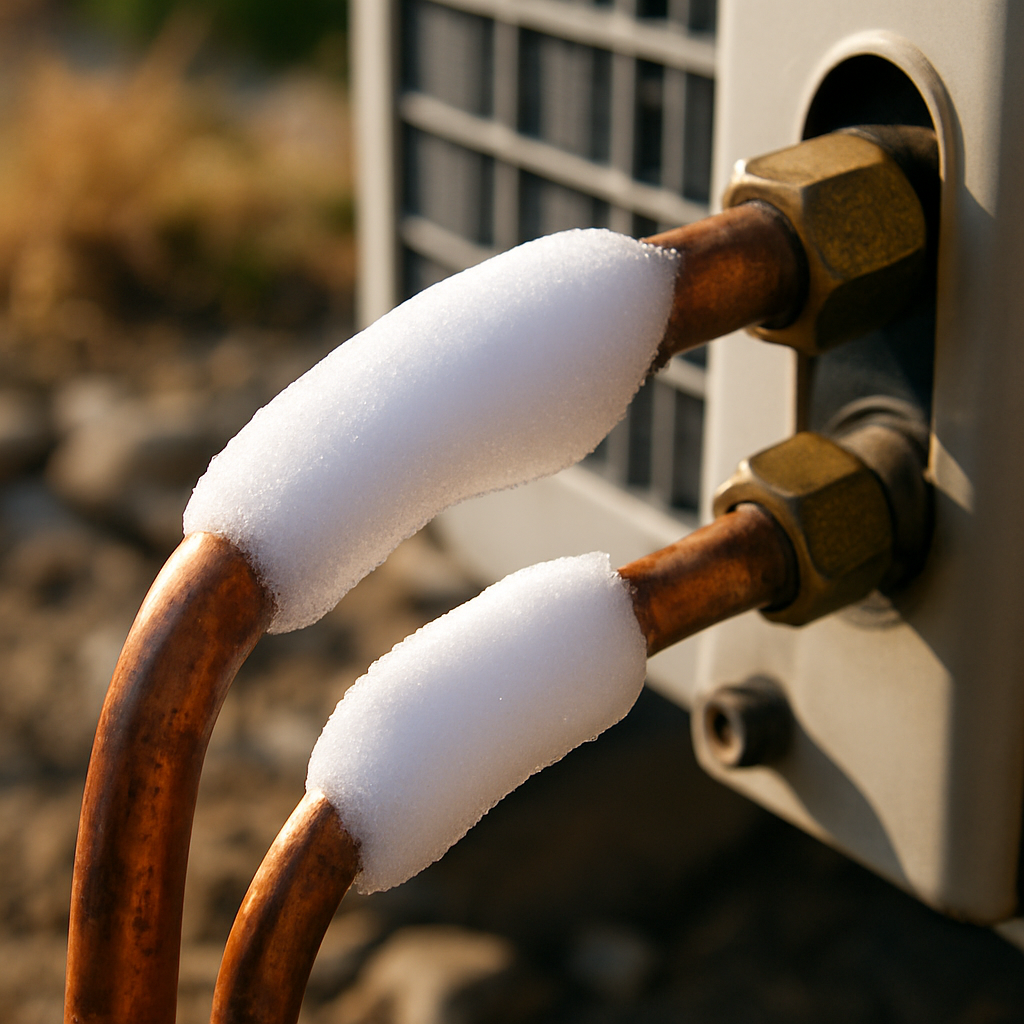
If you notice ice forming on the copper pipes of your outdoor unit—even on a scorching Pasadena afternoon—it’s a major red flag. This strange sight, often accompanied by a faint hissing sound, is a classic symptom of a refrigerant leak. Your first instinct might be to look for a quick frozen air conditioner coils fix, but this isn’t a problem of your AC working too well; it’s a sign that the system is unhealthy and struggling.
Your air conditioner cools your home using a special, pressurized liquid called refrigerant. Think of it as the lifeblood of the system. Because this substance is a federally controlled chemical, you can’t simply buy more and top it off. Handling refrigerant requires special certification and tools, making this a job strictly for a professional. A technician won’t just refill the system; they’ll need to locate and repair the leak, which is the only real, long-term solution.
Ignoring the problem is a costly gamble. Running an AC with low refrigerant puts immense strain on the compressor—the expensive motor that acts as the heart of your entire system. This overwork can cause it to overheat and fail completely, which is one of the most common signs of a bad AC compressor. The refrigerant leak repair cost is significantly less than replacing a destroyed compressor, a situation that often forces a difficult decision, especially with an older unit.
The ‘Repair or Replace’ Dilemma: A Quick Guide for Your Aging Pasadena AC
Facing a significant repair bill for an aging air conditioner is stressful. It’s hard to know if you’re making a smart investment or just throwing money at a system that’s on its last legs. To cut through the confusion, many in the industry use a simple guideline known as the “5,000 Rule” to create a helpful AC repair vs. replacement guide.
The rule is a quick calculation: multiply the age of your AC unit (in years) by the estimated repair cost. If the total is more than $5,000, replacement is often the more sensible financial choice.
- (Unit Age) x (Repair Cost) = Your Number
- If your number is over 5,000, strongly consider a new system.
For Pasadena homes with units over a decade old, another factor makes this decision easier. Many systems built before 2010 use an old refrigerant called R-22 (Freon), which has been phased out due to environmental concerns. This makes the refrigerant leak repair cost for these older units extremely high, as the chemical is now scarce and expensive.
Beyond just avoiding another repair, a new system brings a powerful long-term benefit: efficiency. Modern AC units have much higher SEER ratings—think of it as a miles-per-gallon score for your air conditioner. A more efficient system works less hard to cool your home, leading to significantly lower monthly bills from PWP or LADWP. When you’re ready, a reliable Pasadena HVAC repair service can help you find a new unit that will pay for itself in energy savings.
Your Action Plan for a Cool and Comfortable Pasadena Summer
You no longer need to feel helpless when your AC quits on a sweltering Pasadena afternoon. Where there was once just mystery and a rising temperature, you now have a clear game plan. You’ve learned to spot the difference between a simple fix and a serious problem, transforming that moment of panic into a methodical checklist.
Always remember your troubleshooting path: start with the simple indoor checks at the thermostat and breaker, then move to airflow with the filter and outdoor unit. By understanding these common AC issues in Pasadena, you can confidently handle the basics. More importantly, you now know that being a smart homeowner means recognizing when you’ve done all you can safely do on your own.
If your checks point to a problem that needs an expert, you haven’t failed—you’ve succeeded in your diagnosis. For urgent situations, a reliable Pasadena HVAC repair service is your next move. Don’t hesitate to seek emergency 24 hour AC repair in Pasadena, knowing you’ve already handled your part and can help a professional get right to the source of the trouble.
Common AC Issues can start small but escalate quickly if ignored. Knowing the warning signs helps homeowners act faster. Professional diagnosis and maintenance are the safest way to restore comfort and prevent expensive breakdowns.
FAQ:
Why is my AC blowing weak or insufficient airflow?
Weak airflow is often caused by dirty filters, blocked vents, or duct issues that restrict air movement through your system. Regular filter changes and professional inspections help restore proper airflow.
What does it mean when my AC makes loud or strange noises?
Unusual sounds like banging, grinding, or rattling usually indicate loose parts, worn components, or debris inside the unit. These noises should be checked promptly to prevent further damage.
Why isn’t my AC cooling my home properly?
An AC that runs but doesn’t cool effectively could be low on refrigerant, have a dirty coil, or suffer from thermostat or compressor issues. Professional diagnosis is often needed.
What causes my AC unit to trip the circuit breaker?
Frequent breaker trips can be due to electrical problems, an overloaded system, dirty coils, or faulty wiring — all of which require inspection by a qualified HVAC technician.
Why does my AC produce foul or unusual odors?
Foul smells can come from mold or mildew build-up inside the system, or from electrical issues. Musty or rotten odors should be addressed quickly to protect indoor air quality.
When should I call an HVAC professional for AC problems?
If your AC isn’t turning on, isn’t cooling properly, is making unusual noises, or repeatedly trips your breaker, it’s time to call a professional. Early diagnosis can prevent bigger repair bills and keep your home comfortable.