
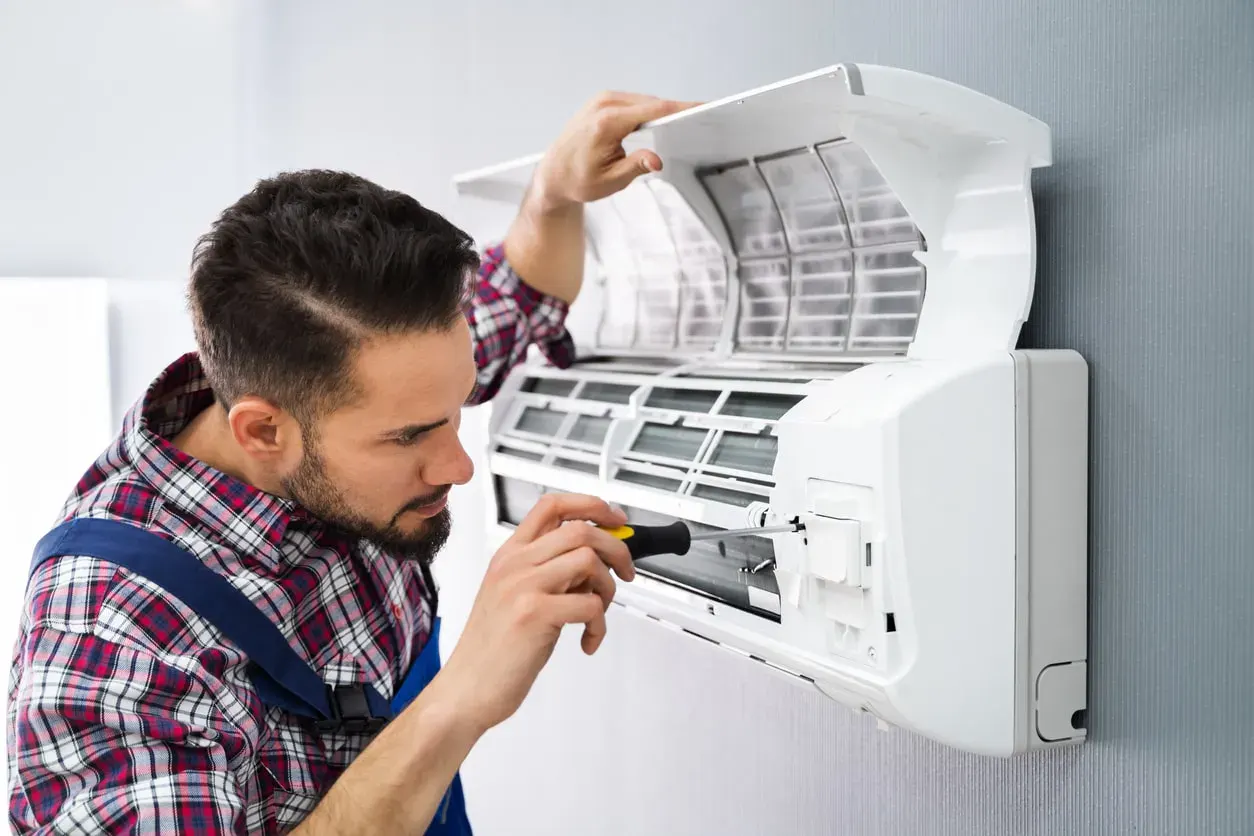
When the AC quits on a 100-degree afternoon in Pasadena, CA, two things are worth knowing before you call anyone. A good share of no-cooling calls turn out to be a thermostat setting, a tripped breaker or a packed filter, and you can check all three in five minutes. If it is not one of those, the next thing you want is a clear picture of what a service visit involves so nobody is surprised by the bill.
What you can check yourself
None of this involves opening a sealed compartment, touching refrigerant, or working on wiring.
- The thermostat. Set to Cool, fan on Auto, and the setpoint at least five degrees below the room. If the screen is dim or blank, change the batteries. Then wait a few minutes: most thermostats hold a compressor delay before the outdoor unit restarts.
- The breaker box. A central system usually has two breakers, one for the air handler and one for the condenser outside. Reset a tripped breaker once. If it trips again, stop there and call. A breaker that keeps tripping is telling you something.
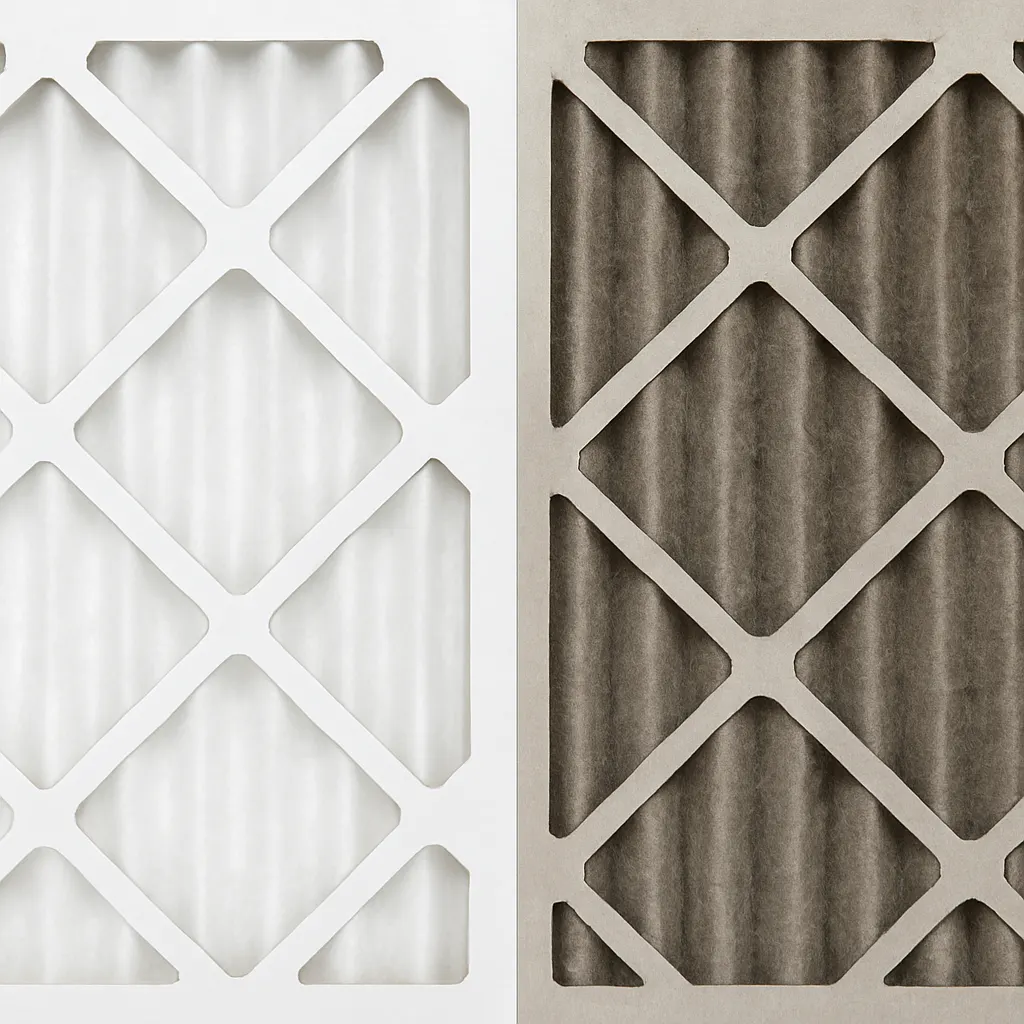
- The filter. If it is gray and you cannot see light through it, the system is starving for air. That alone will make an AC blow warm and, given a day or two, ice the indoor coil.
- The outdoor unit. Look, do not reach in. Leaves, oleander clippings and the dust the Santa Anas leave behind pack into the coil fins and trap the heat the unit is supposed to be dumping. If the fins are matted, that is worth mentioning when you call. Clear anything leaning against the cabinet and give it a couple of feet of breathing room.
- The registers and the return. Every supply register open, nothing over the return grille.
If you find ice on the copper lines or on the indoor coil, turn the whole system off at the thermostat and leave the fan running to thaw it. Running an iced system is how a compressor dies.
What each symptom usually points to
- Warm air with the outdoor unit running. A dirty condenser coil, a failing capacitor, or low refrigerant. Refrigerant is not consumed, so a low charge means a leak, and the leak has to be found before anything is added.
- Outdoor unit silent, indoor fan blowing. Breaker, the disconnect by the unit, a capacitor, or the contactor.
- A loud buzz or hum and the fan does not start. Most often a capacitor. It is a common part and a short repair.
- Metallic grinding or screeching. A motor or the compressor. Shut it off at the thermostat, and if the noise is coming from the outdoor unit, cut the power at the disconnect box beside it. Call before running it again.
- Water on the floor near the indoor unit. Usually a clogged condensate drain, not refrigerant. The AC pulls moisture out of the air, and when the drain line blocks with algae the pan overflows.
- Short cycling. On and off every few minutes. Airflow, a dirty coil, a failing control, or a system oversized for the house.
What the visit looks like
The technician starts with what you already told us on the phone, then checks the things that are cheap to rule out: thermostat call, filter, breaker, disconnect, the condenser coil. From there it is meter work — capacitor readings, contactor, motor amp draw, temperature split across the indoor coil, and refrigerant pressures if the symptoms point that way.
Then you get the finding and a written quote before anything is repaired. Not a verbal number, not a number after the work. If the repair needs a part that is not on the truck, you are told what it is and when it can be here. Our labor carries a 1-year warranty, and the brands we work on regularly include American Standard, Bryant, Carrier, Daikin, Goodman, Lennox, Mitsubishi Electric and York.
A lot of San Gabriel Valley homes are 1950s to 1980s ranches with a side-yard condenser and attic ducts, so plenty of visits end up in a 130-degree attic. That is worth knowing if the tech asks about attic access before booking.
How the $69 diagnostic works
You are told the fee before we book, not after. It covers the visit and the diagnosis, and it is charged whatever the technician finds, including the times the answer is "your filter was the problem." If you go ahead with the repair, the $69 is credited toward the work.
What it is not: a quote. The repair is quoted separately, in writing, once the cause is known, and you decide before any work starts.
Our hours, and what "same day" means
We answer 6am to 10pm, seven days a week, and an owner usually picks up. Response is usually within a few hours. Same day is what we aim for and often manage, but it depends on how the schedule looks when you call, and in a 100-degree week in September every HVAC company in the valley is stacked up. We would rather tell you a real arrival window than a flattering one.
When to call a licensed tech
- The breaker trips a second time.
- Burning smells, or anything that smells electrical.
- Grinding, screeching, or a bang from the outdoor unit.
- Ice that comes back after a full thaw and a new filter.
- Any suspicion of a refrigerant leak. Handling refrigerant is regulated work and it is not a homeowner job.
- Water where water should not be, or a coil that ices within an hour of restarting.
Everything above is what an AC repair call is for. If the system is old and this is the third failure of the season, the conversation is usually replacement rather than another part. Systems built for R-22 are a particular case: production and import of R-22 ended in 2020, so a major leak on one of those means repairing a system that can only be recharged from reclaimed stock. That does not decide anything on its own, but it belongs in the decision.
Common questions
Do I pay the $69 if the technician cannot fix it that day?
Yes. The fee is for the visit and the diagnosis, and you get the finding and a written quote either way. If you go ahead with the repair, whether that day or later on the same quote, it comes off the repair.
My AC is under a manufacturer's parts warranty. Does that help?
Often, yes, on the part itself if the system was registered and the model is still covered. Labor is usually separate. Have the model and serial numbers from the data plate ready when you call and we can tell you what to expect.
Should I just replace it instead of repairing?
It depends on the age, what failed, and whether the system has been reliable up to now. A capacitor on an eight-year-old system is an easy yes to repair. A compressor or a major leak on a system past its teens is where people usually start pricing a change-out. A maintenance visit is the cheapest way to find out where yours stands before it fails in July.
Our diagnostic is $69, quoted before we book and credited toward the work. Call 818-277-5056, 6am to 10pm, seven days a week, or book online. Boost Services Heating and Cooling, licensed C-20 #1119892, veteran-owned, with a crew base at 1055 E Colorado Blvd in Pasadena.
Written with AI assistance by Boost Services, Heating and Cooling team, and reviewed by our licensed technicians before publishing. Boost Services Heating and Cooling, C-20 #1119892.