
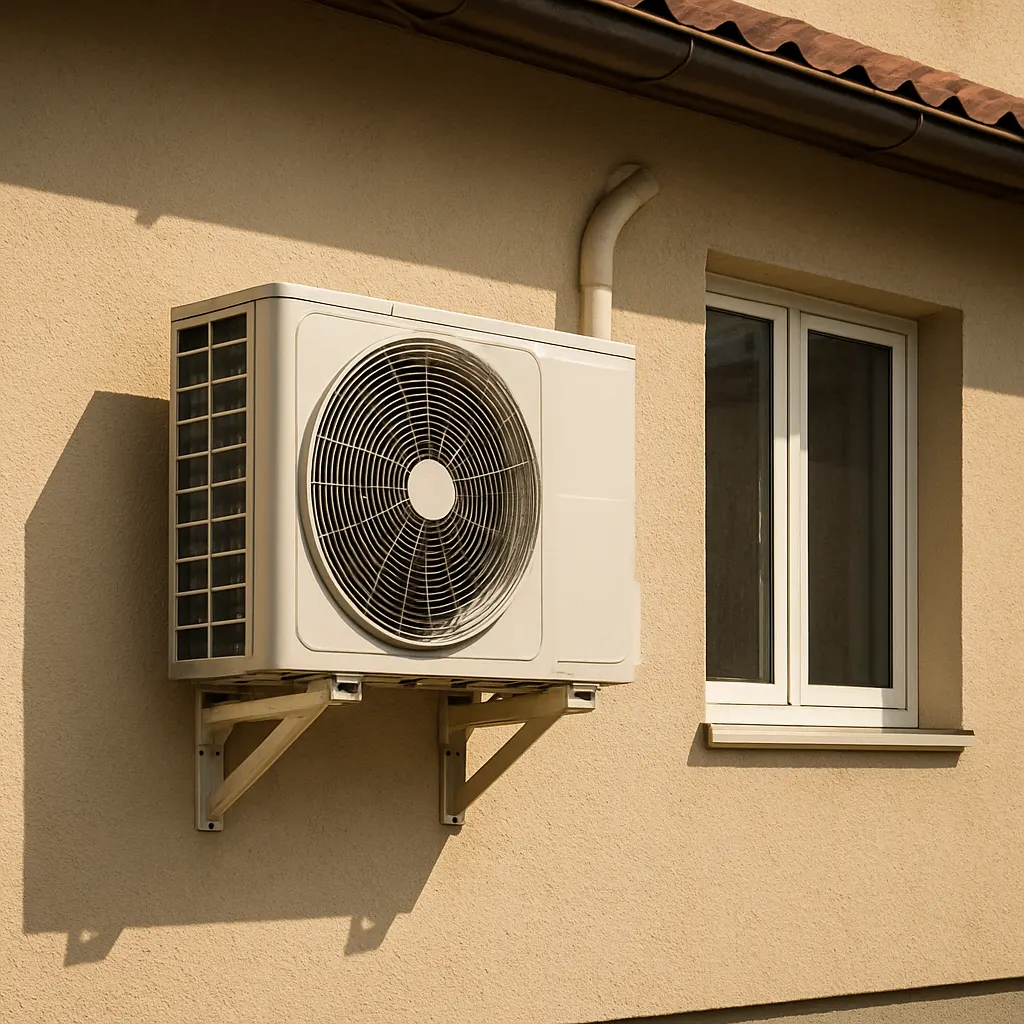
An air conditioner that runs but blows warm air usually has one of a handful of problems, and the first three are things you can check in ten minutes: the thermostat is in the wrong mode, the filter is choked, or the outdoor unit has lost power. The rest, a failed part outside, a refrigerant leak, or a frozen indoor coil, need a licensed tech. Here is how to tell them apart in a Pasadena, CA home on a 100°F afternoon.
Start at the thermostat
It sounds too simple, but it is one of the most common reasons an AC seems to be blowing warm air in July. Check three things:
- Mode. It has to say Cool, not Heat or Off. On a heat pump, a thermostat left in Heat will happily push warm air all afternoon.
- Fan setting. Auto, not On. With the fan set to On, the blower runs constantly, including the minutes between cooling cycles, and the air from the vents feels room temperature or warmer. People read that as "the AC is blowing hot air" when nothing is broken.
- Setpoint. Set it a few degrees below the current room temperature so the system actually gets a call for cooling.
If the display is blank or flickering, replace the batteries. If the thermostat is fine and the air is still warm, move on.
A clogged filter
A filter that has not been changed since spring chokes airflow across the indoor coil. Less air over the coil means less heat pulled out of the house, and eventually the coil gets so cold it ices over. At that point the air from the vents goes from weak to warm. Pull the filter out and hold it up to a light. If you cannot see light through it, replace it. In our climate, with the dust the Santa Ana winds carry and the smoke days, filters load up faster than the box suggests. Change it on the manufacturer's schedule at a minimum; during a Pasadena summer, monthly is closer to right.
The outdoor unit is not running
Go outside while the system is calling for cooling. The fan on top of the condenser should be spinning and you should hear the compressor hum. If the unit is silent while the indoor blower runs, the house will get warm air until it is fixed. Common reasons:
- A tripped breaker. Check the panel for the AC breaker and the disconnect box on the wall next to the unit. Reset a tripped breaker once. If it trips again, stop and call. Repeated trips mean a part is drawing too much current.
- A failed capacitor. The capacitor gives the fan motor and compressor their starting kick. When it fails, the unit hums but the fan does not spin, or the fan spins but the compressor never starts. Heat waves kill capacitors, because the outdoor unit sits in a side yard at 110°F running all day. This is a tech repair. The capacitor holds a charge even with the power off, so do not open the electrical panel on the unit.
- A stuck contactor or a failed fan motor. Same symptom, same answer: a diagnostic visit.
The outdoor unit runs but the coil is filthy
The condenser's job is to dump the heat pulled from your house into the outdoor air. If its coil is packed with dust, cottonwood fluff, dryer lint, or leaves, it cannot shed that heat, pressures climb, and the air inside stays warm. Side-yard condensers in older Pasadena and Altadena neighborhoods sit against fences and under shrubs, and they load up fast. Look at the fins through the grille. If they are grey and matted, cleaning is due. Cutting power at the disconnect and gently rinsing the fins from the outside with a garden hose helps in the short term. A proper coil cleaning is part of any maintenance visit.
Refrigerant leak
Refrigerant does not get used up. If the system is low, it leaked, usually at a coil, a brazed joint, or a valve. Signs: cooling that has faded over weeks rather than failed overnight, ice on the copper line at the outdoor unit, a hissing or bubbling sound, and longer and longer run times. Finding the leak takes gauges and a leak detector, and by federal rule only a certified technician can add or recover refrigerant. Topping it up without fixing the leak is a short-term fix that you pay for again next month.
A frozen indoor coil
Weak airflow or low charge can freeze the evaporator coil inside the air handler into a block of ice. The air coming out is warm because almost none is getting through. If you see ice on the indoor unit or the line set, turn the system to Off at the thermostat and leave the fan on Auto or On to help it thaw. Do not chip at it. Then fix the cause, or it freezes again tomorrow.
Duct leaks in a 130°F attic
This one is specific to our housing. The 1950s to 1980s ranch homes across the San Gabriel Valley and the San Fernando Valley run their supply ducts through an attic that hits 130°F or more on a summer afternoon. A disconnected duct or a torn joint pulls that attic air into the supply stream, and the rooms at the end of the run get lukewarm air while the rest of the house is fine. If the problem is one or two rooms rather than the whole house, suspect the ducts before the equipment. A duct repair visit finds the break and reseals it.
What you can check yourself
- Thermostat on Cool, fan on Auto, setpoint below room temperature, fresh batteries.
- Filter: replace it if it is grey or you cannot see light through it.
- All supply registers open, return grille not blocked by furniture.
- Outdoor unit: fan spinning, no debris on the coil, roughly two feet of clear space on all sides.
- Breaker and disconnect on. Reset a tripped breaker once, not twice.
- Ice anywhere: turn the system off and let it thaw.
Stop there. Do not open sealed electrical compartments, and do not buy a refrigerant recharge kit.
When to call a licensed tech
Call if the outdoor unit is silent or humming without spinning, if a breaker trips a second time, if you see ice, if you hear hissing, or if the air is still warm after the filter and thermostat are sorted. Turn the system off while you wait. Running a compressor on low charge or with a failed capacitor is how a repair becomes a replacement. Our AC repair diagnostic starts at the thermostat and ends at the outdoor unit, with the fault named and the price in writing before any work.
Common questions
Why does my AC blow warm air after a power outage?
The outage can trip the AC breaker or leave the control board locked out. Turn the thermostat to Off, wait five minutes, reset any tripped breaker, and set it back to Cool. If the outdoor unit still does not start, that is a service call.
Is it safe to keep running the AC if the air is warm?
Not for long. If the cause is a filter or a thermostat setting, no harm done. If it is a leak or a failed part, every hour of run time adds wear to the compressor, the most expensive part in the system. Off is the safe setting until you know which it is.
Can the AC be too small for a heat wave?
Yes, and it looks like hot air from the vents: the system runs all afternoon and never catches up. That is a sizing or a duct problem, not a breakdown. A load calculation on the house tells you which.
If your AC is blowing warm air and the checks above did not fix it, book a $69 diagnostic. We tell you the fee before booking and credit it toward the work. Call Boost Services at 818-277-5056 or send us a message and we will usually be out within a few hours.
Written with AI assistance by Boost Services, Heating and Cooling team, and reviewed by our licensed technicians before publishing. Boost Services Heating and Cooling, C-20 #1119892.