
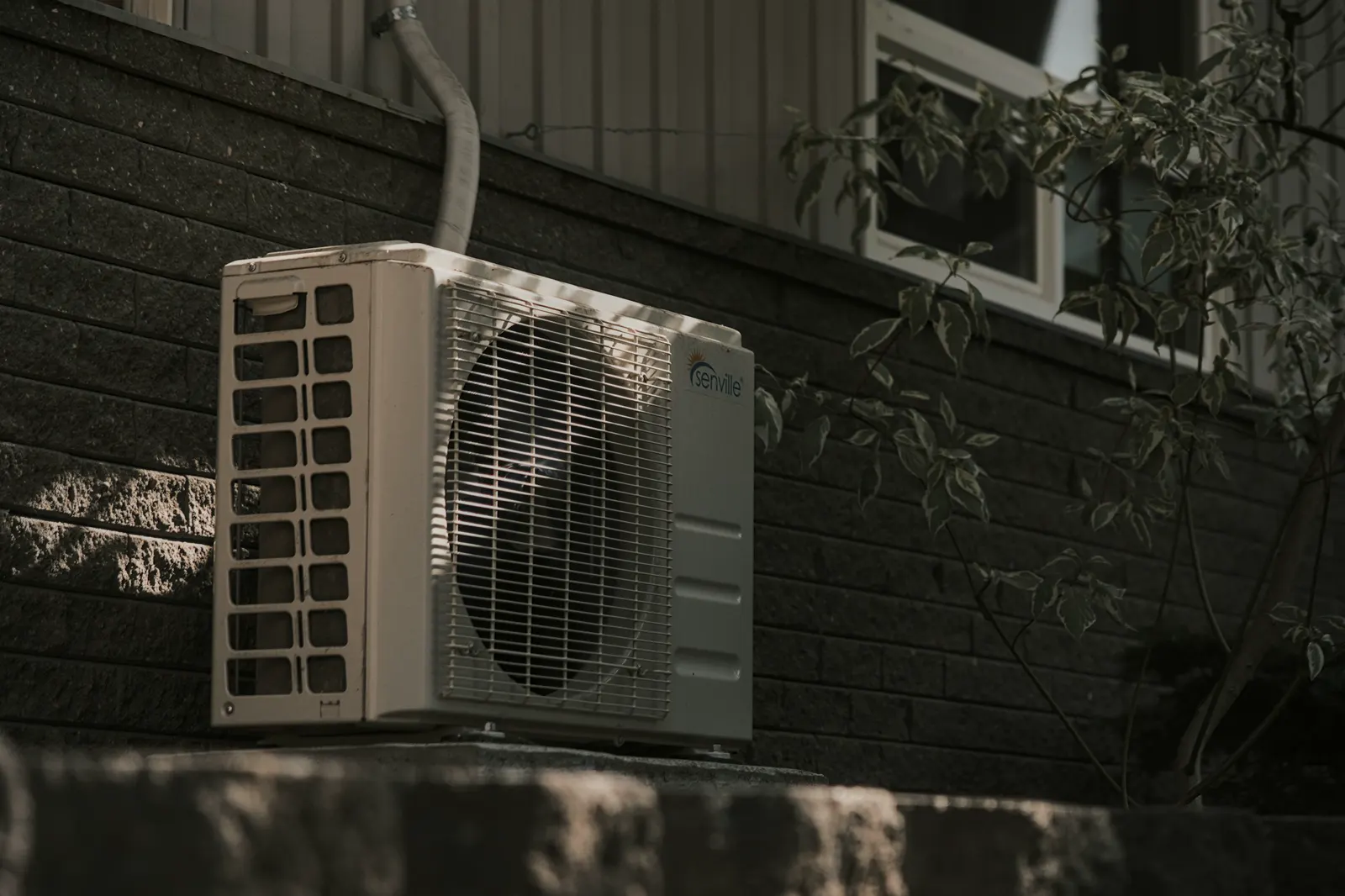
If the outside unit is silent while the thermostat is calling for cooling, the cause is almost always power, a control, or one of two small parts that fail in the heat. In Pasadena, CA and across the San Gabriel Valley we see the same short list every summer. Work through the checks below in order. They are safe, they take about ten minutes, and what the unit does when it tries to start tells a technician most of what they need to know.
First, sort out what is running
Set the thermostat to Cool, drop the setpoint a few degrees below the room, then go listen at the furnace or air handler and at the outdoor unit.
- Nothing runs, indoors or out. The call is not getting past the thermostat, or the indoor unit has lost power. A safety switch on the furnace is the usual reason.
- The indoor blower runs, the outdoor unit is dead. The indoor side is fine. Look at the outdoor unit's power, its contactor, or the thin control wire that runs to it.
- The outdoor fan spins but the air never gets cold. The compressor is not running or the refrigerant is low. That is a different problem, covered in AC blowing hot air.
- The outdoor unit hums or buzzes and the fan does not turn. Read the capacitor section below, then turn the system off at the thermostat so the compressor is not sitting there straining.
What you can check yourself
Stop at anything that involves removing a screwed-on panel. Everything on this list is outside the sealed compartments.
- Thermostat settings and batteries. Cool, not Heat or Off. Setpoint below room temperature. If the screen is dim or blank, replace the batteries. A thermostat with weak batteries can light up and still fail to hold the call.
- The breakers. There are usually two, one for the indoor furnace or air handler and one for the outdoor condenser. Look for one sitting in the middle. Reset it once, firmly off and then on. If it trips again, stop. Repeated resets can turn a small fault into a dead compressor.
- The outdoor disconnect. The gray box on the wall near the condenser. Make sure the pull-out block is seated the right way and any switch is on. Gardeners, painters and kids bump these. Some disconnects hold cartridge fuses. If the box looks scorched or the fuses are blown, leave it for a tech; a fuse that blew had a reason.
- The indoor service switch and the blower door. Furnaces and air handlers have a switch nearby that looks like a light switch, and a safety switch on the blower door. If the door was left loose after a filter change, the board will not run anything. Seat and latch it. Do not remove it.
- The condensate float switch. Attic air handlers and most closet furnaces in the Valley have a small switch on the drain line or in the overflow pan. When the drain clogs, the switch cuts the cooling call. Water in the pan, a wet spot at the drain outlet, or a stain on the ceiling under the attic unit is your answer. Clearing the drain restores the call.
- The filter and ice. A packed filter can ice the indoor coil and trip a safety. Change the filter. If there is frost on the copper lines, set cooling to Off and the fan to On for an hour or two to thaw before you try again.
- Clearance and debris. With the disconnect off, pull dry leaves, grass and cobwebs away from the unit and keep a couple of feet clear on all sides. A gentle rinse of the fins with a garden hose from the outside is fine. No pressure washer, and do not bend the fins.
- The five-minute delay. Most systems, and many thermostats, hold the compressor off for a few minutes after a shutdown. If you just changed something, wait before deciding it is broken.
What the sound tells you
- Silent, nothing at all. No power reaching the unit, a dead contactor coil, a blown low-voltage fuse on the control board, or a broken control wire.
- A hum or buzz, fan not spinning. The run capacitor is the first suspect. It gives the fan and compressor motors their starting push; when it weakens, the motor sits there and hums. Capacitors tend to fail in heat, which is why so many go on the hottest week of the year.
- A click, then nothing. The contactor pulled in but the compressor did not start. Capacitor or compressor.
- Starts, runs a few seconds, stops. A pressure switch is tripping. Usually a dirty condenser coil, a failed fan motor, or a low charge from a leak.
- The fan turns slowly or squeals. Fan motor bearings.
The parts that need a licensed tech
- The capacitor. It holds a charge after the power is off. Do not touch it. Testing and replacing it is a short job for a tech.
- The contactor. The relay that sends power to the compressor and fan. Its contacts pit and burn, or the coil fails.
- The condenser fan motor. If it will not spin freely or it squeals, the bearings are done. Running the compressor without the fan overheats it.
- The low-voltage fuse and wiring. The thin cable to the outdoor unit gets nicked by shovels, chewed by rodents and corroded at the terminals. Replacing the fuse is easy. Finding why it blew is the actual repair.
- Refrigerant and the pressure switches. A leak, or a coil so dirty the pressure climbs and the switch opens. Handling refrigerant takes EPA certification. A coil cleaning is often part of the fix.
- The compressor. A tech tests the windings and the start components before calling it dead. When it is, the conversation becomes repair versus replacement.
When to call a licensed tech
- The breaker trips again after one reset.
- Anything smells burnt, or the disconnect or the unit shows scorch marks.
- The unit hums or buzzes with the fan not turning.
- There is ice on the copper lines.
- The unit starts and stops over and over.
- You have done the list and it still does nothing.
Tell us what you found: which breaker tripped, whether the indoor blower runs, what sound the outdoor unit makes, whether there was water in the pan. That shortens the visit. An AC repair call on a no-start is usually one part, and a yearly tune-up catches a weak capacitor before it strands you in August.
Common questions
Why does the outdoor unit fail on the hottest day?
Because that is when everything is working hardest. Capacitors lose strength with heat and age, a dirty coil pushes pressure up, and the utility voltage sags in a heat wave. A part that was marginal in May fails in a September heat wave.
Can a clogged drain really stop the outdoor unit?
Yes. The float switch does not just stop the water; it cuts the whole cooling call so the pan stops filling. The outdoor unit goes quiet and the indoor fan may keep running. Clear the drain and it comes back.
Is it safe to keep resetting the breaker?
No. One reset is a fair test. A breaker that trips again is protecting a motor, a shorted wire or a compressor that is drawing far too much current. Leave it off and call.
Our diagnostic is $69, quoted before we book and credited toward the work. Reach Boost Services at 818-277-5056, 6am to 10pm, seven days a week, or book online.
Written with AI assistance by Boost Services, Heating and Cooling team, and reviewed by our licensed technicians before publishing. Boost Services Heating and Cooling, C-20 #1119892.