
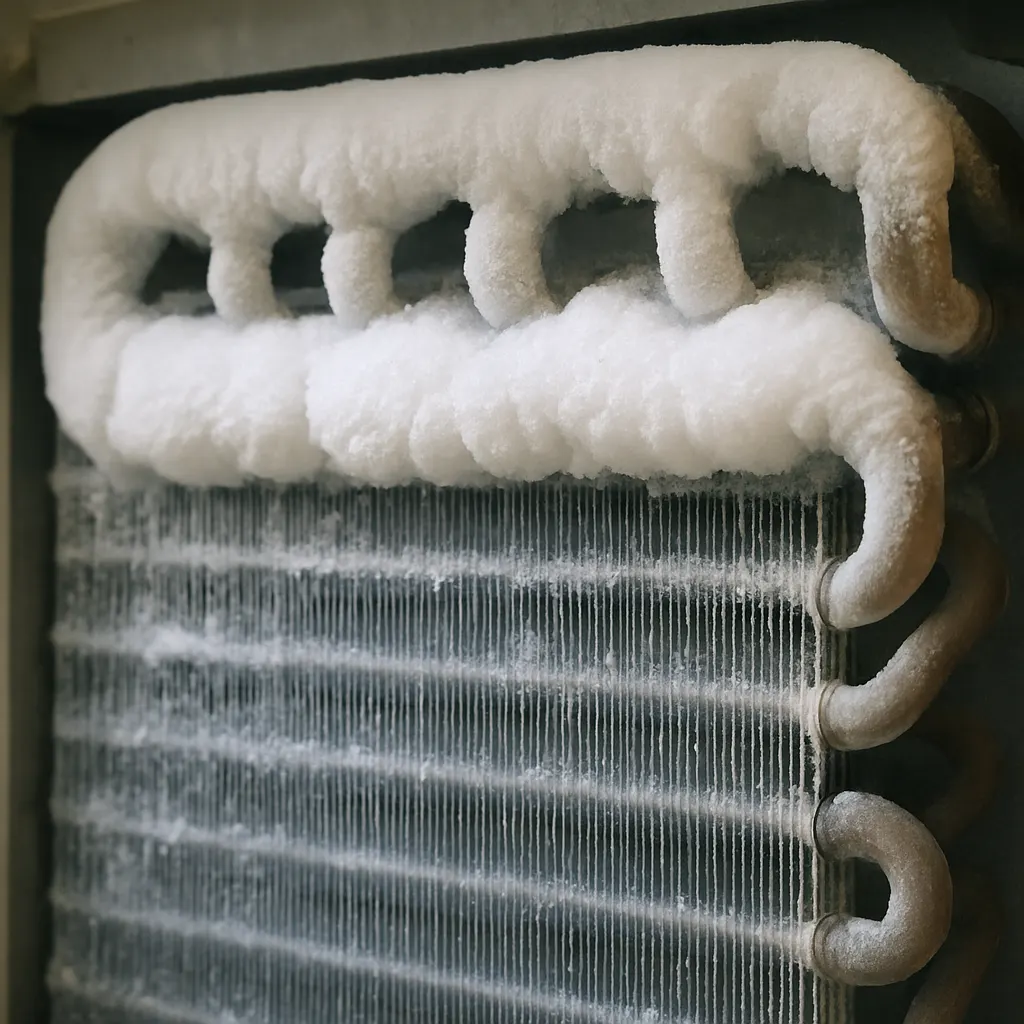
An air conditioner freezes for one of two reasons: not enough warm air is moving across the indoor coil, or there is not enough refrigerant in it. Everything else on the usual lists (dirty filter, closed vents, weak blower, dirty coil, a leak, running the AC on a cool night) is a version of one of those two. Prevention is mostly about airflow, which you control. The refrigerant side is a licensed tech's job.
Why a coil freezes in a 100°F Pasadena summer
The indoor coil is cold on purpose. Refrigerant boils inside it at a temperature well below room temperature, and the blower pushes house air across it so the air gives up heat and the coil stays above freezing. Cut the airflow and the coil has nothing to warm it. Its surface drops below roughly 32°F, the moisture the coil pulled out of the air freezes on the fins, and the ice blocks even more airflow. It feeds itself. A system that is low on refrigerant does the same thing from the other direction: lower pressure in the coil means a lower boiling temperature, so the coil runs colder than designed no matter how much air passes over it.
That is why an AC can ice up on the hottest day of the year. Outdoor temperature does not matter much. What is happening inside the air handler does.
Signs your AC is freezing
You usually notice the results before you see the ice.
- Airflow from the registers is weak, or starts strong and fades during a cycle.
- Air that was cold ten minutes ago is now lukewarm while the system keeps running.
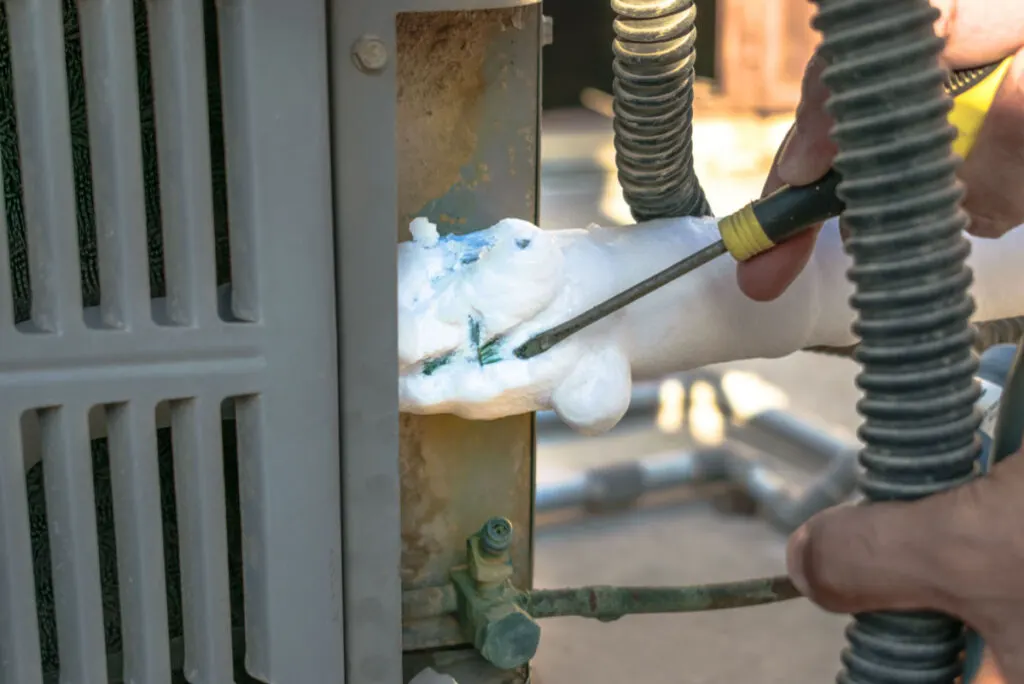
- Frost or ice on the larger, insulated copper line at the indoor unit or where it enters the outdoor unit.
- Water on the floor near the air handler or a stain on the ceiling below an attic unit. The ice melts between cycles and overflows the drain pan.
- The house never reaches the set temperature, and the system runs from afternoon into the night.
- Gurgling or hissing at the indoor unit as refrigerant flow changes around a frosted coil.
What causes it
A dirty filter. The most common cause by a wide margin. Pasadena, CA and the San Gabriel Valley are dusty, the cooling season runs May through October, and a filter that was fine in April can be packed by July. A filter you cannot see light through is choking the coil.
Closed or blocked registers. Closing vents in unused rooms does not save energy on a central system. It cuts total airflow across the coil. Furniture on floor vents and rugs over returns do the same.
A dirty indoor coil. Years of running with cheap fiberglass filters, or with gaps around the filter, coat the coil in a felt of dust. A filter change will not fix this. It needs coil cleaning.
A weak blower. A failing capacitor or motor moves less air than the system was designed for. The coil gets colder, the ice starts, and the blower strains even harder.
Collapsed or leaking attic ducts. The 1950s and 60s ranch homes across the San Fernando Valley and the newer parts of the San Gabriel Valley often have original ductwork sitting in a 130°F attic. Crushed or disconnected return ducts starve the coil.
Low refrigerant. Refrigerant does not get used up. If it is low, there is a leak. This is the cause that will keep coming back until the leak is found and fixed.
Running the AC on a cool night. When outdoor temperatures drop into the 50s, system pressures fall and the coil can dip below freezing. Cold clear nights in fall and spring are when this happens here. Open a window instead.
Fan set to "on" with a struggling system. Continuous fan can hide a freezing problem: the blower keeps pushing air over ice, so you get weak cool air instead of nothing, and the ice keeps growing.
How to prevent it
- Check the filter every month during cooling season. Replace it when it looks dirty, which in this area is typically every one to three months, sooner during smoke or construction dust.
- Keep every supply register open and every return grille clear.
- Keep the fan on "auto," not "on," unless you have a specific reason.
- Do not set the thermostat far below what you actually want. A very low setpoint just makes the system run without stopping.
- Keep a couple of feet clear around the outdoor unit and rinse the fins gently with a hose, power off at the disconnect, a few times a season.
- Get a maintenance visit in spring. A tech checks the refrigerant charge, the blower, the coil, and the drain before the first heat wave, which is when freeze-ups show up.
If it has already frozen
Turn cooling off at the thermostat and set the fan to "on." The blower will move house air across the coil and thaw it in a few hours. Do not chip at the ice; the coil fins bend and the tubing is thin. While it thaws, replace the filter and open every vent. Once the ice is gone, run the AC again and watch the airflow. If the system freezes a second time with a clean filter and open vents, stop and call. Running a compressor with a frozen coil can pull liquid refrigerant back into it, and compressors do not survive that for long.
What you can check yourself
- Pull the filter and hold it up to a light. Replace it if you cannot see through it. Note the size and the airflow arrow.
- Walk the house and open every register. Move furniture off floor vents.
- Look at the copper lines at the indoor unit and the outdoor unit for frost.
- Look in the drain pan under the indoor coil for standing water.
- Check the thermostat: cool mode, fan on auto, a reasonable setpoint.
- Clear leaves and yard debris from around the outdoor unit.
- If the breaker tripped, reset it once. Not repeatedly.
Do not open sealed electrical compartments, and do not try to add refrigerant. Adding or removing refrigerant legally requires EPA Section 608 certification, and topping up a leaking system just delays the same freeze-up to next month.
When to call a licensed tech
Call when the coil freezes again after a full thaw with a clean filter, when airflow stays weak with everything open, when you hear hissing or find an oily spot on a refrigerant line, when the outdoor unit or the blower will not start, or when the breaker trips more than once. A diagnostic visit measures the airflow, the refrigerant pressures and temperatures, the blower motor and capacitor, and the coil condition, and tells you which of the two root causes you have. If it is a leak, the fix is finding it and repairing it, then charging the system by weight, not by feel.
Common questions
Can a frozen AC damage the compressor?
Yes, if it keeps running. Ice on the coil means refrigerant may leave the coil as a liquid instead of a vapor, and the compressor is built to pump vapor. Shut cooling off as soon as you see ice or notice the airflow fading.
How long does it take to thaw?
Typically a few hours with the fan running and cooling off. A heavily iced attic coil in the afternoon can take longer. Let it finish; restarting cooling on a half-thawed coil refreezes it.
Does a high-MERV filter cause freezing?
It can if the system was not designed for it and the filter is left in too long. A MERV 13 pleated filter is fine in most systems, but it loads up faster than a cheap one, so check it more often. If airflow drops right after a filter upgrade, a tech can measure whether the system can handle it.
If the AC keeps icing up, book a $69 diagnostic. You are told the price before we schedule, and it is credited toward the work if you go ahead. Call Boost Services, 818-277-5056 or send us a message and we will usually be out within a few hours.
Written with AI assistance by Boost Services, Heating and Cooling team, and reviewed by our licensed technicians before publishing. Boost Services Heating and Cooling, C-20 #1119892.