
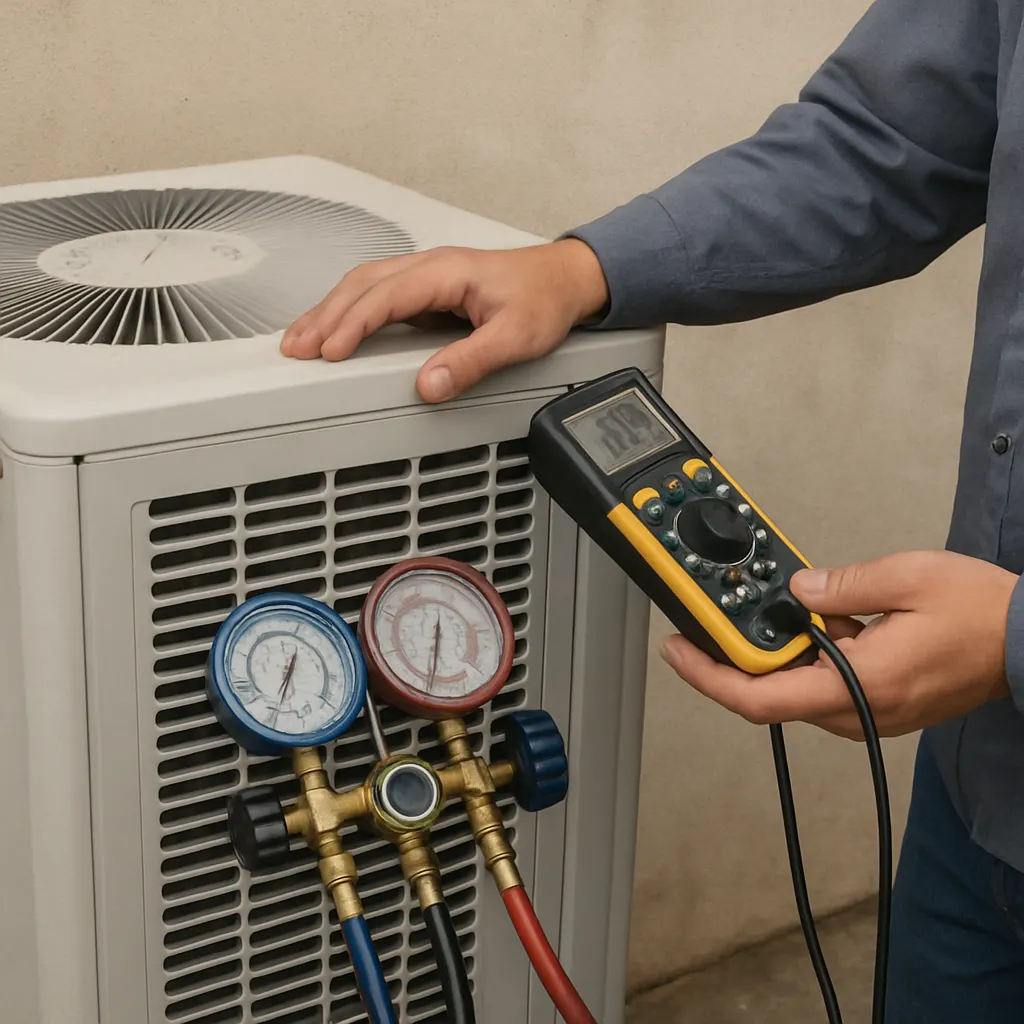
An air conditioner that runs all afternoon and never gets the house where you set it is usually losing the fight in one of four places: airflow, the outdoor coil, the ducts, or the refrigerant charge. The system is working. Something is stopping the cold it makes from reaching you, or stopping the heat it collects from getting outside. In Pasadena, CA and across both valleys, the ducts are the one people never suspect.
First, is it cooling a little or not at all?
These are different problems with different fixes.
- The vents blow cold air, the house just never catches up. That is this post. Keep reading.
- The vents blow room-temperature or warm air. Start with AC blowing hot air instead.
- The outdoor unit never runs at all. That is a no-start, covered in troubleshooting the outside unit.
A quick measurement tells you which one you have. Hold a cheap thermometer in the nearest supply vent, then in the return grille. On a working system the supply should read meaningfully colder than the return. A small split points at airflow or charge. A healthy split with a hot house points at ducts, insulation or capacity.
Airflow is the first suspect
Everything downstream depends on moving enough air across the indoor coil. Choke that and the coil gets too cold, the system moves less heat, and on a bad day the coil ices over and stops cooling entirely.
- The filter. Hold it up to a light. If light does not pass, replace it. A summer here loads a filter faster than the box suggests, and the Department of Energy's Energy Saver home cooling guide puts it plainly: a clogged filter restricts airflow through the unit and cuts its efficiency.
- Closed or blocked registers. Furniture over a floor register, rugs over a return, supply vents closed off in unused rooms. Closing vents does not save anything on most systems; it raises static pressure and makes the whole house worse.
- A dirty indoor coil. Above the furnace or inside the air handler, the evaporator coil collects a felt of dust that no filter caught. You cannot see it without pulling a panel, so leave that to a tech, but it is a common cause of a system that cooled fine two summers ago.
- The blower. A wheel packed with dust, or a motor running at the wrong speed after a board or thermostat swap, moves a fraction of the air it should.
The outdoor unit has to dump the heat somewhere
The condenser outside is where the heat from your house actually leaves. Cottonwood fluff, jacaranda litter, dryer lint and a hedge planted too close all cut the airflow through those fins. Pressure climbs, capacity drops, and on a 100-degree afternoon the system simply cannot keep up.
With the power off at the disconnect, clear a couple of feet around the unit, pull the debris off the fins, and rinse them gently from the outside with a garden hose. No pressure washer, and do not bend the fins. If the fins are packed gray all the way through, a hose will not do it and the unit needs a proper coil cleaning with the top off.
Your ducts are baking in the attic
This is the Pasadena and San Fernando Valley problem. Most 1950s to 1980s ranch houses here run their supply ducts through the attic, and a Southern California attic on an August afternoon runs far hotter than the air outside. Cold air that leaks out of a joint, or picks up heat through thin insulation, never reaches the room.
The Department of Energy's home upgrades guidance says that "in a typical house, about 20%-30% of the air that moves through the duct system is lost due to leaks, holes, and poorly connected ducts." In an attic that hot, the comfort cost is worse than the energy cost: the back bedroom stays warm no matter what you set the thermostat to.
Two things matter, and both are in California's 2025 Title 24 energy code. When more than 25 feet of new duct goes into an attic in our climate zones, it is required at R-8 insulation, which is a good deal more than the thin gray flex that came with a 1970s house. And when an air handler, condenser or coil gets replaced, the ducts usually have to pass a duct leakage test, the one your contractor will call a HERS or ECC test. If your system was changed out without anyone testing the ducts, that is worth asking about. Duct repair and sealing is often the single biggest comfort change in an older house.
Low refrigerant means a leak
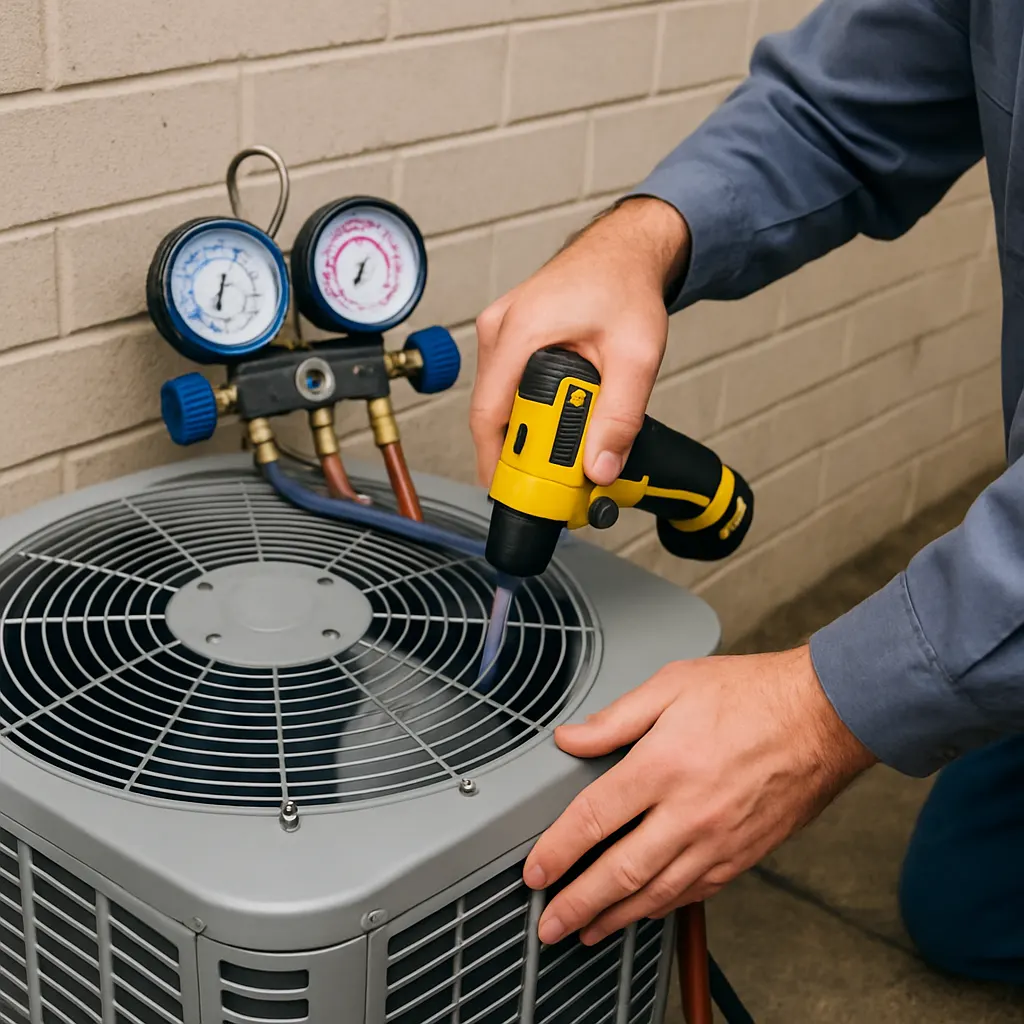
Refrigerant is not fuel. It circulates in a sealed loop and does not get used up, so a system that is low has a leak somewhere. The signs are weak cooling that has faded over a season or two, frost on the copper line at the outdoor unit, and a hiss.
Adding refrigerant without finding the leak buys a few weeks and vents the new charge into the air. EPA's Section 608 rules require certification to handle refrigerant, so this is not a homeowner job in any case. A tech finds the leak, repairs it, then weighs in the correct charge.
When the system is just too small for the day
Some houses cool fine in June and lose ground in a September heat wave. A system sized for a typical hot afternoon will run continuously and fall behind in a record heat wave, and that is not a fault. The same happens after an addition, a garage conversion, or when an ADU got tied into the existing system without anyone recalculating the load. If the house has never held temperature on hot days since it was installed, the question is sizing, not repair.
What you can check yourself
- Change the filter and note how bad it was.
- Open every supply register and clear anything sitting on a return grille.
- Kill the power at the outdoor disconnect, clear leaves and debris, rinse the fins with a hose.
- Check the thermostat: Cool mode, fan on Auto, setpoint below room temperature, fresh batteries.
- Feel the two copper lines at the outdoor unit. The fat insulated one should be cold and sweating, not frosted over.
- Walk the house with the system running and note which rooms are worst. That map is useful to a tech.
- If there is frost anywhere, switch cooling off and the fan to On for an hour or two to thaw it before running again.
Nothing on that list involves opening a sealed panel or touching refrigerant, and none of it should.
When to call a licensed tech
- The supply air is barely cooler than the return.
- The indoor coil or the copper lines keep freezing.
- The system runs constantly and still loses ground on a normal warm day.
- One or two rooms are always hot while the rest are fine.
- The outdoor unit is short cycling, or the breaker trips.
- You can hear air whistling out of the ducts in the attic.
Tell us the room-by-room map, what the filter looked like and when it was last changed, and whether anything has been replaced recently. That shortens an AC repair visit considerably.
Common questions
Why is upstairs hot when downstairs is fine?
Heat rises, the attic is above the upstairs, and the duct runs to the upstairs rooms are usually the longest and leakiest. Sealing and insulating those runs, adding return air, or zoning the system are the real fixes. Cranking the thermostat down just overcools the ground floor.
Should I close vents in rooms I do not use?
No. Residential duct systems are balanced for all the registers being open. Closing them raises pressure in the ducts, pushes more air out of every leak, and can drop airflow across the coil enough to freeze it.
Does my AC need refrigerant every couple of years?
It should not. The loop is sealed. A system that needs topping up regularly has a leak that is getting bigger, and each visit adds cost while the problem stays. Ask for the leak to be found and repaired.
Our diagnostic is $69, told to you before we book and credited toward the work. Call Boost Services, 818-277-5056, 6am to 10pm, seven days, or send us a message.
Written with AI assistance by Boost Services, Heating and Cooling team, and reviewed by our licensed technicians before publishing. Boost Services Heating and Cooling, C-20 #1119892.