
The price of a new HVAC system in Pasadena, CA is set by six things: the kind of system, its size, its efficiency tier, the condition of your ducts, how hard the house is to work in, and the permit and testing work California requires. You will not find a useful number online because none of those six are visible from a web page. What you can do is understand each one before the quotes arrive, so the differences between quotes make sense instead of just being different.
What drives the price
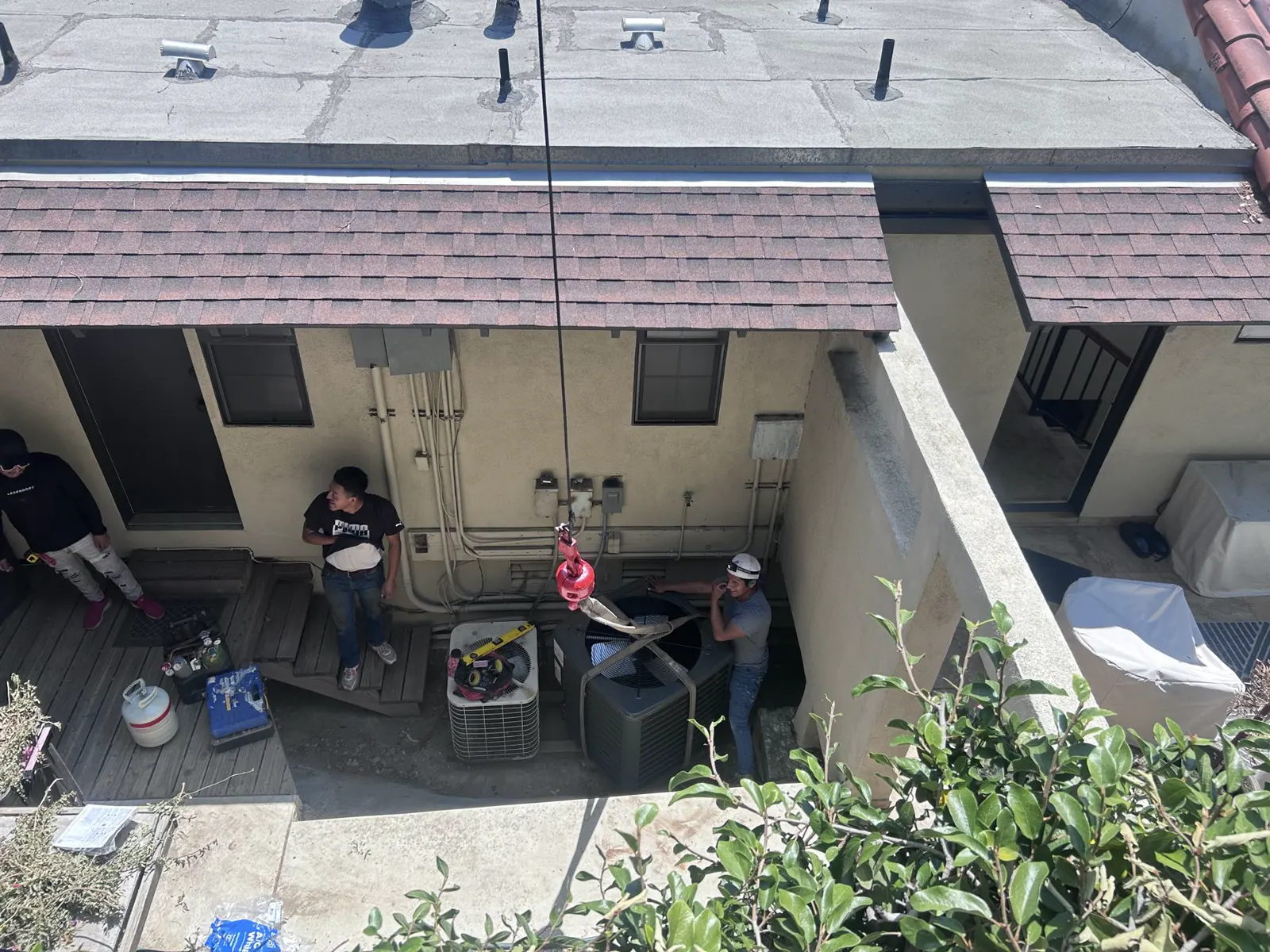
The kind of system. A straight air conditioner paired with your existing furnace is the simplest change. A furnace and AC together is bigger. A heat pump does both jobs in one outdoor unit and changes the electrical side. A ductless mini split skips the ducts and is the usual answer for an ADU, a garage conversion, or a Pasadena bungalow that never had ducts. A rooftop package unit on a flat-roofed San Fernando Valley home or a small commercial building involves a crane and a roof curb. Each of these is a different job, not a different price for the same job.
Size, from a load calculation. Capacity is measured in tons, and the right number comes from a calculation of your house: square footage, orientation, windows, insulation, attic condition, and how many people live there. It does not come from matching the old unit. Old units were often oversized, and an oversized system short-cycles, never dehumidifies, and wears out early. Ask how the size was decided. "Same as what you have" is the wrong answer.
Efficiency tier. Cooling efficiency is rated in SEER2 and heating in AFUE or HSPF2. A higher tier costs more up front and less every month. In a long cooling season like ours, May through October with 100°F stretches, the monthly side matters more than it would in a milder climate. The right tier for your house depends on how long you plan to stay, and a tech should show you two options rather than one.
Ductwork. This is the item most quotes hide and most homeowners skip. The 1950s to 1980s ranch homes across the valleys usually have their original attic ducts, and after decades in a 130°F attic the insulation has collapsed and the joints have opened. A new system attached to leaking ducts performs like the old one. The quote should say whether the ducts were inspected, whether they will be sealed, repaired, or replaced, and what the new duct insulation rating will be. The 2025 Title 24 standard for new attic ducts in our climate zones is R-8.
Access and the house itself. A closet furnace in a bungalow, an attic air handler reached through a hall hatch, a condenser on a side yard with two feet of clearance, a roof unit: each changes the labor and sometimes the equipment. Old wiring, an undersized disconnect, or a panel that cannot take a heat pump's circuit are electrical work, a separate licensed trade, and the quote should say so rather than bury it.
Permits and testing. A mechanical permit is required for a replacement, and when the air handler, condenser, or coil is replaced, California requires duct leakage testing by a third-party rater (HERS, now called ECC). A quote without a permit line is a quote that plans to skip it, and the unpermitted install becomes your problem at resale.
What a real quote contains
- Equipment: brand, model numbers, capacity, and efficiency ratings, in writing.
- Labor and materials: the line set, the pad or curb, the disconnect, the thermostat, condensate handling.
- Ductwork: what was found and what will be done.
- Permit and ECC test fees.
- The warranty: the manufacturer's parts warranty and the contractor's labor warranty. We give one year on labor.
- Start and finish dates.
- The price, before work begins. Ours are written before any work starts.
Get more than one quote, and compare them line by line, not total to total. A lower total that leaves out the duct work, the permit, and the test is not lower.
The costs after installation
- Filters. Check monthly in cooling season; replace every one to three months here.
- Annual maintenance. A tune-up before summer and a furnace check before winter catch small failures before they take out the compressor. Some manufacturers ask for documented annual service to keep the parts warranty, so check yours. A maintenance plan puts both on the calendar.
- Electricity or gas. A higher efficiency tier lowers this line every month for the life of the system.
- Repairs. New systems rarely need them in the first years, but a capacitor or a contactor will fail eventually. Budget something rather than nothing.
Financing and incentives
Financing is available on new systems through Wisetack: monthly plans on approved credit, and checking your options does not affect your credit score. Details on our financing page. Pasadena Water & Power and LADWP have had heat-pump incentives; programs change, so check the current offering before you buy and ask what paperwork the installer needs to provide.
What you can check yourself
- Read the data plates on the outdoor unit and the furnace: brand, model, serial, refrigerant type. The age is encoded in the serial number.
- Note which rooms are always too hot or too cold. That is duct and sizing information.
- Look in the attic hatch at the ducts. Crushed, hanging, or bare metal ducts are worth a photo.
- Find the electrical panel and note whether there is any open space in it.
- Pull your last two summers of electric bills so you can compare after.
- Write down what you actually want fixed: a bedroom that never cools, a furnace that scares you, a bill that doubled.
When to call a licensed tech
Call when you want a load calculation done on your house rather than a size guessed from the old unit, when you want the ducts inspected before deciding, when the old system uses R-22 (production and import ended in 2020) and has a leak, or when the repair quotes on the current system have started to stack up. Our AC installation visit ends with a written quote, and we will tell you if the honest answer is a repair instead.
Common questions
Should I replace the furnace and the AC at the same time?
Often, if both are near the end. They share the blower, and a new high-efficiency condenser on an old air handler can underperform. If the furnace is much newer, replacing the outdoor unit and matching the indoor coil may be right. Ask for both quotes.
Is a heat pump cheaper to run than gas heat in Pasadena?
It depends on your electric and gas rates and how much heating you actually do, which in our winters is not much. What a heat pump certainly does is replace two pieces of equipment with one. A tech should walk through your bills rather than promise a number.
How long does an installation take?
A like-for-like split system is typically a day. Add duct replacement, a heat pump conversion, or a crane and it becomes two or more. The quote should say.
If you are at the quote stage, book a quote visit. The quote visit for a new system is free. Call the Boost Services team at 818-277-5056 or send us a message and we will usually be out within a few hours to a day.
Written with AI assistance by Boost Services, Heating and Cooling team, and reviewed by our licensed technicians before publishing. Boost Services Heating and Cooling, C-20 #1119892.