
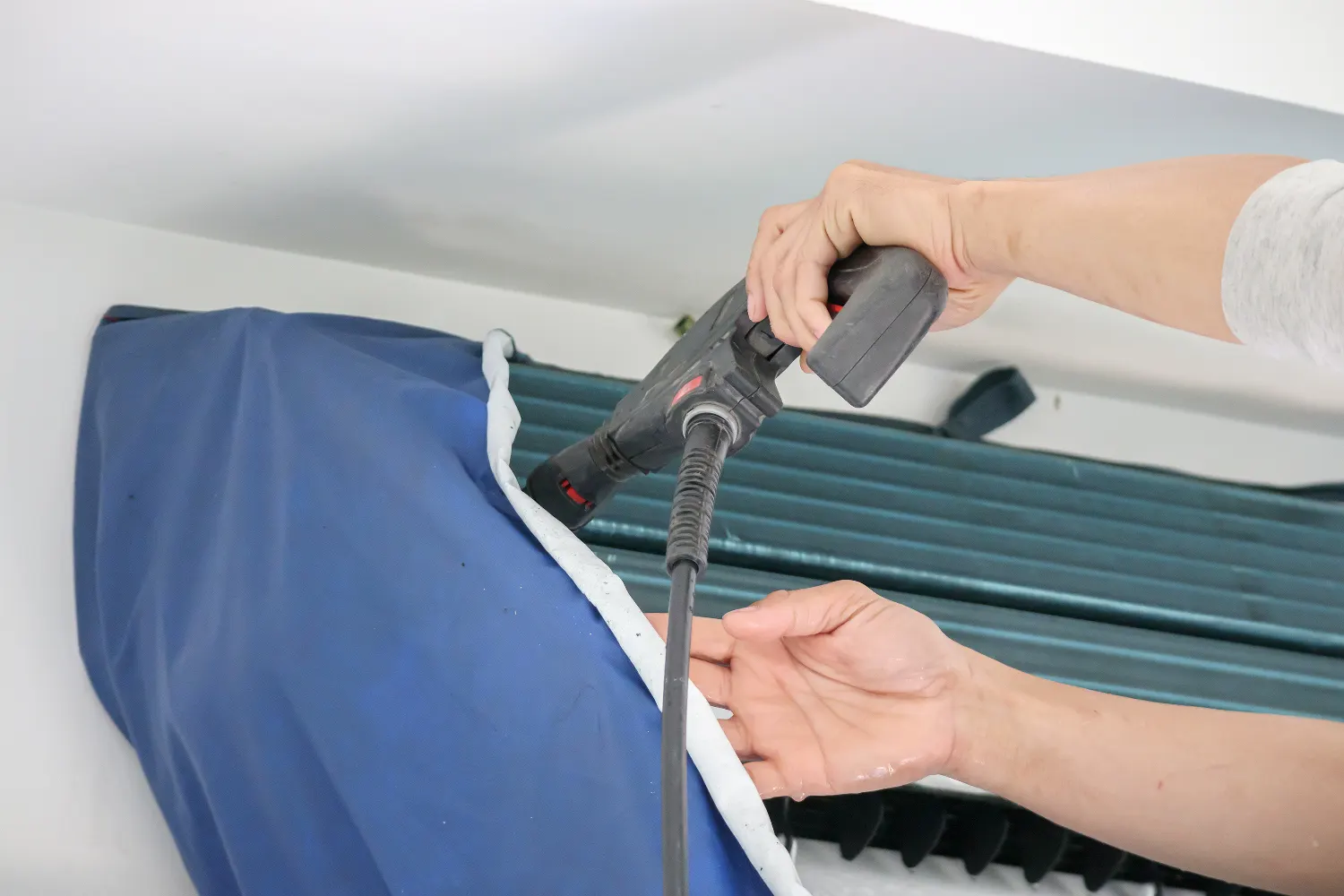
Your air conditioner has two coils, and both of them only work when air can move through them and heat can move across them. A layer of dust does the same thing to a coil that a blanket does to you: it insulates. The system runs longer to do the same job, the bill goes up, and the compressor works against pressures it was not designed for. In the San Gabriel Valley and the San Fernando Valley, with dry dusty air, Santa Ana winds, and smoke seasons, coils get dirty faster than the maintenance schedule in the owner's manual assumes.
The two coils and what they do
The evaporator coil sits inside, in the air handler or on top of the furnace. Refrigerant inside it is cold; house air blows across it, gives up its heat and moisture, and comes out cool. Because it is wet while it runs, dust that lands on it turns into a paste, and the paste grows things.
The condenser coil wraps around the outdoor unit. The refrigerant arrives hot, the fan pulls outdoor air through the fins, and the heat leaves. It is exposed to everything in the yard: dust, pollen, leaves, cottonwood fluff, dryer lint if the vent is nearby, and the grass clippings the mower throws at it.
What dirt actually does
- Longer run times. Less heat transfer per minute means more minutes to reach setpoint. On a 100°F afternoon a dirty system may never get there.
- Higher pressures and temperatures. A condenser that cannot shed heat pushes head pressure up, and the compressor draws more current and runs hotter. That is where the wear is.
- Frozen indoor coils. A dirty evaporator coil, or a dirty filter in front of it, chokes airflow until the coil ices over. Then the air from the vents goes warm.
- Drain problems and smells. The paste on a wet evaporator coil sheds into the drain pan, clogs the condensate line, and produces the musty smell people notice at the start of summer.
- Higher bills. A dirty coil makes the system run longer for the same cooling, and that shows up on the bill well before it shows up as a breakdown.
How often, in this climate
Clean the outdoor coil whenever it looks dirty, and have a tech check both coils at the annual visit. For most homes here that works out to:
- Outdoor coil: once a year, in spring before the cooling season, and a look after every Santa Ana wind event or smoke stretch.
- Indoor coil: inspected every year at the maintenance visit, cleaned when it needs it. A coil behind a good filter that gets changed on time can go a few years; a coil that has run behind a cheap filter or a gap in the filter rack will be matted.
- More often for units in a dirt side yard, next to a dryer vent, under a cottonwood or a pine, or on a rooftop next to a restaurant exhaust.
Signs the coils need cleaning
- The house takes longer to cool than it did last summer.
- The outdoor unit's fins look gray and matted, or you cannot see through them.
- Ice on the copper line at the outdoor unit, or on the indoor unit.
- A musty smell when the system first runs.
- Water around the indoor unit, from a clogged drain.
- The electricity bill rose without a change in weather or use.
What you can check yourself
The outdoor coil is the homeowner's job, within limits. Turn the power off at the disconnect box next to the unit. Every panel stays on while you work: pulling the disconnect stops the fan and compressor, but the low-voltage control wiring is fed from the indoor unit and can still be live. Pull leaves and debris out of the top and away from the sides. Trim shrubs back so the unit has roughly two feet of open air all around. Then rinse the fins gently with a garden hose from the outside, at low pressure, top to bottom. That takes off the surface layer. Dirt packed several rows deep needs the cabinet opened and a rinse from the inside out, so the dirt leaves the way it came in, and that is the tech’s job. No pressure washer: it folds the fins flat and the coil is worse off than before. Let it dry, restore power. Worth knowing before you start: two of the brands we service would rather you did not. Goodman says to hire a qualified servicer if the outdoor coil needs cleaning, because inexperienced hands puncture the tubing. Lennox says coil cleaning should be done by a licensed technician. Trane says a gentle rinse from the outside is fine. If you would rather leave it to someone who does it daily, coil cleaning is part of a maintenance visit from Boost Services Heating and Cooling, licensed C-20 #1119892.
The indoor coil is not a homeowner job. It sits in a sealed cabinet behind the blower or on top of the furnace, it is delicate, and getting to it means opening the air handler. Change the filter on time and let the annual visit handle the coil.
What a professional coil cleaning involves
A coil cleaning visit is more than a rinse. The outdoor coil gets a foaming coil cleaner that lifts the grime out from between the fins, then a thorough rinse, and any bent fins get straightened with a fin comb so the air path is open. The indoor coil is accessed through the air handler, cleaned with a product made for evaporator coils, and the drain pan and condensate line are flushed at the same time. The tech checks the temperature drop across the coil and the pressures before and after, which is how you know it worked.
Cleaning fits naturally into an annual HVAC maintenance visit, and a maintenance plan puts it on the calendar so it happens before the first heat wave rather than during it.
Commercial rooftop units
Package units on the flat roofs across the Valley have the same two coils in one cabinet, and they collect more: roof dust, exhaust from the kitchen next door, bird debris. They also run more hours. Twice-yearly cleaning is common for restaurants and busy small buildings. The visit is scheduled around business hours so the space is not down while it happens.
What drives the price
What you pay for a coil cleaning depends on access (a rooftop or an attic air handler takes longer than a closet), how many units you have, how dirty the coils are, and whether the indoor coil needs the cabinet opened. A coil that has gone five years takes far longer than one that gets seen every spring, which is the practical case for the annual schedule.
When to call a licensed tech
Call if the outdoor fins are matted and a hose rinse did not change how the system runs, if you see ice anywhere, if the indoor unit smells musty or is leaking water, or if it has been more than a year since anyone looked at the indoor coil. Turn the system off if there is ice and let it thaw before the visit.
Common questions
Can I clean the indoor evaporator coil myself?
No. It is inside a sealed cabinet, easily damaged, and reaching it means opening the air handler. Keep a good filter in place and let the annual visit handle the coil.
Does coil cleaning fix an AC that blows warm air?
If the cause is a dirty condenser or a frozen evaporator coil, yes, often completely. If the cause is low refrigerant or a failed part, cleaning helps but the underlying repair is still needed. The diagnostic tells the two apart.
Is coil cleaning part of a tune-up?
The inspection is, and the outdoor rinse usually is. A heavy indoor coil cleaning that needs the cabinet opened is its own line item, quoted before it is done.
If your system is running long or the coils have not been seen in a year, book a $69 diagnostic. We tell you the fee before booking and credit it toward the work. Call 818-277-5056 or send us a message.
Written with AI assistance by Boost Services, Heating and Cooling team, and reviewed by our licensed technicians before publishing. Boost Services Heating and Cooling, C-20 #1119892.