
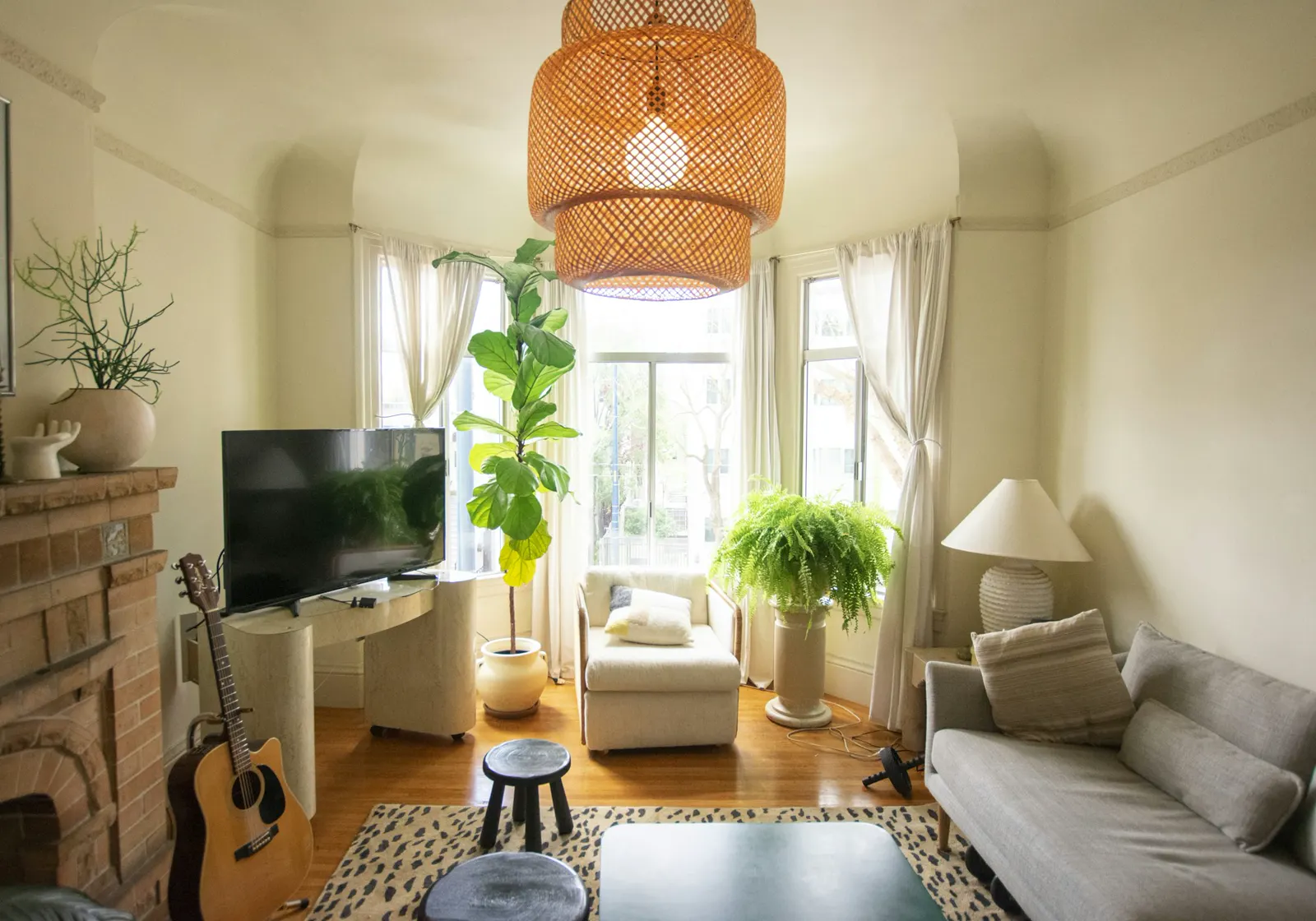
When the AQI climbs past 100 over Pasadena, CA and the valleys, almost every useful move is indoors, and most of them run through your heating and cooling system. Close the house, stop pulling outside air through it, put the best filter the system will actually take in the slot, and set up one room you can breathe in. Here is the order to do it in, plus what a smoke week does to the equipment while nobody is looking.
The two numbers worth acting on
AirNow.gov, the EPA's air quality site, splits the index into six categories. Two of them are the ones that should change what you do.
- Orange, 101 to 150, Unhealthy for Sensitive Groups. AirNow's description: "Members of sensitive groups may experience health effects. The general public is less likely to be affected." This is where people with asthma, COPD, or a heart condition, plus young kids and older adults, often start to notice it.
- Red, 151 to 200, Unhealthy. "Some members of the general public may experience health effects; members of sensitive groups may experience more serious health effects." At red, everyone closes up.
Above that, purple (201 to 300) is a health alert for everyone. If you want the full scale and where to look up your street rather than your ZIP, that is covered in how to monitor air quality in LA.
One honest note: nothing in this post prevents or treats anything. Cleaner indoor air is about reducing what you breathe, and people with asthma often notice the difference. Medical questions go to your doctor.
Close the house first
EPA's wildfire guidance for indoor air is blunt about the first step: "Keep windows and doors closed." Use fans and air conditioning to stay cool instead.
That is harder here than it sounds. A 1920s Craftsman in Pasadena or Altadena with original wood windows and no weatherstripping leaks at every sash. You will not seal it, but you can cut the worst of it: lock the windows rather than just closing them, drop a rolled towel at the bottom of exterior doors, and close the fireplace damper.
Things to switch off on a smoke day:
- Whole-house fans and attic fans. They pull outdoor air through the house by design.
- Evaporative coolers, for the same reason.
- Long runs of the range hood or bathroom exhaust. Both push air out, which drags an equal amount of outdoor air in through every gap. Use them briefly while cooking, then stop.
Put the system on recirculate
EPA: "If you have an HVAC system with a fresh air intake, set the system to recirculate mode, or close the outdoor intake damper."
Most single-family systems around here have no outdoor air intake at all. They already recirculate house air, which on a smoke day is what you want. Newer tight homes, some additions, and most small commercial rooftop units do have an outside-air damper, and that is the one to close.
The other setting worth changing is the fan. Move the thermostat from auto to on for a few hours. The blower keeps running between cooling calls, so house air keeps passing through the filter instead of sitting still. Put it back to auto when the air clears.
The filter is what actually does the work
EPA again: "Choose a high-efficiency HVAC filter, such as one with a Minimum Efficiency Reporting Value (MERV) 13 rating, or as high a rating as your system fan and filter slot can accommodate."
Two practical points. First, the size and depth are printed on the frame of the filter you already have, so read it before you buy. A 1-inch slot takes a 1-inch filter; a media cabinet takes a 4- or 5-inch one and holds up much better under smoke. Second, smoke loads a filter far faster than ordinary dust. During an event, pull it and look at it every week or so rather than waiting for the calendar.
If airflow drops noticeably after you fit a higher-MERV filter (weak vents, longer run times, a strained blower), that is a sign the return side is undersized, not a reason to give up on filtration. It is worth having looked at, because a starved blower is hard on the motor and on the coil. And never run the system with the filter out. All of that dust goes straight onto the coil and the blower wheel.
Set up one clean room
EPA's clean room advice is to pick a room you are comfortable in, keep its windows and doors closed, filter the air with a portable air cleaner that does not produce ozone, and stay cool with fans or recirculating air conditioning.
In practice, that is usually a bedroom. Match the portable cleaner to the room's square footage rather than buying the smallest box on the shelf, run it on a high setting, and leave the door shut. Skip ozone-generating air cleaners, and check that any "ionizer" setting can be switched off. While you are in there, avoid the indoor sources that undo the work: candles, incense, smoking, frying on high heat, and vacuuming with a machine that has no HEPA bag.
A whole-home air purifier at the air handler is the version of this that covers the entire house, which matters more in a region with a smoke season than in most of the country.
Outdoors is a different question
Everything above is about the air already inside your house, which is the part a heating and cooling contractor can actually change. What you do outside on a smoke day, how hard to exercise, and what kind of mask is worth wearing are health questions. AirNow.gov is the EPA's own site for the current number and the advice that goes with each category, and it is the right place to start rather than anything we could tell you.
What a smoke week does to the equipment
This is the part nobody mentions until the following summer.
- The evaporator coil and blower wheel collect what the filter misses. Fine smoke particles are sticky. A season of heavy smoke leaves a film that cuts airflow and capacity, and it does not blow off. That is what coil cleaning is for.
- Leaky attic ducts bypass the filter entirely. Return ducts with open joints sit in an attic that can run 130°F or hotter in summer and pull attic air, ash and all, into the system downstream of nothing. No filter upgrade fixes that. Sealing the return side does.
- The outdoor condenser coil gets a layer of ash. It is outside, so it will. Rinsing it gently with a garden hose, with the power off at the disconnect box by the unit first, is safe homeowner work.
What you can check yourself
- Read the size and depth printed on your current filter, then buy the highest MERV rating that fits the slot.
- Switch the thermostat fan from auto to on for the duration of the smoke, and back afterward.
- Walk the house and close every window and the fireplace damper. Turn off whole-house and attic fans.
- Look at the filter weekly during a smoke event, not monthly.
- After it clears, replace the filter, rinse the outdoor coil with a hose, wet-wipe hard surfaces, and open up once the AQI is back in the green.
When to call a licensed tech
Call when airflow drops after a filter upgrade and you want the return sized properly, when the slot only takes a thin filter and you want a deeper media cabinet, when the air from the vents smells like smoke even with a fresh filter (usually a loaded coil or a leaking return), or when readings inside stay high with the house shut and a clean filter. A maintenance visit covers the coil, the blower and the drain, which is where a smoke season ends up.
Common questions
Should I run the AC when the AQI is bad?
Yes, if it is a normal recirculating system. It keeps the house cool without bringing outside air in, and every cycle sends house air through the filter. Just make sure the filter is clean and rated as high as the system takes.
Does a MERV 13 filter remove smoke smell?
It removes much of the particle side of smoke, which is what EPA points filters at. A MERV rating describes particle capture, not gases, so odor typically lingers even behind a good filter. Closed windows, time and activated-carbon filtration do more for smell.
Is it safe to open windows at night to cool the house down?
Only once the AQI has actually dropped, not just because the sun went down. Readings do not reliably fall after dark, so check the number before you open up.
If you want the filtration and duct side handled before the next smoke week, book a $69 diagnostic. You hear the price before we schedule, and it is credited toward the work if you go ahead with it. Call Boost Services, 818-277-5056 or send us a message, and we are usually out within a few hours.
Written with AI assistance by Boost Services, Heating and Cooling team, and reviewed by our licensed technicians before publishing. Boost Services Heating and Cooling, C-20 #1119892.