
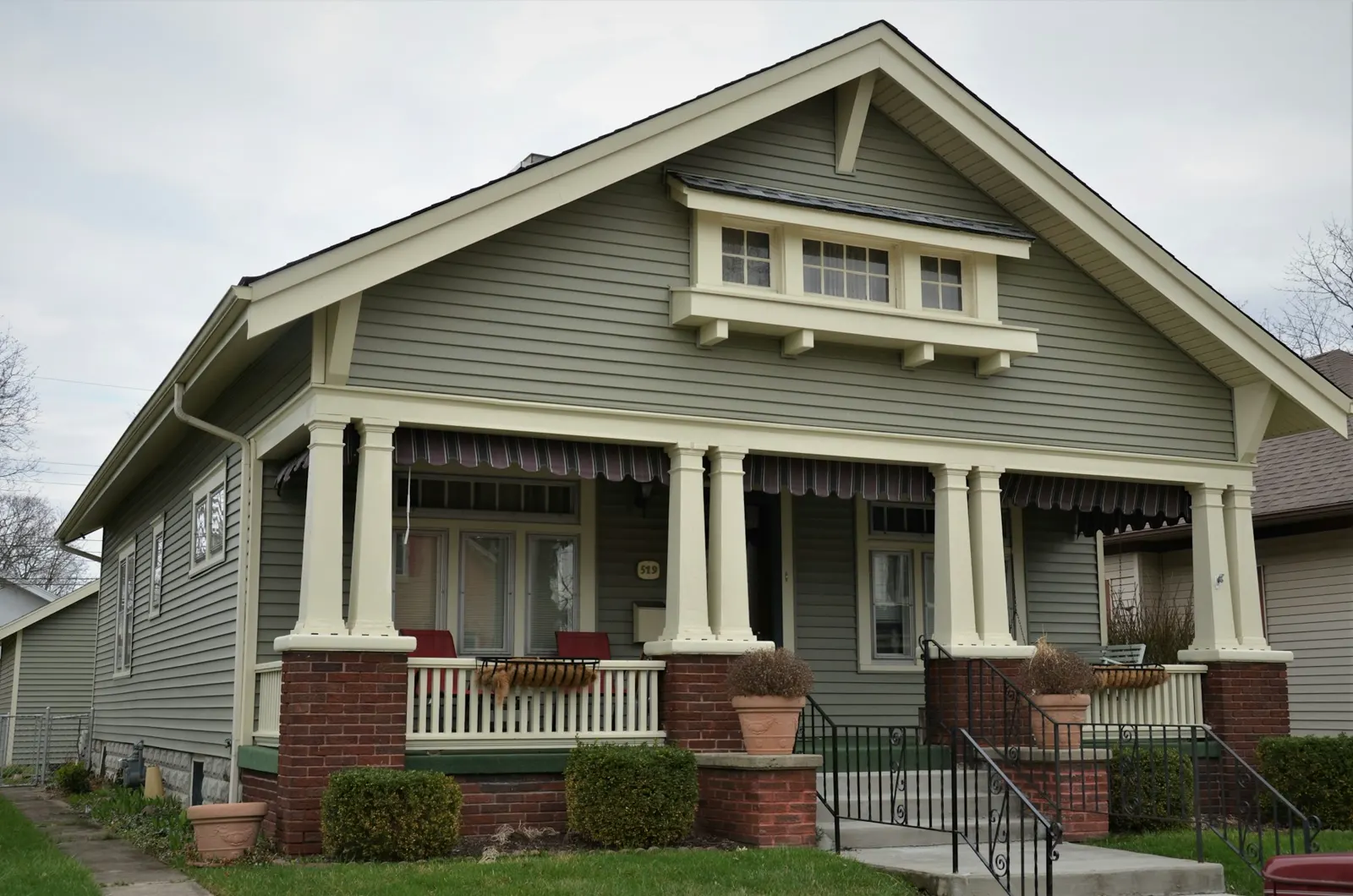
A floor furnace that has been inspected, has a clean burner and a sound heat exchanger, and lives in a house with working carbon monoxide alarms is a reasonable way to heat a small older home. One that has not been looked at in years is a question mark. If you own a 1920s bungalow in Pasadena, CA, Altadena, or South Pasadena with a metal grille in the hallway floor, the decision is rarely urgent. It is about condition, what you want from the house, and whether you also want cooling.
What a floor furnace is
A gravity floor furnace hangs below the floor in the crawlspace. The burner and heat exchanger sit in a metal box, and the only thing you see from inside the house is the grille, usually in a hallway or between the living room and dining room. Gas burns below, the exchanger heats up, warm air rises through the grille, and cooler air sinks back down around the edges. No blower, no ducts, no electricity in most older models. Exhaust goes through a vent pipe under the house and up through the roof or an exterior wall.
They were the standard heat source for small homes here from the 1920s into the 1950s, and many are still in service because there is almost nothing to break.
Are floor furnaces safe?
They can be, with three conditions.
- The grille gets hot. Hot enough to burn skin on contact while the furnace is running. Homes with small children, older adults, or pets need to treat the grille as a stove top. That is the most common floor furnace injury, and it is a design feature, not a defect.
- The heat exchanger must be intact. It is the metal wall between the burning gas and the air coming up into your house. Decades in a damp crawlspace rust it. A crack or a rust hole lets combustion gases, including carbon monoxide, into the room air.
- The vent must draw properly. A crushed, disconnected, or rusted vent under the house pushes exhaust into the crawlspace, and from there into the living space.
Every home with a gas appliance should have working CO alarms. California has required them in homes with fuel-burning appliances since 2011. With a floor furnace, put one in the hallway near the grille and one near the bedrooms, and test them when you turn the heat on for the season.
Keep it: what a service visit covers
If the furnace is sound, an annual service before the cold nights arrive is the right move. A proper floor furnace service includes:
- Cleaning the burner and pilot assembly. Dust, rust flakes, and spider webs choke the pilot orifice and make the burner flame lazy.
- Inspecting the heat exchanger from below with a light and, where the design allows, a camera.
- Checking the vent pipe along its full run under the house, and its termination.
- Testing the thermocouple or thermopile output. These sensors keep the gas valve open and weaken with age.
- Checking the gas connections for leaks.
- Confirming the thermostat, if there is one, actually calls the valve.
- Measuring for carbon monoxide at the grille with the furnace running.
Most repairs are small. A thermocouple, a thermopile, a pilot orifice, or a millivolt thermostat are all routine.
What usually fails
- Pilot goes out or will not hold. Nearly always the thermocouple or thermopile, sometimes a dirty pilot orifice or a draft under the house.
- Pilot holds, burner will not light. Weak thermopile, a failed thermostat, or a broken wire in the crawlspace.
- Weak heat. Dirty burner ports, a partly blocked vent, or a dust-coated exchanger.
- Rust. Crawlspaces in older Pasadena neighborhoods get damp in winter. The bottom of the furnace box and the vent pipe corrode first.
Replace it: the honest options
The point where replacement makes sense is a cracked or rusted-through heat exchanger, a combustion chamber that is coming apart, or a unit so far gone that parts cannot be matched. At that point you have a few paths.
- A new floor furnace. Still manufactured, in limited models. It is the least disruptive swap and keeps the house as it is. It also keeps the hot grille and gives you no cooling.
- A wall furnace. Similar simplicity, moves the heat out of the floor. Needs a wall cavity and a roof vent.
- A ductless mini split or heat pump. This is the choice most owners of these houses end up making, because it adds air conditioning to a home that never had it. A mini split installation can heat and cool the main rooms with no ducts, and multi-zone systems cover several rooms from one outdoor unit. A ducted heat pump is possible when there is room in the attic or crawlspace to run ducts, which in a 1920s bungalow often there is not.
Pasadena Water & Power and LADWP have had heat pump incentives. Check the current program before you buy, since they change.
When the old furnace comes out, the gas line gets capped, the vent gets sealed, and the floor hole gets framed and patched. Ask for that in the written quote.
What you can check yourself
- Look at the pilot flame through the grille. Steady blue is what you want. Yellow, flickering, or none is a service call.
- With the furnace off and cool, vacuum dust and pet hair out of the grille.
- Keep rugs, furniture, and anything flammable off and away from the grille. Never cover it, even when the heat is off.
- Test your CO alarms and replace the batteries.
- If you have crawlspace access and want to look, do it with the furnace off. Look for standing water, heavy rust, or a vent pipe that has come apart. Do not touch the gas valve or any fitting.
When to call a licensed tech
- The pilot will not stay lit after one careful attempt following the label instructions.
- The furnace has not been inspected in more than a year, or you just bought the house and have no record.
- You see rust flakes or soot coming up through the grille, or the CO alarm has ever gone off.
- The heat is on and you get headaches or feel drowsy that clear up outside.
- You are deciding between repair and replacement and want the heat exchanger and vent looked at before spending anything.
Common questions
Can I put a rug over the floor furnace grille?
No. Not when it is running, and not when it is off either, because someone will forget. Rugs and furniture on the grille are a fire risk and block the airflow the furnace depends on.
Can a floor furnace be converted to add air conditioning?
No. It is a gravity heater with no blower and no ducts, so there is nothing to attach cooling to. Adding AC to one of these houses means a separate system, which is why a mini split often replaces the furnace rather than joining it.
How do I know if the heat exchanger is cracked?
You often cannot tell from above. Signs include a CO alarm going off, soot at the grille, a flame that changes color or flutters, and rust flakes coming up. The way to know is an inspection from the crawlspace with a light and a CO meter, which is part of a normal service visit.
Our diagnostic visit is $69, told to you before booking and credited toward the work. Call Boost Services at 818-277-5056 or send us a message.
Written with AI assistance by Boost Services, Heating and Cooling team, and reviewed by our licensed technicians before publishing. Boost Services Heating and Cooling, C-20 #1119892.