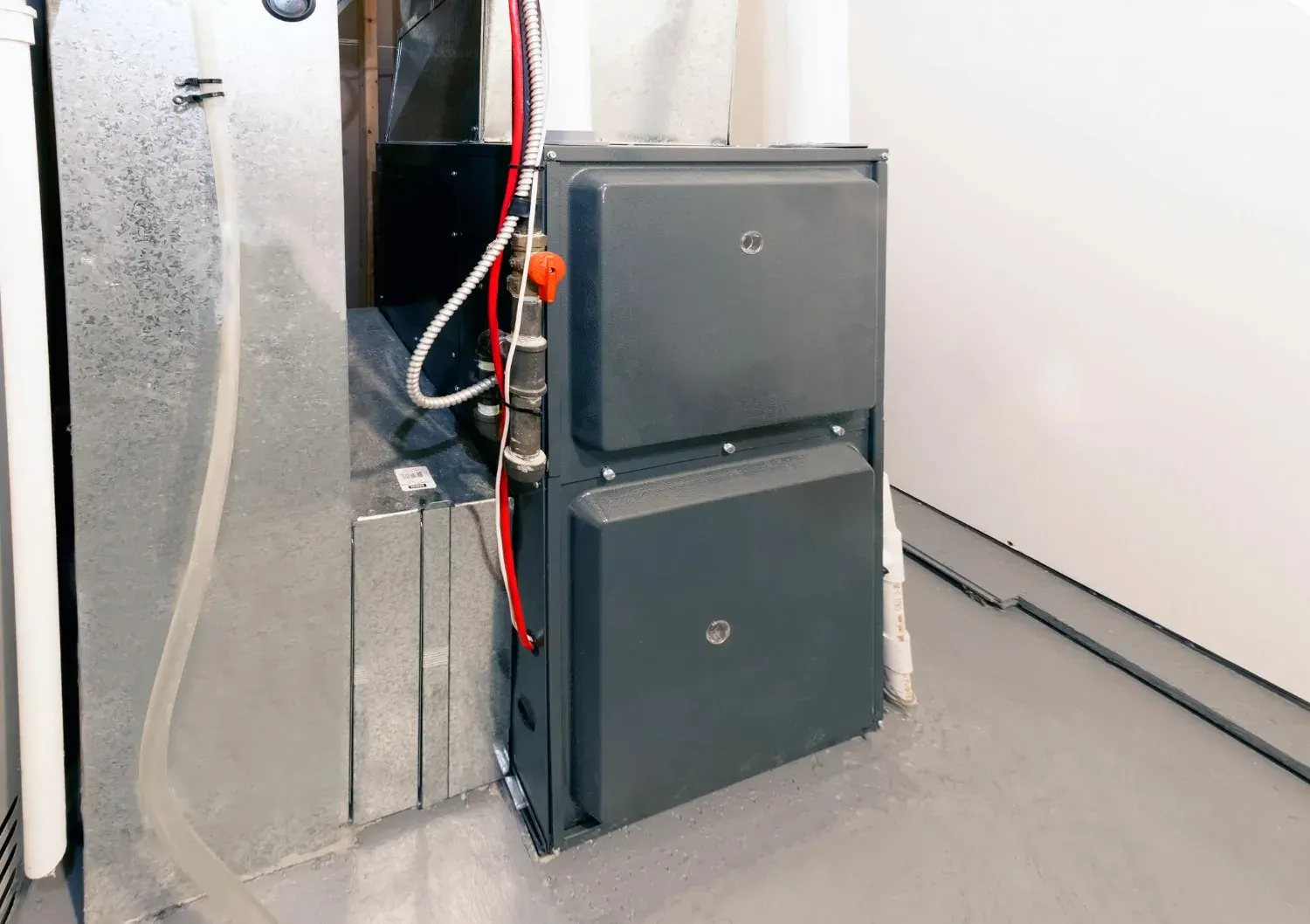
A furnace usually gives warning before it quits. Some of the signs are a safety problem that means shut it off tonight: a carbon monoxide alarm, a gas smell, a yellow lifting flame, soot around the cabinet. Others are a repair you can schedule this week: a squeal on startup, short cycling, a room that never warms up. Around Pasadena, CA the heating season is short and mild, so a furnace can limp along for years unnoticed. The first cold snap in November is when the warning signs pile up.
Shut it off and call
These are the ones that do not wait.
- A carbon monoxide alarm. Leave the house, then call. Do not reset the alarm and go back to bed. California requires a CO alarm in every existing home with a fuel-burning appliance or an attached garage (Health and Safety Code section 17926). If you have a gas furnace and no CO alarm, that is the first thing to fix, today.
- A gas smell. Rotten egg or sulfur near the furnace or at the registers. Leave, and call the gas company from outside before anyone else.
- Yellow, orange, or lifting burner flames. A healthy natural-gas flame is steady and mostly blue. Yellow or wavering flames mean incomplete combustion, and incomplete combustion makes carbon monoxide.
- Soot, scorch marks, or rust streaks on the cabinet, the vent pipe, or the wall above. Soot means combustion gas is leaving somewhere other than the flue.
- Smoke or a strong electrical burning smell.
- A breaker that trips again after one reset.
Signs to schedule a repair this week
- Noises. A bang or boom a second or two after the burners should have lit is delayed ignition: gas pooling before it catches. Grinding or screeching is a motor bearing or a blower wheel. Rattling is usually a loose panel or a duct joint, and it is the one noise that is usually harmless.
- Short cycling. The furnace lights, runs a few minutes, shuts off, and starts again. Most often a clogged filter or a blocked return is overheating the heat exchanger and tripping the high-limit switch. Sometimes it is a failing flame sensor. Either way it is wearing the parts out.
- Hard starts. Clicking with no ignition, or the burners lighting and dropping out after a few seconds. Dirty flame sensor, weak igniter, or a control board fault.
- Cold spots and weak airflow. A room that never warms up while the thermostat says the furnace is running usually points at the ductwork, not the furnace. Attic ducts in the 1950s ranch homes across the San Gabriel and San Fernando valleys have often collapsed or pulled apart after decades in 130°F summer attics.
- A gas bill that jumped with no change in the weather or the thermostat. The furnace is running longer to do the same work: dirty filter, dirty blower, a duct leak, or burners that need cleaning.
- Water at the base of a high-efficiency (condensing) furnace. These make water as part of normal operation and drain it away. Water on the floor means the condensate line or trap is blocked.
- A dusty or dry house. A furnace pulling return air through gaps in the ducts brings attic dust with it.
The pilot light, if you have one
Newer furnaces have electronic ignition and no standing pilot. The wall furnaces and floor furnaces in the Craftsman bungalows and Spanish revivals of Pasadena, Altadena, and South Pasadena often do. A pilot that keeps going out, or burns yellow instead of blue, is a sign the thermocouple, the gas pressure, or the venting needs attention. Relighting it once per the instructions on the unit is fine. Relighting it every night is not, and that is a job for wall and floor furnace repair, not another match.
Age, and when it stops being worth fixing
Gas furnaces typically run somewhere around 15 to 20 years, and in our mild winters a well-kept furnace can go past that, because it works a few hundred hours a year instead of a few thousand. Age alone is not a reason to replace. The reasons are a cracked heat exchanger, which is a safety failure and ends the conversation, a pattern of repairs two winters running, or parts that are no longer available. If a tech recommends replacing the furnace, ask to see why: a photo of the crack, a written list of what has failed, and a repair quote next to the replacement quote.
What you can check yourself
- Confirm a working CO alarm on each level and near bedrooms. Test it.
- Replace the filter if you cannot see light through it.
- Open every supply register and clear every return grille.
- Set the thermostat to heat, fan to auto, and a setpoint above room temperature. Replace its batteries.
- Check the furnace power switch (it looks like a light switch on or near the cabinet) is on, and the breaker is on. Reset the breaker once if it tripped.
- Make sure the panel on the blower compartment is seated. Most furnaces will not run with it off.
- Look at the flames through the sight glass if there is one. Blue and steady is right.
- Write down any error code the furnace's status light is blinking.
Do not open the burner compartment while it is running, touch the gas valve, bypass a safety switch, or tape over a rollout switch. Those switches are the furnace's way of telling you something is wrong.
When to call a licensed tech
Call for anything in the shut-it-off list, for any noise that is new and repeats, for short cycling that a fresh filter did not fix, for a pilot that will not stay lit, and for any winter where the house does not warm up evenly. A furnace repair visit checks the heat exchanger, the burners and flame, the ignition parts, the blower and its capacitor, the safeties, and the venting, and ends with a written quote before any work starts. A fall maintenance visit does the same inspection before the first cold night, which is a better time to find a cracked exchanger than the night you need the heat.
Common questions
Is a burning smell normal the first time the furnace runs in fall?
A dusty smell the first time the heat runs is normal and can take a few hours to clear; it is summer dust burning off the heat exchanger. A smell that persists, smells electrical, or comes with smoke is not.
How often should a furnace be inspected?
Once a year, before heating season. Gas furnaces are combustion appliances in your house, and a cracked heat exchanger does not announce itself.
My furnace runs but the air is barely warm. Is that a warning sign?
Sometimes. A furnace that cycles off on its high limit before it heats the air, a leaking duct mixing in attic air, or a thermostat calling for fan only can all do this. It is worth a visit, and it is rarely the whole furnace.
If anything on this list sounds familiar, book a $69 diagnostic. You are told the price before we schedule, and it is credited toward the work if you go ahead. Reach Boost Services at 818-277-5056 or send us a message and we will usually be out within a few hours.
Written with AI assistance by Boost Services, Heating and Cooling team, and reviewed by our licensed technicians before publishing. Boost Services Heating and Cooling, C-20 #1119892.