
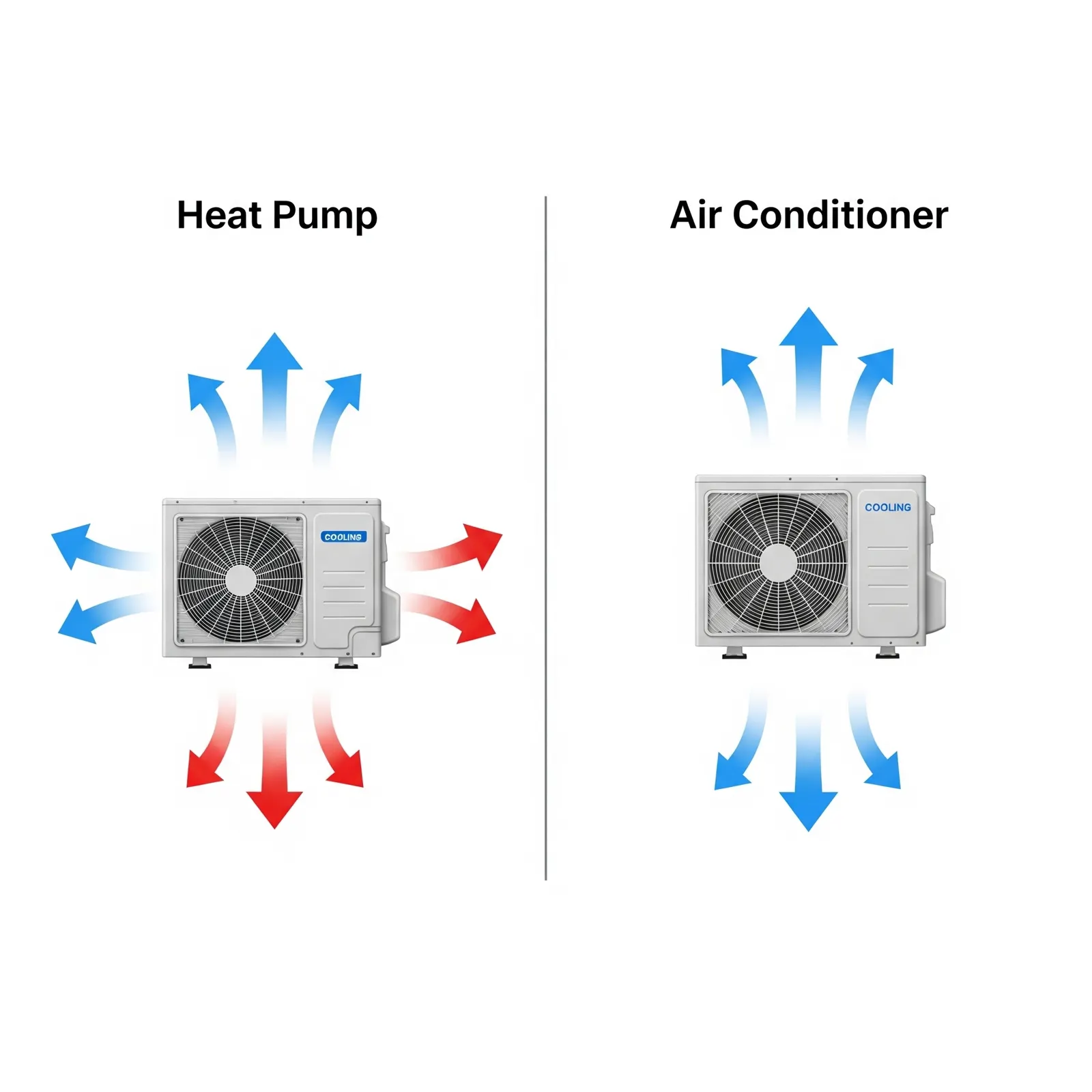
In cooling mode, a heat pump and a central air conditioner are the same machine. Same compressor, same coils, same refrigerant cycle, same amount of cold air at the register. The difference is a reversing valve. In winter, a heat pump runs the cycle backwards and pulls heat out of the outdoor air into the house, so it replaces the furnace as well as the AC. In Pasadena, CA and the San Fernando Valley, where a cold night is 40°F, that makes it a serious option for most homes.
How each one works
An air conditioner moves heat in one direction: it absorbs heat at the indoor coil, carries it outside in the refrigerant, and dumps it at the outdoor coil. Heating is a separate appliance, usually a gas furnace sharing the same blower and ducts.
A heat pump does the same thing in summer. In winter, the reversing valve swaps the roles of the two coils. The outdoor coil absorbs heat from the air (there is heat to absorb even at 40°F) and the indoor coil releases it into the house. Because it moves heat instead of making it, it delivers more heat energy than the electricity it consumes. A Department of Energy guide for contractors puts the saving at as much as 30% to 40% compared with electric resistance heat.
The differences that matter here
Heating source. The AC pairs with a gas furnace. The heat pump heats on its own, with electric strip heat as backup for the rare very cold morning, or with a gas furnace kept as backup in a "dual fuel" setup.
Efficiency ratings. Both carry a SEER2 rating for cooling. A heat pump also carries an HSPF2 rating for heating. In a climate like ours the cooling rating matters more, and our season runs May to October.
Winter performance. Heat pump output falls as the outdoor temperature drops. That is a real limitation in Minnesota. In the San Gabriel Valley, where January lows sit in the 40s, a correctly sized heat pump carries the house without backup nearly all the time. Cold-climate models exist for the foothills above Altadena.
The feel of the heat. Furnace air comes out hot in short blasts. Heat pump air comes out warm, around body temperature, for longer runs. Some people notice this the first winter. The house ends up at the same temperature.
Wear. A heat pump runs year-round; an AC rests all winter. That is more hours on the compressor, offset by the furnace you are not running. Neither lasts noticeably longer than the other, and maintenance matters more than the type.
Cost drivers. The heat pump outdoor unit costs more than a cooling-only condenser. But it replaces the furnace, so if both are due, the totals are often close. Going from gas to a heat pump can mean a new indoor air handler and sometimes a bigger circuit, and panel work is a separate licensed trade. Pasadena Water & Power and LADWP have had heat-pump incentives; check the current program before you buy.
Gas. A heat pump takes gas combustion out of the house. For a 1920s bungalow with a floor furnace, that is a safety upgrade as well as a comfort one.
Which one fits your house
- AC plus existing furnace makes sense when the furnace is newer and healthy. Replace the condenser and coil, keep the furnace, keep the cost down.
- Heat pump makes sense when the furnace and AC are both due, when there is no gas at the house, in an ADU or garage conversion, or when you want to stop burning gas indoors. Mini split heat pumps are the usual answer for rooms the central system never reached.
- Dual fuel makes sense when you want the heat pump's efficiency most of the year and prefer to keep the gas furnace for the coldest mornings.
What you can check yourself
- Read the data plate on your outdoor unit. If it lists a heating capacity or an HSPF rating, you already have a heat pump.
- Find the thermostat's mode list. A heat pump thermostat has an EM HEAT or AUX setting; an AC thermostat does not.
- Note the age of the furnace from its data plate. A furnace under ten years old changes the math toward keeping it.
- Note which rooms the current system never reaches. That is a mini split conversation, not a furnace-versus-heat-pump one.
When to call a licensed tech
Sizing either system is a load calculation, not a copy of the old label, and both are licensed work from the refrigerant to the disconnect. A heat pump installation quote from us covers the outdoor unit, the indoor coil or air handler, the duct connections, the unit's own disconnect and line set, and the permit, in writing before any work starts. If the house needs a change to its electrical service to carry the new unit, that is an electrician's job and a separate line on your budget. An AC installation quote covers the same lines with the furnace left in place. If you are not sure the old furnace is worth keeping, our heating page covers what a furnace diagnostic looks at.
Common questions
Does a heat pump work in a Pasadena winter?
Yes. Our winter lows are in the 40s, well inside the range where an ordinary air-source heat pump carries the house. Backup heat runs rarely, if at all. The foothills and canyon homes that see frost more often are the exception, and cold-climate models handle those.
Is a heat pump louder than an AC?
Not in cooling mode; it is the same equipment. In heating mode you will hear the outdoor fan run in winter, which you are not used to, and a brief whoosh when it goes into defrost. Placement matters more than type.
Can I add a heat pump and keep my gas furnace?
Yes. That is the dual fuel setup. The thermostat runs the heat pump until a set outdoor temperature and switches to the furnace below it. It needs a compatible furnace and a thermostat that can manage both.
If you want to know which one fits your house rather than which one wins on paper, start with a $69 diagnostic. You are told the price before we schedule and it is credited toward the work if you go ahead. Call the Boost Services team at 818-277-5056 or send us a message.
Written with AI assistance by Boost Services, Heating and Cooling team, and reviewed by our licensed technicians before publishing. Boost Services Heating and Cooling, C-20 #1119892.