
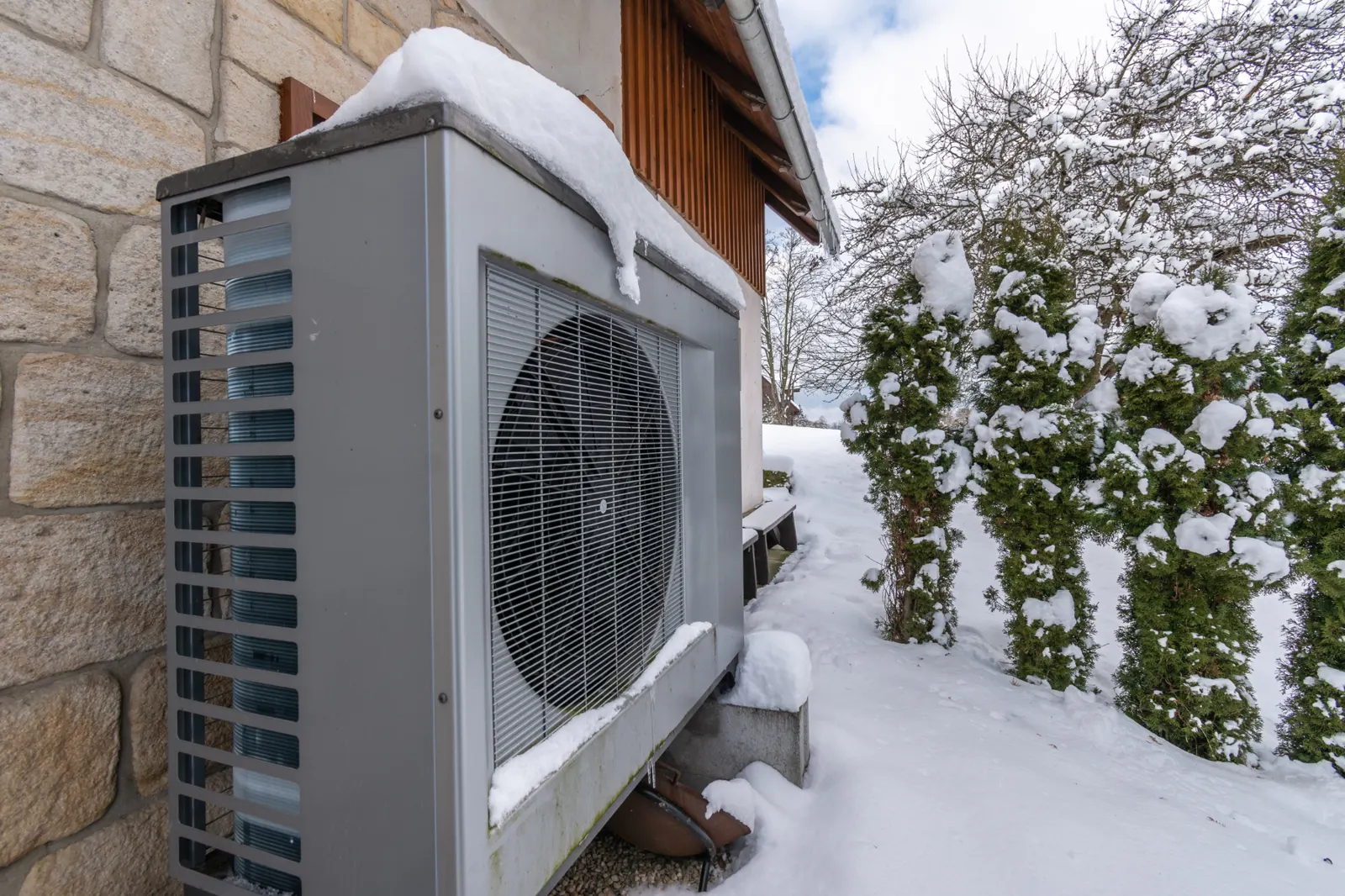
A heat pump heats a house by moving heat from outside to inside instead of burning fuel to make it, and it keeps doing that on a cold night. The myths about heat pumps failing in winter come from older equipment and from places with real winters. Pasadena, CA is not one of those places. Here is what actually happens in a heat pump on a January night in the San Gabriel Valley, and which of the common worries hold up.
How a heat pump heats
In cooling mode, a heat pump is an air conditioner: it pulls heat out of the house and dumps it outside. In heating mode a reversing valve flips the cycle, and it pulls heat out of the outdoor air and delivers it inside. There is heat in outdoor air well below freezing; the refrigerant just has to be colder than the air to absorb it. Because the system is moving heat rather than making it, it delivers more heat energy than the electricity it uses. ENERGY STAR puts it at up to roughly three times the heat energy for the electrical energy consumed. A gas furnace, by comparison, cannot deliver more heat than the fuel contains.
Myth 1: heat pumps do not work when it is cold
Output does drop as outdoor temperature drops, because there is less heat to harvest and the compressor works harder for it. That is true. What has changed is how far down the curve modern equipment goes. Cold-climate models with variable-speed compressors keep useful output at temperatures far below anything Southern California sees; ENERGY STAR's cold-climate program tests them down to 5°F. Pasadena's winter nights sit in the 40s most of the time, and the foothill neighborhoods in Altadena and Sierra Madre see the 30s a few times a season. That is easy territory for even a standard heat pump.
The one winter behavior worth knowing about is defrost. When the outdoor coil gets cold enough to frost, the system briefly reverses to melt it, and the indoor air goes cool for a few minutes. On a damp cold morning you may notice it. It is normal, not a fault.
Myth 2: heat pumps cost more to run than gas
It depends on the price of gas versus electricity where you live, and in this area that comparison has been shifting. What is not in dispute is the efficiency: a heat pump delivers more heat per unit of energy than any furnace. Whether that translates to a lower bill depends on your utility rates and how much heat your house needs. Our heating season is short, which means the heating bill is a small part of the year either way, and the bigger money question is usually the cooling season, where a modern heat pump is also your air conditioner.
Myth 3: you need backup heat
In cold climates, heat pumps are often paired with backup heat for the coldest days. Here, a correctly sized heat pump handles the whole winter on its own. Some systems ship with electric resistance strips as an "auxiliary" stage. If yours has them, the thing to watch is a thermostat that kicks them on too readily, because resistance heat is the expensive kind. A big overnight setback followed by a big morning jump is the usual trigger. Smaller, steadier setpoint changes keep the strips off.
Myth 4: the air from the vents is cold
Heat pump supply air is cooler than furnace supply air. A furnace blows air that feels hot; a heat pump blows air that is warm, well above room temperature but not hot to the hand. People who switch from gas sometimes hold a hand to the vent and decide something is wrong. The house still gets to temperature; it just gets there with longer, gentler run times. If the house is not reaching setpoint, that is a different matter and worth a call.
Myth 5: heat pumps need more maintenance
They need the same maintenance as an air conditioner, which is what they are for eight months of the year: filters, a clean outdoor coil, a clear condensate drain, and an annual check of refrigerant charge, airflow, and electrical parts. The difference is that they work year-round, so the filter schedule does not get a winter break. A neglected heat pump costs more to run than a maintained one, and it gets there gradually enough that most people never notice. Our heat pump maintenance visit covers the list.
What you can check yourself
- Thermostat mode. Heat, not Aux or Em Heat. On many thermostats the Em Heat setting runs the resistance strips only, which heats the house and the bill.
- Setpoint habits. Avoid setbacks of more than a few degrees. Let the heat pump run long and low.
- Filter. Monthly check in winter too.
- Outdoor unit. Clear of leaves and debris, nothing stacked against it, and in wet weather, not sitting in a puddle. If you see it steaming or hear it change pitch for a few minutes on a cold morning, that is defrost.
- Ice. A thin frost on the outdoor coil that clears itself is normal. A solid block of ice that stays is not.
When to call a licensed tech
Call if the house is not reaching setpoint on a normal winter night, if the outdoor unit is iced solid, if the auxiliary heat indicator is on constantly, or if the electricity bill jumped without a change in weather. Those point at low refrigerant charge, a defrost control fault, or a reversing valve problem, all of which are heat pump repair work. And if you are weighing a heat pump to replace a gas furnace and an aging air conditioner together, a load calculation on the house is where that starts; see our heat pump installation page. Pasadena Water & Power and LADWP have had heat-pump incentives; check the current program before you buy.
Common questions
Will a heat pump keep my house warm on the coldest night of the year?
In this climate, yes, if it was sized for the house. Cold-climate models are tested to temperatures far below anything the San Gabriel Valley sees.
Why does my heat pump blow cool air for a few minutes?
Defrost. The outdoor coil frosted over, the system reversed briefly to melt it, and heating resumed. If it happens every ten minutes, or the indoor air stays cold, that is a service call.
Is a heat pump a good replacement for a wall furnace in an old Pasadena house?
Often the best one. Bungalows with no ducts get a ductless mini split heat pump, which heats in winter and cools in summer from the same wall unit, without adding ductwork to a 1920s house.
If your heat pump is not keeping up this winter, book a $69 diagnostic. We tell you the fee before booking and credit it toward the work. Call the Boost Services team at 818-277-5056 or send us a message.
Written with AI assistance by Boost Services, Heating and Cooling team, and reviewed by our licensed technicians before publishing. Boost Services Heating and Cooling, C-20 #1119892.