An electric furnace has fewer parts than a gas one, so its problems are easier to narrow down. No heat at all is usually power: a tripped breaker, a blown fuse in the unit, or an open safety switch. The blower running with cold air is usually a failed heating element or the sequencer that switches the elements on. Heat that comes and goes is airflow. Here is how to tell them apart and what is safe to check before you call.
How an electric furnace makes heat
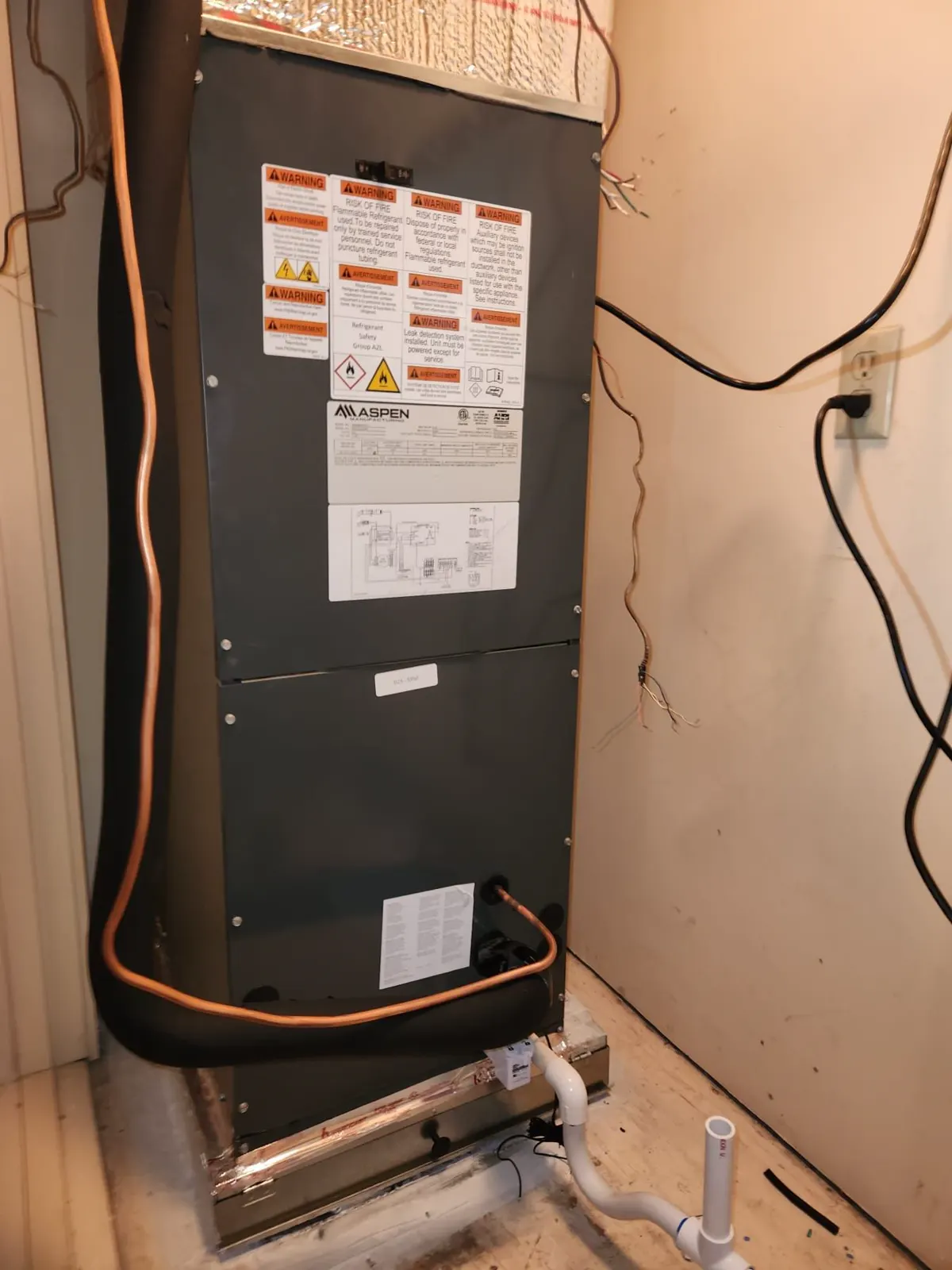
There is no burner and no flue. Air from the return passes over a bank of resistance heating elements, like the coils in a toaster, and the blower pushes it into the ducts. A sequencer (or a set of relays) turns the elements on in stages a few seconds apart so they do not all draw at once and trip the breaker. A high-limit switch cuts the elements if the cabinet gets too hot, which happens when airflow is restricted.
Electric furnaces are less common in Pasadena, CA than gas ones, because most homes here have gas service. You find them in some condos, ADUs, all-electric remodels, and paired with a heat pump as backup heat. A Department of Energy guide for contractors notes that an electric furnace converts all of its electricity into heat, minus a little lost through the cabinet, and that electricity is still one of the most expensive heating fuels. A heat pump moves heat instead of making it, so it uses considerably less electricity than resistance heating for the same warmth. That matters if yours is old enough to replace.
The symptoms and what they point to
- No heat, no blower, nothing. Power. A breaker, a blown fuse or fusible link inside the unit, the furnace disconnect switch, or a thermostat that is not calling.
- Blower runs, air is cold. One or more elements open, a failed sequencer, or the high-limit switch holding the elements off because of airflow. The last one is the cheapest, so check the filter first.
- Some heat but never enough. One element out of several has failed. Electric furnaces usually have two to five elements, and losing one drops output without killing it.
- Heat, then cold, then heat. The high-limit switch cycling on restricted airflow: a clogged filter, closed registers, a dirty blower wheel, or a blower motor that is slowing down.
- Breaker trips repeatedly. A shorted element, a seized blower motor, a loose connection heating up, or a breaker that has weakened. Do not keep resetting it.
- Burning smell. A dusty smell at the first heat of the season is normal and can take a few hours to clear. A persistent burning or hot-plastic smell is not. Turn it off and call.
- Buzzing or clicking, no heat. A sequencer or contactor trying to pull in and failing, or a control transformer problem.
- Bills jump in winter. Elements running for hours because one has failed, duct leaks in the attic, or backup heat running on a heat pump when it should not.
What you can check yourself
- Thermostat: HEAT mode, fan AUTO, setpoint above room temperature, fresh batteries. If it is a heat pump thermostat, make sure it is not stuck in EM HEAT, the setting that runs the electric furnace alone.
- Breaker and furnace switch: confirm both are on. Reset a tripped breaker once. If it trips again, leave it off and call.
- Filter: replace it if you cannot see light through it. Electric furnaces are sensitive to airflow because the elements get very hot very fast.
- Registers and returns: open everything, move furniture off the returns. Closing vents in spare rooms pushes an electric furnace toward a limit trip.
- Listen: the elements should click on in stages a few seconds apart after the blower starts. A furnace that hums and does nothing, or clicks once and stops, has a control problem.
- Outdoor unit, if you have a heat pump: if the outdoor fan is not running while the house is on backup heat, the furnace is doing all the work and your bill will show it.
Do not open the electrical compartment, test elements with a meter, or reset the high-limit switch by hand. The elements run on 240 volts and the sequencer can energize them while you are looking at them.
When to call a licensed tech
Anything inside the cabinet: elements, sequencer, relays, limit switches, fuses, blower motor, and wiring. A breaker that trips twice. A burning smell that lingers past a few hours, or any electrical smell. A furnace repair visit starts with a diagnostic that finds which element or control has failed rather than swapping parts, and the $69 is credited toward the work.
If the furnace is old and the elements are failing one after another, it is worth asking about a heat pump before you keep repairing it. A heat pump heats and cools with the same outdoor unit and, in our mild winters, rarely needs backup heat. Pasadena Water & Power and LADWP have had heat-pump incentives; check the current program before you buy. Our heating page covers what we service.
Common questions
How long does an electric furnace last?
Roughly 15 to 20 years is the figure the trade usually gives, longer than a gas furnace because there is no heat exchanger to crack. Elements and sequencers are replaceable along the way. The blower motor is usually the part that ends it.
Why does my electric furnace trip the breaker?
An element that has shorted to ground, a blower motor drawing too much current, a loose lug on the wiring, or a breaker that has weakened with age. Every one of these is a tech visit. Resetting it repeatedly can start a fire.
Is an electric furnace cheaper to run than gas?
Usually not. It is close to 100% efficient at the unit, but electricity costs more per unit of heat than gas in most of Southern California. If you want electric heat, a heat pump moves heat instead of making it and uses far less power for the same result.
If your electric furnace is not heating, book a $69 diagnostic. You are told the price before we schedule and it is credited toward the work. Call Boost Services Heating and Cooling at 818-277-5056 or send us a message. We work 6am to 10pm, seven days, and are usually out within a few hours.
Written with AI assistance by Boost Services, Heating and Cooling team, and reviewed by our licensed technicians before publishing. Boost Services Heating and Cooling, C-20 #1119892.