
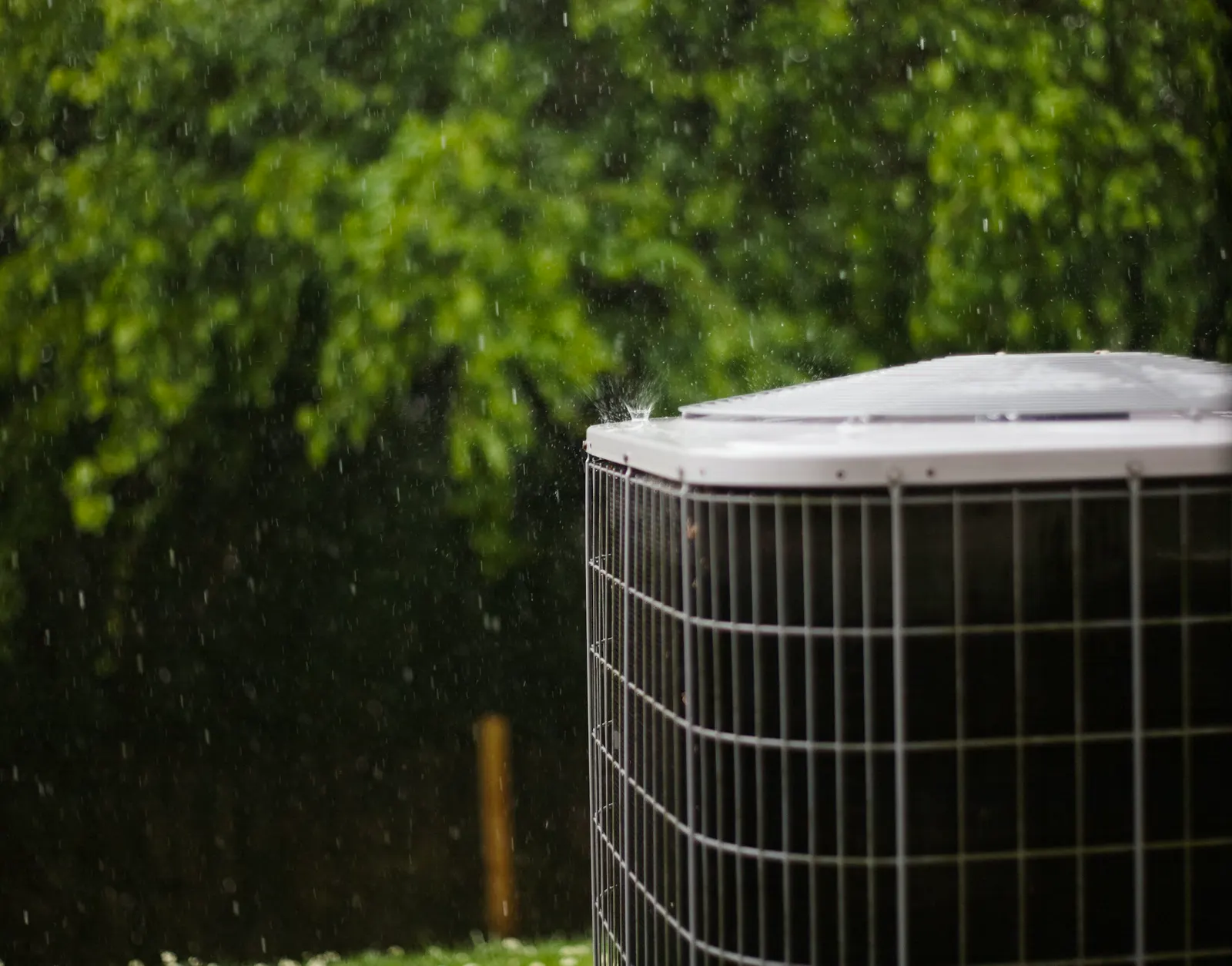
A heat pump in cooling mode is an air conditioner. Same compressor, same coils, same refrigerant cycle. So the question "do heat pumps work in hot climates" has a simple answer: exactly as well as the AC you have now, because in summer it is one. The real questions for the San Gabriel and San Fernando valleys are what happens on a 108-degree afternoon, and whether the heating side is enough on a 38-degree January night. Both are worth understanding before you buy.
Heat waves: the outdoor unit is fighting the air
Every air conditioner and heat pump sheds the heat it pulls from your house into the outdoor air. The hotter that air, the harder the job. Equipment is rated at 95 degrees outdoor, which is the standard test condition, and above that, capacity and efficiency both slide. That is true of a plain AC and of a heat pump equally; there is nothing about the heat pump that makes it worse in heat.
What you will notice on a 105-plus day:
- Longer run times. The system may run most of the afternoon. On a properly sized system that is normal; it is designed to keep up, not to cycle.
- The house holds rather than drops. If it is 78 inside at 4 pm and the system is running, it may not reach 74 until the sun is off the house. That is capacity, not a fault.
- Vent air a little less cold. Supply air temperature rises a few degrees when the outdoor coil is working against very hot air.
What is not normal: the outdoor unit shutting off on its own and restarting a few minutes later, warm air from the vents with the outdoor fan running, or ice on the refrigerant line. Those are heat pump repair calls.
Two local details matter here. First, side-yard condensers on the south or west side of a 1950s ranch in Reseda or Northridge sit in direct sun on a strip of gravel or concrete. The air around them can run well above the ambient reading. Some shade, without blocking airflow, helps. Second, Santa Ana winds in September and October blow dust and leaves straight into the outdoor coil. A coil that was clean in June can be half-blocked by a heat wave in October, and a blocked coil is the single most common reason a system "cannot keep up."
January: is it actually cold enough to matter?
Winter nights in Pasadena, CA and the valleys typically sit in the 40s, with occasional dips into the high 30s and, in Altadena or the north Valley, a rare frost. That is mild by heat-pump standards. Modern units keep close to full heating capacity at those temperatures, and even the cold-climate models built for real winters are rated well below freezing. Backup electric heat exists on most systems, but in this climate it should rarely run.
So the heating side works. It just feels different from a gas furnace, and this is where most first-winter complaints come from.
- The air is warm, not hot. A gas furnace blows air at 120 degrees or more. A heat pump's supply air is typically in the 90s. Hold your hand at the vent and it feels lukewarm, even though the house is warming. It runs longer and more gently to get there.
- Defrost cycles. On cold, damp mornings, frost builds on the outdoor coil. The unit reverses briefly to melt it. You hear a whoosh, the indoor air goes cool for a few minutes, and there may be a cloud of steam outside. Normal.
- Setback recovery is slow. If the thermostat drops to 62 overnight and calls for 70 at 6 am, most thermostats will bring on the backup strips to close the gap fast, and strip heat is expensive to run. Keep overnight setbacks small, 2 to 4 degrees, on a heat pump.
What the heat pump is really being asked to do here
The climate splits the year unevenly. Cooling runs from May into October with heat waves on top. Heating is a few months of mild nights. A heat pump sized for the cooling load will have far more heating capacity than the house needs, which is the opposite of the sizing problem in cold states. The practical result is that heat pumps are a good fit for this area, and the details that decide whether yours works well are the same ones that decide whether any AC works well: sizing, duct condition, refrigerant charge, and a clean outdoor coil.
One more local note: Pasadena Water & Power and LADWP have had heat-pump incentives at various times. Check the current program before you buy, since the terms change.
What you can check yourself
- Clearance. Keep roughly two feet of open space on every side of the outdoor unit and nothing hanging over the top. Trim the shrubs, pull the leaf pile, and after a Santa Ana wind, look at the coil fins for dust and debris.
- Rinse the coil. With the power off at the disconnect, a gentle hose rinse on the outside of the coil clears dust from the fins. No pressure washer.
- Filter. Change or clean it monthly during heat waves and smoke season. A heat pump runs in both seasons, so the filter loads faster than an AC-only filter would.
- Thermostat mode. Make sure the heat pump setting is selected if your thermostat has one, and that the overnight setback is small.
- Ice. Any ice on the outdoor unit in summer, or ice that does not clear within an hour in winter, is a fault. Switch it off and call.
When to call a licensed tech
Call when the house cannot get within a few degrees of the setpoint on a normal 90-degree day, when the outdoor unit cycles on and off every few minutes, when the backup heat seems to run every morning, or when you see ice in summer. A charge that is a little low will show up first on hot days and cold days, the two times you need the system most. A heat pump maintenance visit before the cooling season catches that, along with the coil cleaning and the defrost check.
If you are deciding whether to switch from a furnace and AC to a heat pump, the sizing conversation is the most important part of a heat pump installation. Oversizing for the heat wave is the common mistake and leads to short cycling the other 350 days a year.
Common questions
Will a heat pump keep up on a 110-degree day?
If it is sized for your house and the coil is clean, it will perform like any AC on that day: it will run long and hold the house, and the last couple of degrees may wait for evening. A heat pump is not at a disadvantage in heat compared to a standard AC of the same size.
Does a heat pump need backup heat in Southern California?
Most systems come with electric backup strips, and in this climate they should almost never run. If yours runs regularly, the thermostat settings or the system sizing need a look.
Why does my heat pump blow cool air in winter sometimes?
Two normal reasons: a defrost cycle, which lasts a few minutes, or the fan running between heating cycles. If it blows cool air continuously with the outdoor unit running, that is a fault.
Not sure if yours is behaving normally? A $69 diagnostic visit, quoted before booking and credited toward the work, will tell you. Call Boost Services Heating and Cooling at 818-277-5056 or contact us here.
Written with AI assistance by Boost Services, Heating and Cooling team, and reviewed by our licensed technicians before publishing. Boost Services Heating and Cooling, C-20 #1119892.