
Air conditioners do not break during heat waves by coincidence. A heat wave is when the outdoor unit runs the longest, at the highest pressure, in the hottest air, so every part that was marginal in June fails in the second week of a 105°F stretch. The good news is that the parts that fail are predictable, and most of the preparation is things you can do in an afternoon before the forecast arrives.
Why heat waves kill air conditioners
The outdoor unit rejects heat into the air around it. At 85°F that is easy. At 108°F on a west-facing side yard in Reseda, where the air by the unit may be hotter still, the coil has almost nothing to work with. Pressures climb, the compressor draws more current, and the parts that were already tired give out. The usual casualties:
- Capacitors. Heat is what kills them, and they were already sitting in a metal box in the sun.
- Contactors. More starts, more cycles, and a set of contacts that was already pitted finally welds or burns.
- Fan motors. Bearings that were dragging all summer seize under continuous runtime.
- Compressors. Usually not on their own. They fail because a dirty coil, a low charge, or a bad capacitor made them run hot for weeks.
- Condensate drains. Continuous runtime means continuous condensate, and a slow drain overflows.
The week before: what to do
The National Weather Service usually gives a few days of notice on a significant heat event. Use them.
- Change the filter. A clean filter is the single biggest airflow improvement available to you, and it takes two minutes.
- Clear the outdoor unit. Two feet of clearance on all sides, nothing stacked on top, no tarp, no shrubs pressed against the fins.
- Rinse the coil. Cut power at the disconnect switch next to the unit. Hose the coil gently from the outside, top to bottom, until the runoff is clean. If the fins are visibly coated after that, it needs a chemical cleaning by a tech.
- Check the condensate drain. Look at the pan under the indoor coil. Pour a cup of water in and confirm it drains. If you can reach the drain line outlet outside, make sure it is dripping when the system runs.
- Test the system on a warm afternoon. Run it and check that the air at a register is roughly 15 to 20 degrees cooler than the air at the return grille. If it is not, call before the heat wave, not during it.
- Book maintenance if it has not been done this year. A tech measuring the capacitor and the charge in the week before a heat wave is the difference between a planned part swap and a weekend without cooling. This is what an HVAC maintenance visit is for.
- Set up the thermostat schedule. More on this below.
The morning of: settings that actually help
The system has a fixed capacity. Once the house is hot, it cannot catch up until evening. The strategy is to not let the house get hot in the first place.
- Pre-cool. Set the thermostat lower than usual from early morning until early afternoon, while the outdoor air is cooler and the system has spare capacity. Then raise it a few degrees for the afternoon and let the house drift up slowly. The state grid operator asks for exactly this during a Flex Alert, and it also keeps your system running when it is most efficient.
- Do not set it to 65 to cool faster. The system runs at one speed. A low setpoint just means it never shuts off.
- Close blinds and curtains on the east side in the morning and the west side by noon. Single-pane windows on a 1950s ranch house are a large share of the afternoon heat gain.
- Run the fan on AUTO, not ON, during peak hours. With the fan on ON, air keeps moving through attic ducts between cooling cycles, picking up attic heat. During a smoke day the tradeoff flips, but on a plain hot day, AUTO.
- Skip the oven. Obvious, but it matters.
- Do not turn the AC off to give it a rest. Continuous running in a heat wave is normal. Turning it off means removing all that heat again later, at the worst time of day.
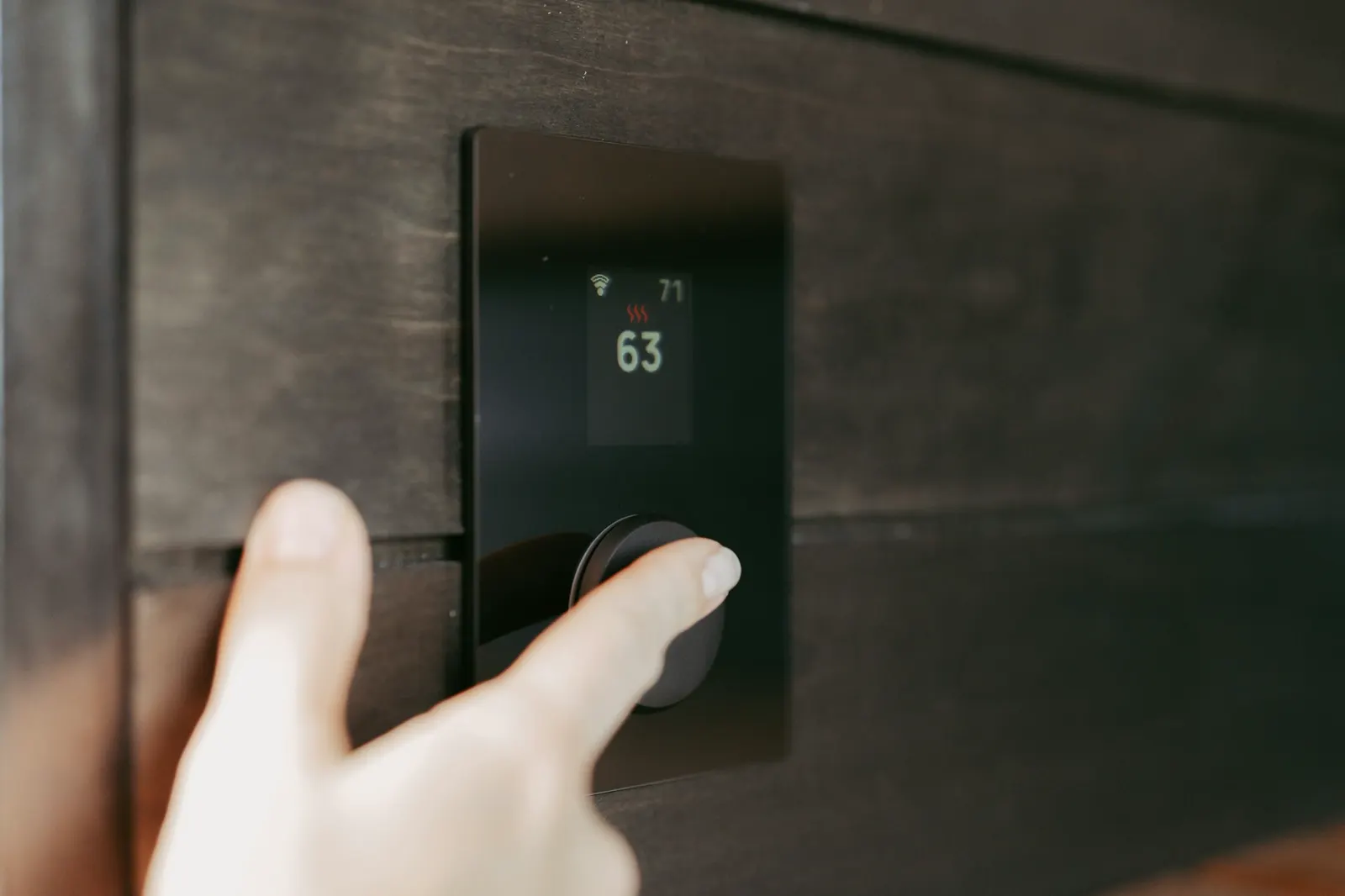
A programmable or smart thermostat makes the pre-cool schedule automatic. If you are running an old dial thermostat and manually chasing the temperature, a thermostat upgrade is a small job that pays off in every heat wave after it.
What you can check yourself
All of the above is homeowner territory. To keep it short:
- Filter changed, spare on hand.
- Outdoor unit clear and rinsed, power off at the disconnect first.
- Drain pan dry, drain line flowing.
- Temperature split at the registers checked.
- Thermostat schedule set to pre-cool.
- Breaker location known, so you can reset it once if it trips.
Stay out of the electrical compartment on the outdoor unit. Pulling the disconnect cuts the high voltage, not everything: the low-voltage control wiring is fed from the indoor unit and can still be live. The capacitor holds a charge with the power off too, and it is the part most likely to be involved if something goes wrong.
When to call a licensed tech
Before the heat wave, if the system has not been serviced this year, if the split at the registers is low, if the outdoor unit is louder than last summer, or if it tripped the breaker on any hot day this year. During the heat wave, call if the outdoor fan is not spinning, if the line set is iced, if the breaker trips more than once, or if water shows up around the indoor unit. Our AC repair calls in a heat wave are triaged by what is running and what is not, and we tell you the fee before you book.
One honest note: during a real heat wave, every contractor in the San Gabriel Valley and the San Fernando Valley is booked. We work 6am to 10pm and get to people as fast as we can, but the week before is when you have the most control over the outcome.
Common questions
Should I shade my outdoor unit?
A little shade helps a little. Blocking airflow hurts a lot. If you put up a shade, keep it well above the unit and open on all sides. Never wrap it or lean anything against it.
Is it normal for the AC to run all day in a heat wave?
Yes. A system sized for a normal design day, roughly the mid-90s in Pasadena, CA, will run continuously at 108°F and hold the house somewhere in the high 70s. That is the system working, not failing.
What is the one thing to do if I only do one?
Change the filter and rinse the outdoor coil. Both are about airflow, both take under half an hour, and both directly lower the strain on the compressor during the hours that break it.
If you want the system checked before the forecast arrives, book a $69 diagnostic. We tell you the fee before booking and credit it toward the work. Boost Services Heating and Cooling answers at 818-277-5056 or send us a message and we will usually get to you within a few hours to a day.
Written with AI assistance by Boost Services, Heating and Cooling team, and reviewed by our licensed technicians before publishing. Boost Services Heating and Cooling, C-20 #1119892.