
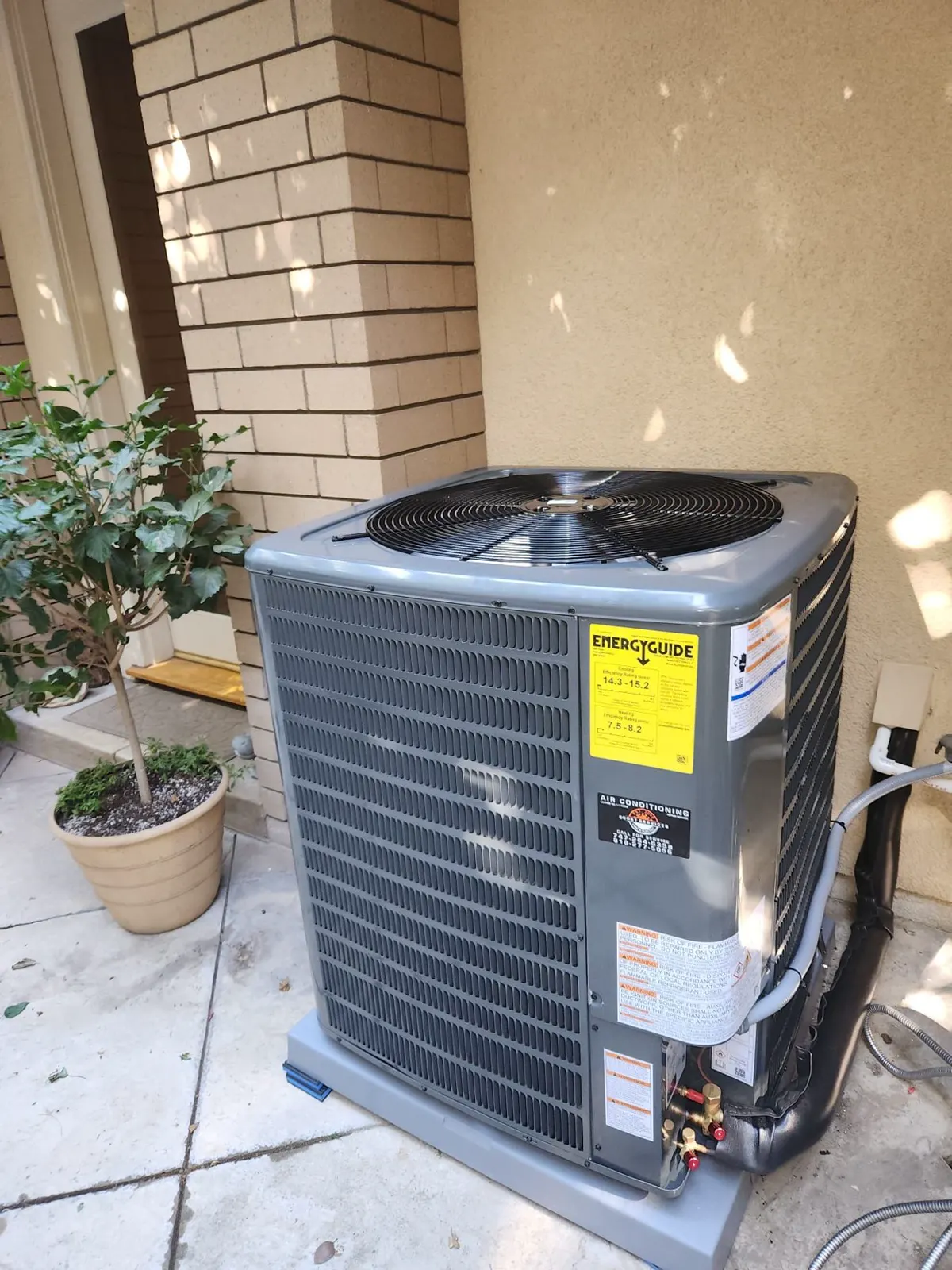
A real AC tune-up is a set of measurements, not a set of chores. The tech puts gauges on the refrigerant, a meter on the capacitor, a clamp on the compressor, and a thermometer on the air, and compares each number to what the manufacturer says it should be. A padded tune-up is someone spraying the coil with a hose, changing the filter you could have changed, and writing "system checked" on an invoice. Both take about the same time. Only one of them tells you anything.
The measurements that make it a tune-up
These are the items that require instruments and a tech who knows what the numbers mean. If they are not on the checklist, it is not a tune-up.
- Refrigerant charge, checked by superheat or subcooling. Not "pressures look fine." The tech measures the line temperatures and pressures and works out whether the charge matches the manufacturer's target for the conditions that day. A system that is a little low on charge still cools the house while it slowly cooks the compressor.
- Capacitor, in microfarads. The run capacitor has a rating printed on the side. A meter tells you what it actually reads. One that has drifted well below its rating is the most common summer failure in this climate, and it costs almost nothing to replace on a maintenance visit versus on a 105°F Saturday.
- Amp draw on the compressor and both motors. Compared against the rated load amps on the data plate. High draw points at a dirty coil, a failing capacitor, or a compressor on its way out.
- Temperature split across the indoor coil. The difference between return air and supply air, typically in the range of 15 to 20 degrees on a working system. Low split with a good charge means airflow. Low split with good airflow means charge.
- Static pressure in the ducts. A manometer across the air handler tells you whether the ductwork is restricting airflow. In 1950s to 1980s ranch homes with original attic ducts across Pasadena, CA and the rest of the San Gabriel Valley, this is often the finding that explains a weak room.
- Contactor inspection. The contacts pit and burn. A tech looks at them and, if they are bad, replaces the part rather than waiting for it to weld shut.
- Electrical connections, tightened. Inside the outdoor unit and at the air handler. Loose connections arc, and arcing is where fires and tripped breakers start.
- Condensate drain, flushed and tested. Not just looked at. Water poured into the pan should run out the drain line. The float switch, if there is one, should shut the system off when lifted.
- Blower wheel and evaporator coil, inspected. A flashlight and a mirror. A blower wheel packed with dust moves less air than it should, and a coated evaporator coil cannot transfer heat.
- Thermostat operation. Calls for cooling, calls for fan, and the temperature the thermostat reads versus the room.
The tasks that look like work
None of these are wrong to do. They are wrong to pay for as if they were the visit.
- Changing the filter. Five minutes. You can do it. A tech doing it is a courtesy, not a service.
- Hosing the outdoor coil from the outside. Worth doing yourself, and it takes the surface layer off. What it does not do is reach dirt packed several rows deep between the fins, and spraying inward can drive some of that further in. A real coil cleaning takes the top off, applies a coil cleaner, and rinses from the inside out so the dirt leaves the way it came in. If the coil is coated, that is a separate coil cleaning job and the tech should say so. The manufacturers do not agree on how much of this a homeowner should do at all. Goodman puts coil cleaning under a heading that reads "qualified servicer only". Trane is fine with a gentle rinse. If that split leaves you unsure, the safe read is the stricter one, and it is on the checklist when Boost Services does the visit.
- "Topping off" refrigerant. Refrigerant does not get used up. If it is low, there is a leak, and adding gas without finding the leak is a yearly bill that never ends. A tune-up that includes refrigerant every year is a leak that nobody has fixed.
- Replacing parts that test fine. A capacitor reading within tolerance stays. A contactor with clean contacts stays.
- Add-ons pitched during the visit. UV lights, duct sanitizing, surge protectors. Some have a place. None belong in the tune-up.
- A checklist with checkmarks and no numbers. If the paperwork says "refrigerant OK" instead of a superheat or subcooling reading, nothing was measured.
What you can check yourself
You cannot do the tune-up, but you can do the maintenance around it, and you can check the tech's work.
- Change the filter on whatever schedule your house needs. In this climate, with the dust and the summer runtime, monthly is not too often for a 1-inch filter.
- Keep the outdoor unit clear. Two feet on all sides, nothing on top.
- Read the registers. A thermometer at the return and at a supply register gives you the same split the tech measures.
- Ask for the numbers. Superheat or subcooling, capacitor microfarads versus rating, compressor amps versus rated. A good tech is happy to show you the meter.
- Keep the paperwork. The value of a tune-up compounds. This year's readings compared against last year's tell you whether the capacitor is drifting or the charge is dropping, which is a leak.
When to call a licensed tech
Once a year for cooling, in spring before the heat, is what the trade recommends for a central system in a long cooling season like ours. If the system has never been serviced, if it is older, or if it struggled last summer, do not wait for spring. Our HVAC maintenance visit includes every measurement on the first list above, and the paperwork you get has the readings on it. Anything we find gets a written quote before we touch it.
If you would rather not think about scheduling, a maintenance plan puts a spring cooling visit and a fall heating visit on the calendar. The point is not the discount. It is that the capacitor gets caught in April instead of failing in August.
Common questions
Is an AC tune-up worth it?
A real one, yes. The parts that fail in this climate, capacitors and contactors, are cheap to replace on a planned visit and expensive to replace on a heat-wave weekend when every contractor is booked. A dirty coil costs you capacity every hour the system runs. A padded one is not worth it, which is why the checklist matters more than the price.
How long should a tune-up take?
Long enough to take the measurements and let the system run at steady state, which usually means an hour or so for a single system. A tech who is in and out in 20 minutes did not measure the charge.
Do new systems need it?
Yes. Several manufacturers can ask for proof of maintenance before they honor a parts claim, and most exclude damage caused by neglect. A new system is also the one worth protecting. A capacitor is a capacitor regardless of the install date.
If something is already wrong, start with a $69 diagnostic. We tell you the fee before booking and credit it toward the work if you go ahead. If nothing is wrong and you just want the tune-up with numbers on the paperwork, ask for an HVAC maintenance visit instead. Call 818-277-5056 or send us a message and we will usually get to you within a few hours to a day.
Written with AI assistance by Boost Services, Heating and Cooling team, and reviewed by our licensed technicians before publishing. Boost Services Heating and Cooling, C-20 #1119892.