
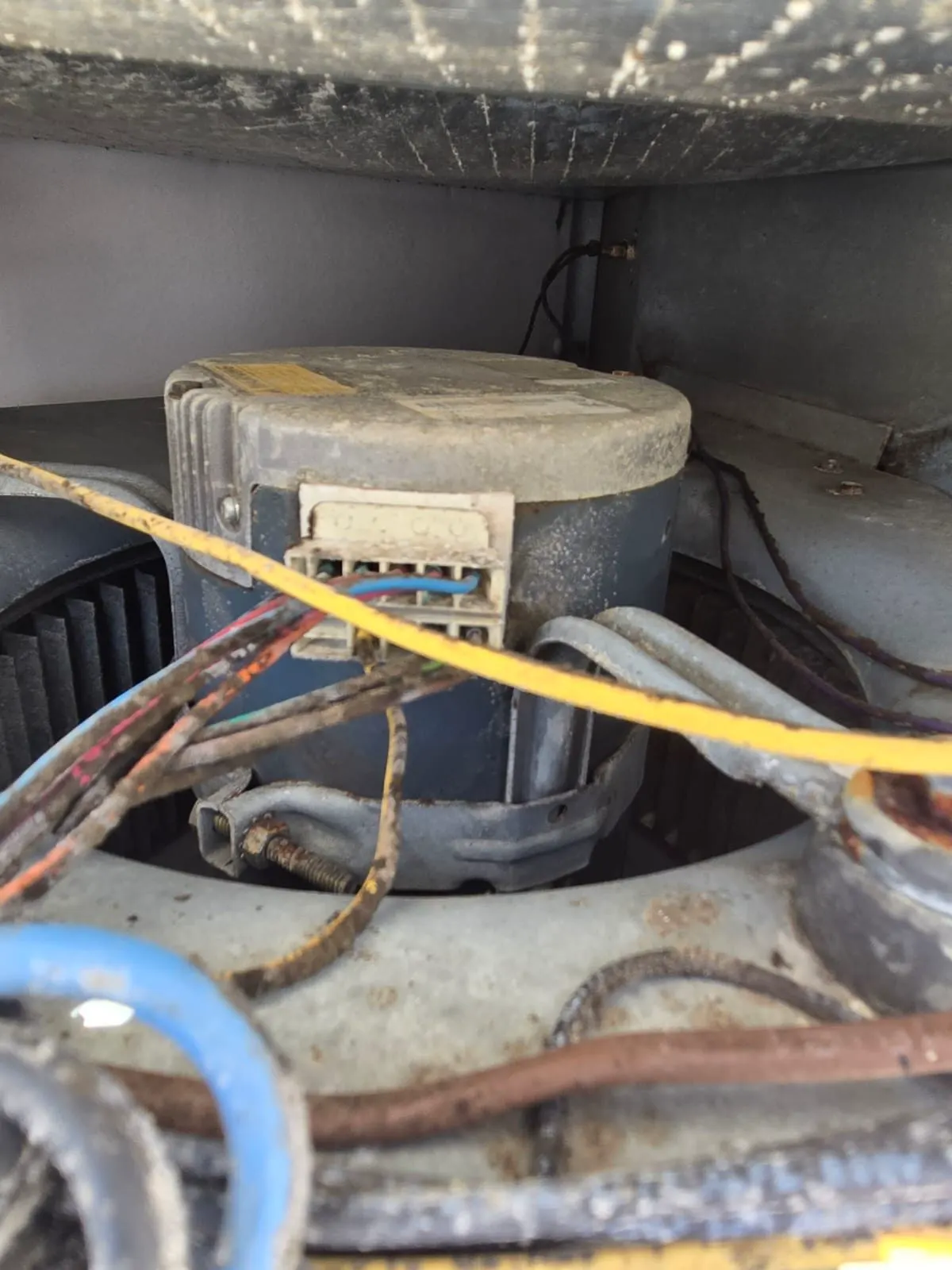
If you searched "blower motor resistor" because the fan in your house only runs at one speed, or barely moves air, the symptoms are real but the part name is probably borrowed from your car. A blower motor resistor is the speed-control part in a vehicle's heater and AC fan. Residential furnaces and air handlers do not use one. They set blower speed with motor taps or an electronic motor, and the parts that fail to produce those same symptoms are the capacitor, the control board, the speed wiring, and the motor itself. Here is how to tell which, and what is safe to check.
What sets the blower speed in a home system
Most furnaces and air handlers in Pasadena, CA and the valleys have one of two motor types.
- A PSC motor with speed taps. The older, cheaper design. The motor has several wires, each a fixed speed, and the installer connects one tap for heating and one for cooling on the furnace control board. A run capacitor gives the motor its push. Speed only changes when the board switches between the heat tap and the cool tap.
- An ECM or variable-speed motor. Newer systems. The motor has its own electronics and the control board tells it what airflow to deliver. It ramps up and down on its own and holds airflow even as the filter loads.
Neither uses a resistor pack the way a car does. So when a home system "only works on one speed," the cause is one of the parts that pick or drive the speed, not a resistor.
The symptoms people mean
- The blower runs at the same speed in heating and cooling, or seems stuck on high or low.
- Weak airflow at the registers while the system is clearly running.
- Airflow that used to be strong and has faded over months.
- The blower hums but does not start, or starts only after a nudge.
- The blower runs continuously and will not shut off with the system.
- Rooms at the end of the duct run never get comfortable.
These show up in both heating and cooling seasons, which is why they get blamed on the furnace in January and the AC in July when the same part is at fault.
What actually causes them
A weak or failed run capacitor (PSC motors). The most common cause of a blower that hums, starts slowly, or moves less air than it used to. Capacitors lose strength with age and heat, and attic air handlers spend every summer in 130°F air. A quick, inexpensive repair when caught early; a burned-out motor when ignored.
A control board relay or a wrong speed tap. The board picks which tap runs. A stuck relay leaves the blower on one speed or on all the time. A tap that was landed on the wrong terminal at the last repair leaves cooling running at the heating speed, which is the classic "AC airflow is weak but the heat is fine" complaint.
A dirty blower wheel. Years of unfiltered dust fill the cups of the blower wheel and it moves far less air at the same speed. This is the one that looks like a motor problem and is fixed with cleaning.
A packed filter or a collapsed return duct. Not the blower at all, but the blower gets the blame. Check these before anything else.
Failing motor bearings. Squealing, grinding, or a motor that is hot to the touch on the housing. The motor is on its way out.
ECM motor or module failure. On variable-speed systems, the electronics on the back of the motor fail more often than the motor itself. Symptoms are a blower that will not start, runs erratically, or throws a fault code on the board.
What you can check yourself
- Replace the filter if you cannot see light through it, and note whether the airflow comes back.
- Open every supply register and clear every return grille.
- Set the thermostat fan to "on" and listen at the air handler. Does the blower start immediately, hum first, or do nothing?
- Set the fan back to "auto" and confirm the blower shuts off after the system stops. A blower that never stops is a board or thermostat issue.
- Look at the status light on the furnace board through the sight window and write down any blink code.
- Listen for squealing or grinding when it starts. Note it for the tech.
- If the breaker tripped, reset it once.
Do not open the blower compartment while the system has power, and do not touch the capacitor. Capacitors hold a charge after the power is off, and the blower compartment has line voltage in it. On most furnaces the door switch cuts power when the panel comes off, and taping that switch down to run it open is how people get hurt.
When to call a licensed tech
Call when the blower hums or will not start, when airflow stays weak with a clean filter and open registers, when the blower runs at the wrong speed for the mode, when it squeals, or when the board is flashing a code. A repair visit tests the capacitor under load, checks the voltage at the motor, confirms which speed taps are landed and whether they match the system, inspects the blower wheel, and reads the board's fault history. In cooling season the same visit measures airflow against what the AC needs, since a blower that is too slow freezes the indoor coil. A dirty wheel and a weak capacitor are both things a maintenance visit catches before they cost a motor.
Common questions
Can I replace the blower capacitor myself?
We do not recommend it. The capacitor stores a charge after power is off, the replacement has to match the microfarad and voltage rating on the label, and a wrong part shortens the motor's life. It is a quick job for a tech.
Why is airflow weak in cooling but fine in heating?
Usually a speed tap issue: cooling needs more airflow than heating, and if the cool tap is on the wrong speed or the board is not switching, the AC runs at furnace speed. Sometimes it is a dirty indoor coil restricting the cooling side only.
Does a bad blower hurt the rest of the system?
Yes. Low airflow in cooling freezes the coil and overworks the compressor. Low airflow in heating overheats the heat exchanger and trips the high limit over and over. The blower is cheaper than either of those.
If the airflow is not what it used to be, book a $69 diagnostic. You are told the price before we schedule, and it is credited toward the work if you go ahead. Call Boost Services at 818-277-5056 or send us a message and we will usually be out within a few hours.
Written with AI assistance by Boost Services, Heating and Cooling team, and reviewed by our licensed technicians before publishing. Boost Services Heating and Cooling, C-20 #1119892.