
A heat pump gets serviced twice a year, not once, because it works twice as hard as an AC. An air conditioner runs from May to October and then sits. A heat pump runs those same months in cooling, then turns around and runs through winter in heating. The compressor, fan, and coils never get a season off. Here is what you should do monthly, and what a tech should do each spring and fall.
Why twice, and why it matters more here
The cooling season in Pasadena, CA and across the San Gabriel and San Fernando valleys is long, with heat waves that push outdoor units to their limit. Then fall brings Santa Ana winds that pack the outdoor coil with dust and leaves, right before the unit switches to heating. A spring visit gets the system ready for the load; a fall visit clears what the summer and the wind left behind and checks the parts that only work in heating mode.
Skipping a visit does not break the system that month. It shows up as a system that runs longer for the same result, then fails on the hottest week of the year, which is when everyone else's failed too.
Monthly: what you do
None of this needs tools.
- Filter. Check it monthly. Replace a disposable one when you cannot see light through it; rinse a washable one. During heat waves and smoke season, that can be every four to six weeks. A heat pump moves air all year, so filters load faster than you expect.
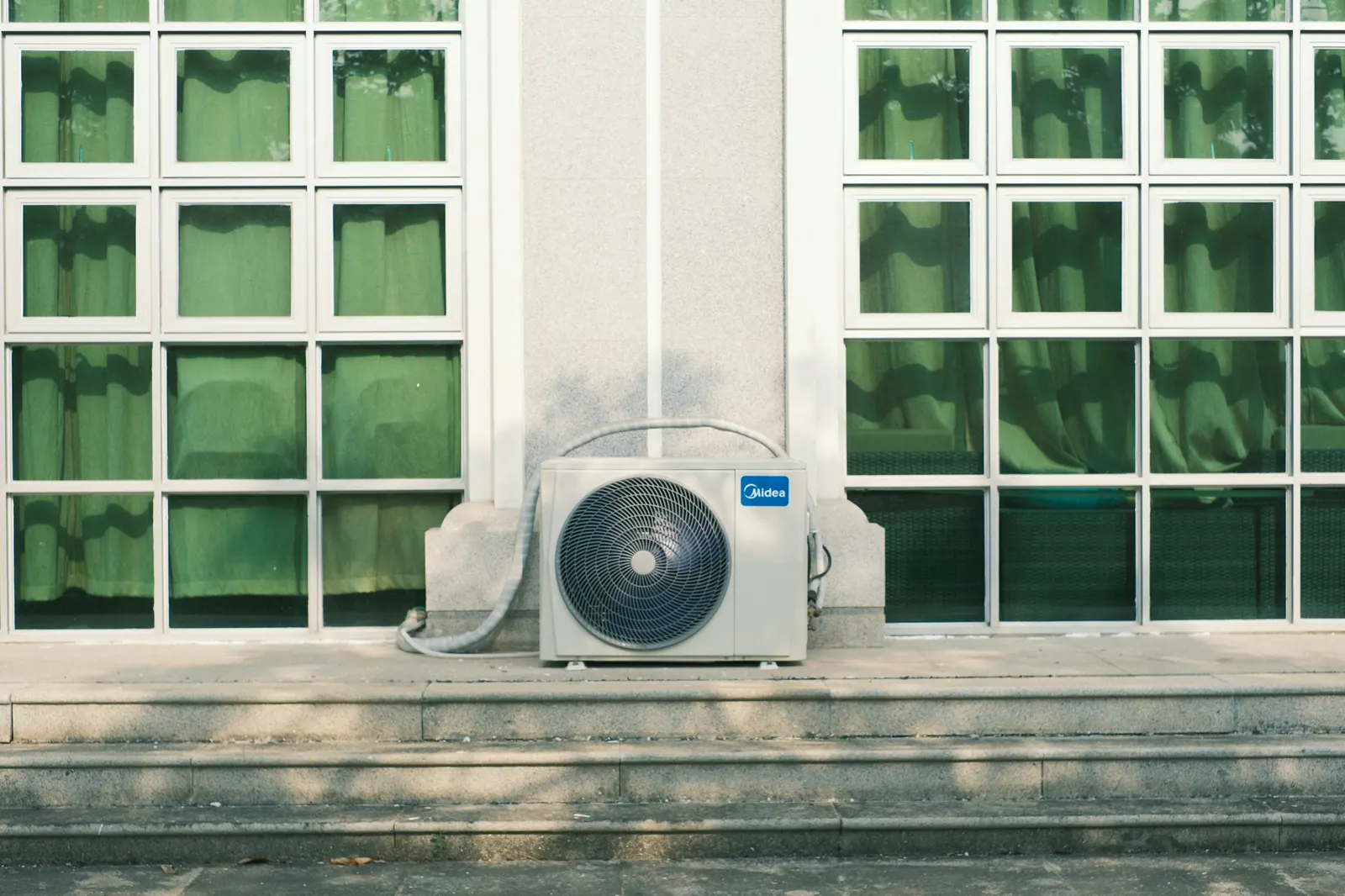
- Outdoor unit. Walk around it. Two feet of clear space on all sides, nothing on top. Pull out leaves, seed pods, and the plastic bag the wind delivered. Look at the coil fins for a gray coating of dust.
- Rinse the coil when it is dirty. Power off at the disconnect box next to the unit: pull the block or flip the switch. That stops the fan and compressor. It does not make the inside of the cabinet safe, so every panel stays on. Gentle hose spray straight on from the outside. No pressure washer, no coil cleaner chemicals from the hardware store.
- Drain line. In cooling season, the condensate drain should drip when the system runs. On a ductless head, look for water at the wall below it, which means the drain is blocked.
Spring visit: what the tech does
This is the pre-cooling visit, ideally in April or May before the first hot week.
- Refrigerant charge. Measured by superheat and subcooling, not by "topping it off." A charge a little low costs you capacity on hot days and can freeze the indoor coil. A charge a little high stresses the compressor.
- Outdoor coil cleaning. Beyond a hose rinse. A dirty outdoor coil is the most common reason a heat pump cannot keep up in a heat wave, and it is worth a proper coil cleaning once a year in this climate.
- Indoor coil. Inspected for dirt and biological growth. Cleaned when needed.
- Capacitor and contactor. The two parts that fail most often on the outdoor unit, and both fail on hot days. A capacitor reading weak in April gets replaced before it strands you in August.
- Electrical connections inside the unit. Tightened and checked for heat damage. Loose connections in a hot side yard are how wires burn.
- Fan motors. Amperage draw, bearing noise, blade condition.
- Condensate drain. Cleared and treated. Float switch tested.
- Airflow and static pressure. Tells the tech whether the ducts and filter are letting the system breathe. A high reading points to crushed or undersized ducts, which no amount of coil cleaning fixes.
- Thermostat. Confirmed as configured for a heat pump, with the correct reversing valve setting.
Fall visit: what the tech does
The pre-heating visit, in October or November. Some of it repeats the spring list. The heating-specific items are the point.
- Reversing valve. The valve that switches the system between cooling and heating. It sat in one position all summer. The tech confirms it shifts cleanly and fully.
- Defrost cycle. Forced and observed. A defrost control that does not trigger lets ice build on the outdoor coil on cold, damp mornings, and a unit that defrosts too often wastes heat. Either one is invisible until January.
- Backup heat strips. Tested for operation and amperage. Then confirmed to stay off when the heat pump alone can carry the load, which in this climate is almost always.
- Outdoor coil after the Santa Anas. Cleaned again if the winds have been through.
- Refrigerant charge and electrical. Same checks as spring.
What a maintenance visit is not
It is not a repair. If the tech finds a weak capacitor or a low charge, that is a separate decision with a written quote. It also does not mean nothing will fail; parts wear. What it does is find the things that are about to fail while they are still cheap to fix, and keep the system running at its rated capacity instead of well under it because of a dirty coil.
A maintenance plan is the usual way to get both visits scheduled without remembering to call, and it means the same tech sees the system twice a year and knows what changed.
What you can check yourself
Everything in the monthly list above, plus a few seasonal things:
- In spring, run the system in cooling for 20 minutes on a warm day. Feel the supply air. It should be noticeably cold, and the outdoor unit should be blowing warm air out the top.
- In fall, run it in heating for 20 minutes on a cool morning. The vents should blow warm, not hot, air. Watch the outdoor unit for a defrost cycle if it is below 45 degrees and damp: steam and a whoosh are normal.
- Look at the refrigerant lines where they enter the house. The larger line should be insulated its whole length. Torn or missing insulation on that line costs efficiency.
When to call a licensed tech
Anything involving refrigerant, the electrical compartment, the reversing valve, the defrost control, or the heat strips is a licensed job, both because it is dangerous and because refrigerant handling requires EPA certification. Call for the spring and fall visits, and call between them if the system starts short cycling, if you see ice in summer or ice that lingers in winter, if the backup heat runs every morning, or if the unit gets noticeably louder. A heat pump maintenance visit is an hour well spent on a system that never gets a season off.
Common questions
How often should a heat pump be serviced?
Twice a year: once before cooling season and once before heating season. It runs in both, unlike an AC, so it needs both checks.
Can I skip the fall visit in a mild climate?
You can, but the fall visit is the only time the defrost cycle, reversing valve, and backup strips get checked, and those are the parts that fail quietly and show up as a high winter bill. It is also the visit that clears the Santa Ana debris out of the coil.
What does a heat pump tune-up include?
Refrigerant charge, coil condition, electrical components, fan motors, drain, airflow, thermostat configuration, and in fall, the reversing valve, defrost, and backup heat. Anything a tech cannot name on that list is not a tune-up.
If your heat pump has not had a visit this year, the diagnostic is $69, quoted before booking and credited toward any work. Call Boost Services Heating and Cooling at 818-277-5056 or book a visit here.
Written with AI assistance by Boost Services, Heating and Cooling team, and reviewed by our licensed technicians before publishing. Boost Services Heating and Cooling, C-20 #1119892.